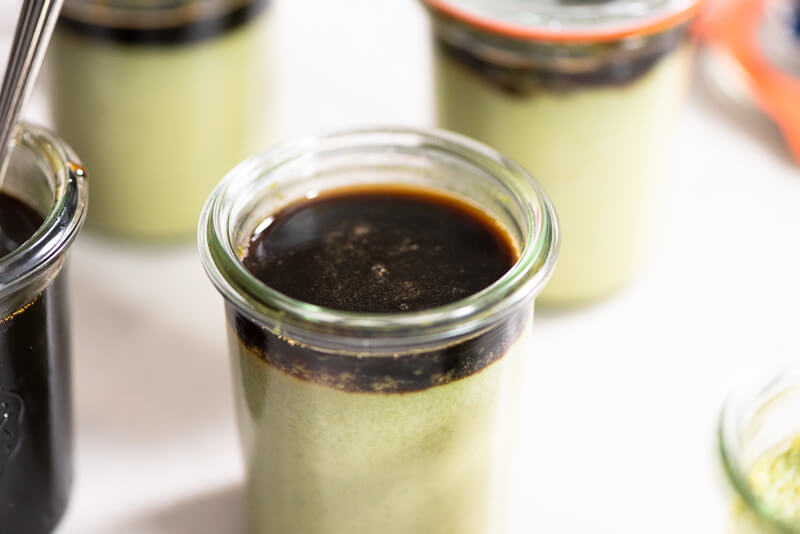
Matcha Purin Recipe: Authentic Japanese Green Tea Custard Pudding
Discover the elegant simplicity of matcha purin, Japan’s beloved green
What is Matcha Purin?
Matcha purin (抹茶プリン) is the Japanese green
This dessert originated as Japanese confectioners began incorporating matcha into Western-inspired desserts during the Meiji period. Today, matcha purin represents the perfect fusion of traditional Japanese ingredients with European custard techniques, creating something uniquely Japanese yet universally appealing.
Why matcha purin works: The slight bitterness of matcha balances beautifully with the sweetness of custard and kuromitsu (black sugar syrup), creating layers of flavor that develop with each spoonful.
Matcha Purin Ingredients
Success with matcha purin depends on understanding how each ingredient contributes to the final texture and flavor:
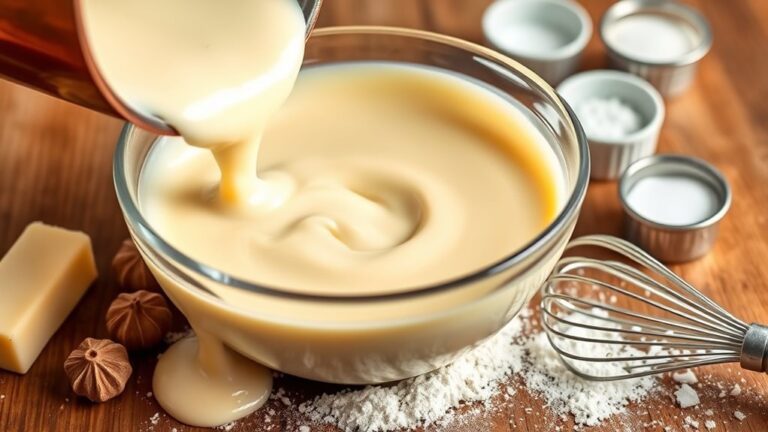
Whole Milk (1¾ cups)
Role: Creates the creamy base and provides richness. Use whole milk for best results—the fat content is essential for proper texture and flavor. Lower-fat milk will result in a thinner, less satisfying purin.
Eggs (3 large + 1 yolk)
Role: The eggs are what transform liquid milk into silky custard through gentle coagulation. The extra yolk adds richness and helps achieve that perfect, spoon-coating consistency that defines quality purin.
Sugar (¼ cup)
Role: Provides sweetness while helping the custard set properly. This amount creates a moderately sweet purin that lets the matcha flavor shine—adjust to taste, but remember the kuromitsu topping adds additional sweetness.
Matcha Powder (1½ tablespoons)
Role: The star ingredient that gives the purin its distinctive color and earthy flavor. Use culinary-grade matcha from Japan for best results. Ceremonial grade can be used but isn’t necessary for baking.
Vanilla Extract (1 teaspoon)
Role: Enhances the overall flavor profile and adds depth without overpowering the matcha. A small amount brightens the entire dessert.
Ingredient Quality Tips:
- Choose matcha labeled “Product of Japan” for authenticity
- Culinary grade matcha works perfectly and costs less than ceremonial
- Ensure matcha is bright green—dull color indicates age
- Use room temperature eggs for easier mixing
Essential Equipment
You’ll need:
- 5-6 small ramekins or pudding molds (4-6 oz capacity)
- Large pot or deep skillet for bain marie
- Fine-mesh sieve or strainer
- Immersion blender or whisk
- Kitchen thermometer
- Clean kitchen towel
Cooking Technique: The Bain Marie Method
The secret to silky matcha purin lies in the gentle cooking method called bain marie (hot water bath). This technique ensures even, gentle heat that prevents the eggs from scrambling and creates that signature smooth texture.
Setting Up Your Bain Marie
- Choose a pot large enough to accommodate all ramekins with space between them
- Add enough hot water to reach halfway up the sides of the ramekins
- Keep water at a gentle simmer—vigorous boiling will create bubbles in your purin
- Cover with a lid wrapped in a kitchen towel to prevent condensation drips
Temperature Control
The custard is perfectly cooked when it reaches 165-175°F (74-79°C). At this temperature, the eggs have properly coagulated without becoming rubbery. Use a kitchen thermometer for accuracy, especially when you’re learning the technique.
Serving and Storage Guide
Serving Suggestions
- Traditional: Top with kuromitsu (black sugar syrup) for authentic flavor
- Simple: Dust with powdered sugar or serve plain
- Elegant: Garnish with sweetened whipped cream and a sprinkle of matcha powder
- Textural: Add azuki (sweet red beans) for contrast
- Western-style: Serve with vanilla ice cream
Storage Instructions
Refrigerator: Store covered for up to 3 days. The texture is best within the first 2 days.
Freezing: Not recommended—freezing damages the custard texture.
Matcha Grade Guide: Culinary vs Ceremonial
Understanding matcha grades will help you choose the right powder for your purin and avoid overspending on premium
Culinary Grade Matcha (Recommended)
- Purpose: Specifically designed for cooking and baking
- Cost: More economical than ceremonial grade
- Flavor: Robust enough to stand up to dairy and sugar
- Color: Vibrant green that maintains color when heated
Tips for making the matcha purin a success
- use culinary grade matcha from Japan like the Aiya matcha we used
- you can always add sugar, but you can’t take it out. i don’t really like my sweets super sweet, so i use 1/4 cup for this recipe. i find that adds just the right amount of sweetness. taste the custard base for sweetness before you cook the custard completely, you may be able to add in a tablespoon of sugar or two if you like things extremely sweet
- use a thermometer to check the temperature (165-175F) so you know the egg has custard has been cooked.
- when making the custard use medium to low heat and cook slowly to avoid scorching or cooking the sides and not the center
- since we’re steaming the custard (to finish cooking it), i measure out enough water in the second pot so that the water level is at least half-way up the canning jars
- while you make the custard heat the other pot with water bring to a gently simmer (this is so you can put the custard in while hot)
- allow to cool completely to set, thought it’s tempting to want to eat right away while slightly warm, it won’t firm up all the way until it’s been chilled
Troubleshooting Common Issues
Lumpy or Grainy Texture
Cause: Matcha wasn’t properly dissolved or mixture wasn’t strained
Solution: Always sift matcha powder and strain the entire mixture before cooking
Rubbery or Dense Purin
Cause: Overcooked at too high temperature
Solution: Use lower heat and monitor temperature carefully—gentle cooking is key
Purin Won’t Set
Cause: Undercooked or insufficient eggs
Solution: Ensure mixture reaches 165°F and include the extra egg yolk for setting power
—
This authentic matcha purin recipe brings the refined elegance of Japanese dessert culture to your kitchen. The gentle sweetness and sophisticated matcha flavor create a dessert that’s impressive enough for special occasions yet simple enough for a weeknight treat.
That Okinawan black sugar syrup sounds interesting. I recently ran across the idea of Okinawan taco rice and inari which I’m going to give a shot.
I’ve only bought matcha powder once … as good a quality cooking matcha as I could afford. It cost me over $20 for a small jar. And it was sort of green-gray colour. The flavour was ok but didn’t really convince me to buy it again. Unfortunately, shipping costs to Canada from most places almost doubles the cost by the time you figure in exchange rate and possible duty if your package is tagged so I’m unlikely to buy it again.
I made shortbread type cookies (disappointingly tasteless and dry, blame the recipe), Hokkaido milk bread (ok), panna cotta (good), crepes (ok) and truffles (tasty).
https://a-boleyn.livejournal.com/tag/matcha
taco rice is delicious! not that well known unless youve been to Okinawa, how did you hear about it? matcha powder is expensive because its made from high grade green tea, it might depend on the way you prepare it but the flavor is much more subtle as compared to drinking matcha tea. that might be a better route to go if you want to get a good taste (if you like drinking tea). you seem to have extensive japanese cooking experience, have you been there also?
Sadly, I’ve never been to Japan though I’d love to. I subscribe to a YouTube channel called TabiEats. Some interesting Japanese foods get presented there.
I like drinking matcha tea although, as you said, the taste is very subtle. Matcha ice cream served in sushi restaurants is pretty amazing so I wanted to try it in other things. I’ve made matcha panna cotta with it and added it to crepes.
maybe one day! yes i’m familiar with their channel also. what other teas do you like to drink?
Earl Gray, chai tea, Turkish mint.
I’m mostly a coffee drinker … instant Nescafe and the occasional espresso.
does turkish mint taste different from spearmint?
I really can’t tell the difference.
howd you come across it? have you been to turkey?
I grow spearmint in my garden and have bought a loose leaf tea blend at Bulk Barn that is labelelled Turkish mint tea with dried mint in it. I don’t know that the MINT itself is Turkish. I believe they’re calling it that based on the fact that that particular blend of tea and mint is served/popular in Turkey. I’ve made tea by steeping loose leaf black tea with fresh spearmint and compared it to the dried tea blend I buy. That’s what I meant when I said I couldn’t tell the difference. I meant to 🙂
PS: I posted some pictures on my LiveJournal of the tea blend and the mint tea I made.
https://a-boleyn.livejournal.com/235842.html
PS: When you buy fresh mint from the grocery store, you can just put a few stalks into a glass of water. You’ll be surprised how quickly it roots without any additional help and then you can transplant it into a container and grow your own. I understand that you shouldn’t try to plant it in your garden as it spreads … a LOT. 🙂