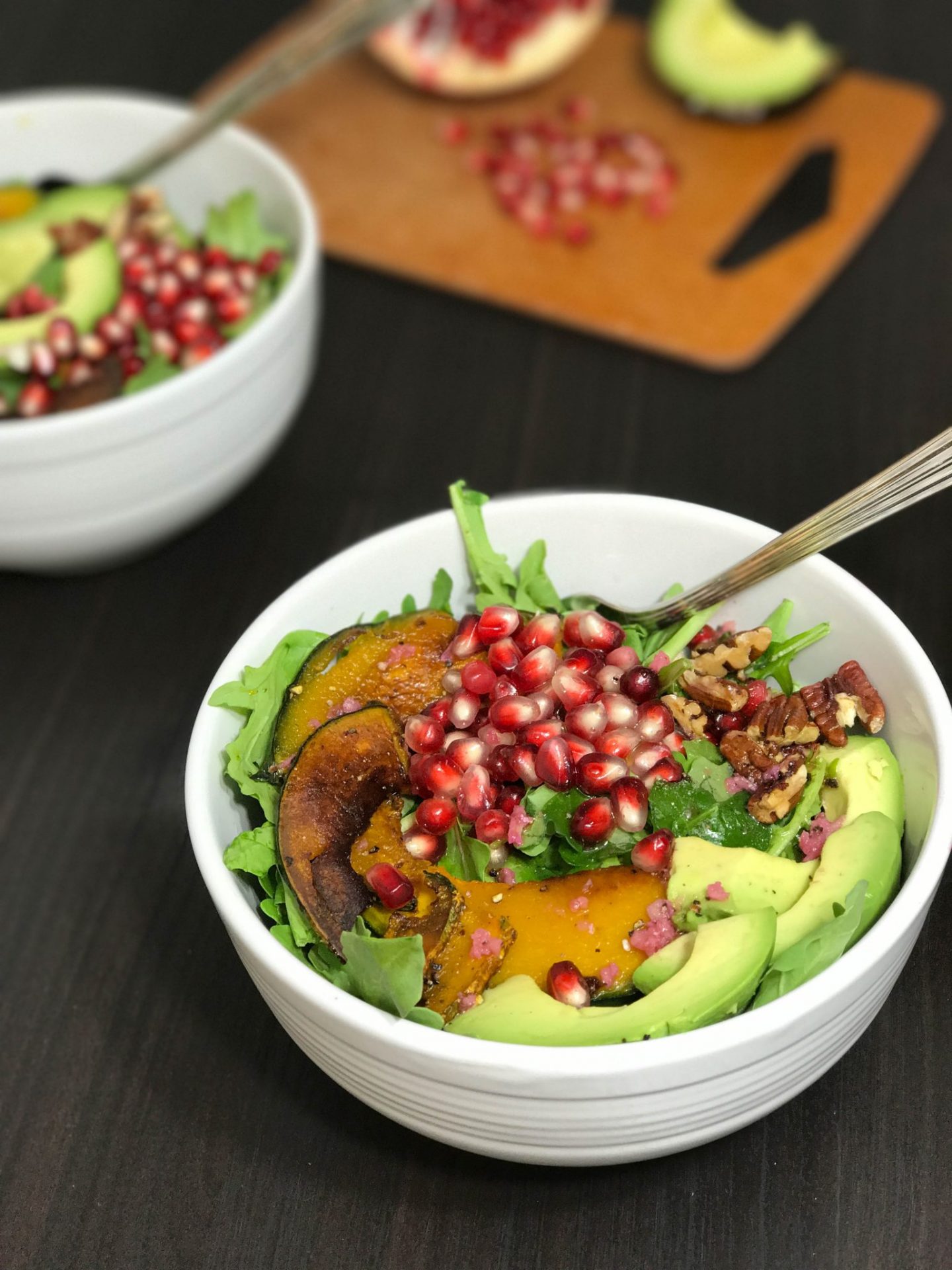
Delicious Arugula Salad: Roasted Kabocha, Pomegranate, and Avocado Delight
Arugula salad with Roasted Kabocha and Pomegranate ginger vinaigrette
- Prep Time: 20 minutes
- Cook Time: 15 minutes
- Total Time: 35 minutes
- Yield: 4 people 1x
- Category: side
- Cuisine: New American
Ingredients
- 2 tablespoons extra-virgin olive oil
- 1/2 one kabocha (sliced 1/4-1/2 inch thick rounds )
- 1/4 teaspoon salt
- 1/4 teaspoon fresh cracked pepper
- 1/4 cup whole pecans (chopped and toasted)
- 6 cups baby arugula (and more as needed)
- 1 whole avocado (sliced)
- 1 whole pomegranate (fruit separated from skin)
pomegranate ginger vinaigrette
- 1/3 cup extra-virgin olive oil
- 1/3 cup pomegranate juice
- 1/4 cup apple cider vinegar
- 1/2 teaspoon Ginger (grated )
- 1 clove garlic (crushed)
- 1/4 teaspoon salt
- 1/4 teaspoon fresh cracked pepper
Instructions
Dressing
- Combine pomegranate juice, vinegar, ginger, garlic, salt and pepper in a large bowl and whisk together. Stream in the olive oil while constantly whisking until the dressing comes together.
Salad
- Heat a large cast iron skillet on medium heat and add oil. Once hot, add kabocha slices and season lightly with salt and pepper.
- Cook for 3-4 minutes or until the bottom is golden/brown and then flip and cook the other side. Remove from heat once browned on both sides.
- Using another skillet or small pan, toast pecans until fragrant. Allow to cool and then chop
- Add the arugula to a large salad bowl. Add in the avocado, pomegranate, pecans and kabocha slices. Drizzle the pomegranate dressing and serve
The crisp autumn air, the vibrant hues of changing leaves, and the comforting aroma of seasonal produce – these are the moments that truly inspire my cooking. For years, I’ve found myself drawn to the unique flavors and textures that autumn brings, especially when infused with a touch of Japanese sensibility.
Back when I first started exploring healthier eating, before a big trip to Europe, I embarked on a culinary adventure, creating dishes that were both nourishing and incredibly delicious. This particular Arugula Salad with Roasted Kabocha, Pomegranate, and Avocado was a standout. It wasn’t just a salad; it was a revelation – a perfect harmony of sweet, savory, tangy, and creamy, all brought together with an invigorating ginger-garlic vinaigrette. It reminded me of the Japanese emphasis on seasonal ingredients and balanced flavors, even in a non-traditional format.
While not a dish you’d find in a classic Japanese cookbook, this salad embodies the spirit of *wafu* (Japanese style) cooking through its thoughtful selection of ingredients and the vibrant interplay of tastes. The star, of course, is the beloved kabocha squash, a staple in Japanese homes, transformed here into a sweet, caramelized delight. Paired with the peppery kick of arugula, the jewel-like burst of pomegranate, and the rich creaminess of avocado, it’s a modern take on healthy eating that truly satisfies the soul. Let’s dive into how you can create this autumn masterpiece in your own kitchen!
Why This Japanese-Inspired Arugula Salad is a Must-Try
This isn’t just another salad; it’s an experience. Every component is chosen for its ability to contribute to a symphony of flavors and textures, making it far more exciting than your average greens.
The Harmony of Flavors: Sweet, Savory, and Tangy
Imagine the earthy sweetness of perfectly roasted kabocha squash, caramelized to perfection. This sweetness is beautifully contrasted by the tart, juicy pop of pomegranate arils. Then, the creamy, almost buttery texture of avocado mellows everything, while the peppery bite of fresh arugula adds a refreshing edge. Finally, the bright, zesty ginger-garlic vinaigrette ties it all together with a pungent, savory finish. This balance of tastes is deeply rooted in the Japanese culinary philosophy of *umami* and *chōwa* (harmony).
A Celebration of Seasonal Ingredients
This salad truly shines in the autumn and winter months when kabocha squash and pomegranates are at their peak. Using seasonal ingredients not only ensures the best flavor and nutritional value but also connects us to the natural rhythms of the earth, a concept highly valued in Japanese cuisine.
Healthy, Vibrant, and Satisfying
Packed with vitamins, fiber, and healthy fats, this salad is a nutritional powerhouse. It’s naturally gluten-free and vegan, making it suitable for a wide range of dietary needs. Despite being light, the combination of roasted squash, creamy avocado, and crunchy nuts makes it incredibly satisfying, whether as a light main or a hearty side.
The Stars of Our Salad: Authentic Ingredient Selection
The quality of your ingredients makes all the difference. Here’s how to choose and prepare the best for this vibrant salad.
Kabocha Squash: Choosing the Best Japanese Pumpkin
Kabocha squash (カボチャ), often called Japanese pumpkin, is truly the star of this dish. Unlike many other squash varieties, kabocha boasts a dense, sweet flesh with a slightly nutty, chestnut-like flavor. It’s less watery than butternut squash and holds its shape beautifully when cooked. In Japan, kabocha is a beloved ingredient, frequently appearing in dishes like *kabocha no nimono* (simmered kabocha), *tempura*, and even soups. When selecting a kabocha, look for one that is heavy for its size, has a deep, dark green skin, and shows no soft spots or blemishes. A dull, matte finish is often a sign of ripeness.
Perfectly Roasted Kabocha: Tips for Sweetness and Texture
Roasting kabocha brings out its natural sweetness and creates a wonderfully tender texture with slightly caramelized edges. To prepare, carefully cut the kabocha in half, scoop out the seeds, and then slice it into ¼ to ½-inch thick rounds or wedges. Tossing it with a little olive oil, salt, and pepper is all it needs. Roast until fork-tender and lightly browned. The key is not to overcrowd the baking sheet, allowing the squash to roast rather than steam.
Creamy Avocado: Ripeness is Key
A perfectly ripe avocado adds a luxurious creaminess that balances the other textures and flavors. Choose an avocado that yields slightly to gentle pressure when squeezed. If it’s too hard, it’s not ripe enough; if it’s mushy, it’s overripe. To prevent browning after slicing, you can toss it lightly with a squeeze of lemon juice.
Jewel-Toned Pomegranate: Deseeding Made Easy
The vibrant, juicy arils of a pomegranate add a delightful burst of tartness and a beautiful pop of color. Deseeding a pomegranate can seem daunting, but here’s a simple trick: cut the pomegranate in half, hold one half cut-side down over a bowl, and gently tap the back with a wooden spoon. The arils will fall right out! You can also submerge the halves in water and gently separate the arils, which helps prevent splashing.
Peppery Arugula: The Fresh Base
Arugula, also known as rocket, provides a wonderfully peppery, slightly bitter base that cuts through the richness of the avocado and the sweetness of the kabocha. Look for fresh, crisp leaves with no wilting or yellowing. If you find the peppery taste too strong, you can mix it with milder greens like baby spinach or mixed greens.
Toasted Pecans (or Walnuts): Adding Crunch
Toasted nuts add a crucial textural contrast and a rich, earthy flavor. Pecans or walnuts are excellent choices. Toasting them briefly in a dry skillet or in the oven enhances their flavor and aroma significantly. Be sure to watch them closely, as they can burn quickly!
Crafting the Umami-Rich Ginger-Garlic Vinaigrette
A great salad is only as good as its dressing, and this ginger-garlic vinaigrette is truly exceptional. It’s bright, zesty, and perfectly complements the salad’s robust flavors.
The Secret to a Balanced Dressing
The combination of fresh ginger and garlic provides an aromatic depth that is a hallmark of many Japanese dishes. While this vinaigrette isn’t traditional Japanese, these foundational flavors resonate deeply. The tartness of pomegranate juice and apple cider vinegar is mellowed by a touch of sweetness (from maple syrup, if using) and emulsified with good quality olive oil. For an even more pronounced Japanese touch, a tiny splash of rice vinegar or even a hint of soy sauce can be added to deepen the *umami* without overpowering the other flavors.
Ingredient Ratios for Perfection
The key to a good vinaigrette is balancing the acid and oil. This recipe provides a ratio that ensures a well-rounded dressing – enough acidity to brighten the salad, but enough oil to carry the flavors and coat the ingredients beautifully. Whisking vigorously or shaking in a jar helps to emulsify the dressing, creating a smooth, cohesive texture.
Step-by-Step: Assembling Your Vibrant Salad
Putting this salad together is straightforward, but a few tips can ensure the best results.
Roasting the Kabocha
Preheat your oven and prepare the kabocha as described above. Roasting it first allows it to cool slightly before being added to the salad, preventing wilting of the greens.
Preparing the Other Components
While the kabocha roasts, prepare your pomegranate arils, slice your avocado, and toast your nuts. This efficient workflow ensures everything is ready at the same time.
Whisking the Vinaigrette
Combine all vinaigrette ingredients in a jar and shake well, or whisk in a bowl until emulsified. Taste and adjust seasonings as needed.
Gentle Tossing for Best Results
In a large bowl, combine the arugula, roasted kabocha, pomegranate, and toasted pecans. Add the avocado last to prevent it from getting overly mashed. Drizzle with the vinaigrette and toss gently to coat. You want to dress the salad just before serving to keep the arugula crisp.
Serving Suggestions and Japanese Pairings
This versatile salad can be enjoyed in many ways, fitting seamlessly into both Western and Japanese-inspired meals.
As a Light Main or Side Dish
This salad is substantial enough to be a light main course, especially for lunch. The combination of healthy fats, fiber, and complex carbohydrates makes it surprisingly filling. It also makes an excellent side dish for almost any meal, adding color, texture, and a burst of fresh flavor.
What to Serve with This Salad: Complementary Japanese Dishes
To lean into its Japanese-inspired roots, consider pairing this salad with:
- Grilled Fish: Dishes like *saba shioyaki* (salt-grilled mackerel) or *salmon teriyaki* would be fantastic alongside the fresh flavors of the salad.
- Chicken Teriyaki: The savory-sweet glaze of chicken teriyaki would find a refreshing counterpoint in this vibrant salad.
- Miso Soup: A warm bowl of miso soup would offer a comforting contrast.
- Onigiri: Simple rice balls (*onigiri*) would provide a neutral base, allowing the salad’s flavors to shine.
- Donburi Bowls: Serve it as a fresh side to various *donburi* (rice bowl) dishes.
Making it a Meal: Adding Protein
If you want to make this salad a heartier main course, consider adding extra protein:
- Grilled Tofu: Marinated and grilled tofu cubes would absorb flavors beautifully.
- Edamame: Shelled edamame adds a pop of green and plant-based protein.
- Shrimp or Chicken: Grilled shrimp or shredded chicken would also be delicious additions.
Variations and Customizations
Feel free to get creative and adapt this salad to your taste or what you have on hand.
Nut Alternatives
While pecans are wonderful, walnuts, almonds, or even toasted cashews would work well, each adding a slightly different flavor profile and crunch.
Green Swaps
If arugula isn’t your favorite, or you want a milder base, try baby spinach, mixed greens, or even a blend of different lettuces.
Dressing Enhancements
To further enhance the Japanese-inspired flavors, consider adding:
- A few drops of toasted sesame oil to the vinaigrette for a deeper, nutty aroma.
- A dash of soy sauce (or tamari for gluten-free) for an extra layer of *umami*.
- A squeeze of fresh yuzu juice (if available) for a bright, floral citrus note.
- A teaspoon of mirin (sweet rice wine) for subtle sweetness and depth.
Storage Tips for Freshness
To ensure your salad stays fresh and delicious, proper storage is key.
Keeping Components Separate
The best way to enjoy this salad is freshly assembled. If you’re making it ahead or have leftovers, store the components separately:
- Roasted Kabocha: Store in an airtight container in the refrigerator for up to 3-4 days.
- Pomegranate Arils: Keep in an airtight container in the fridge for up to a week.
- Toasted Nuts: Store at room temperature in an airtight container to maintain crunch.
- Arugula: Wash and dry thoroughly, then store in a bag or container lined with paper towels in the crisper drawer.
- Vinaigrette: Store in an airtight jar in the refrigerator for up to a week. Shake well before each use.
Maximizing Shelf Life
Only combine and dress the salad right before serving. This prevents the arugula from wilting and the avocado from browning, ensuring the best texture and appearance.
Frequently Asked Questions (FAQs)
Can I make this salad ahead of time?
You can prepare most of the components ahead of time. Roast the kabocha, deseed the pomegranate, toast the nuts, and make the vinaigrette. Store them separately in airtight containers in the refrigerator. Assemble and dress the salad just before serving for optimal freshness and texture.
What if I can’t find kabocha?
While kabocha squash is highly recommended for its unique flavor and texture, if you absolutely cannot find it, butternut squash or even acorn squash can be used as a substitute. However, be aware that their flavor and texture will be slightly different – kabocha is generally sweeter and less stringy. Look for a dense, firm squash for the best results.
Is this salad vegan/gluten-free?
Yes, this salad is naturally both vegan and gluten-free, making it an excellent choice for those with dietary restrictions. All ingredients are plant-based, and no gluten-containing ingredients are used in the recipe.


I am really curious about the Pomegranate. It’s on some skin care products that I have tried, but I haven’t really seen one before.
they are quite delicious, right now they are in season so pretty easy to find in California.. where are you located?
Ooooh, who cares how you found the recipe right, Pat? I mean it looks really good and your version came out just as gorgeous so however you found it, CONGRATS!!! Glad you were able to try some healthy options before your trip because it looks like it worked out in your favor!!!
Thank you Danielle, just want to make sure people get credit for their work. My dream is to come up with my own recipes, so maybe sometime soon i wont have to do it anymore!?
That looks delicious!! My poms are getting ripe on the tree! Can’t wait to make!!
Thank you Kelley!!??? let me know how it turns out!!
I will!
I will!!!
thank you!!
😉
Looks delicious! And gives me a new idea to use up those extra pomegranates I have on hand!
thank you for stopping by! it was a great way to use pomegranates!!
Healthy, delicious food is the best food. This looks so good!! I love all the textures and flavors you incorporated into one bowl!!
thank you Jess, it was very very very flavorful !!!
Looks amazing!
Thank you Grinia, it tastes amazing too!
I’m sure it does!
I love kabocha!! I’m so glad that I found a recipe with it. Delicious!
Thanks for stopping by, let me know how it turns out!
I had pomegranate for the first time yesterday and I’m so in love. Scrumptious salad!
Thank you!
Arugula is one of my favorites, and I love pomegranate. I’ve never heard of kabocha though and feel like a dork admitting that. LOL! This looks and sounds really good and would love to give it a try.
Thank you Kimberly!! Happy to have introduced it to you!!! It tastes very similar to butternut squash, if you get a chance let me know how you like it ?
That’s an interesting recipe – I love avocado best out of all the ingredients
Thanks zozie! It definitely adds depth to the dish!!
Thank you!
This is great timing because my mom just gave me some arugula from her garden. Your pomegranate ginger vinaigrette sounds soooo good, too. Thank you!
Thanks for stopping by, let me know how it turns out!