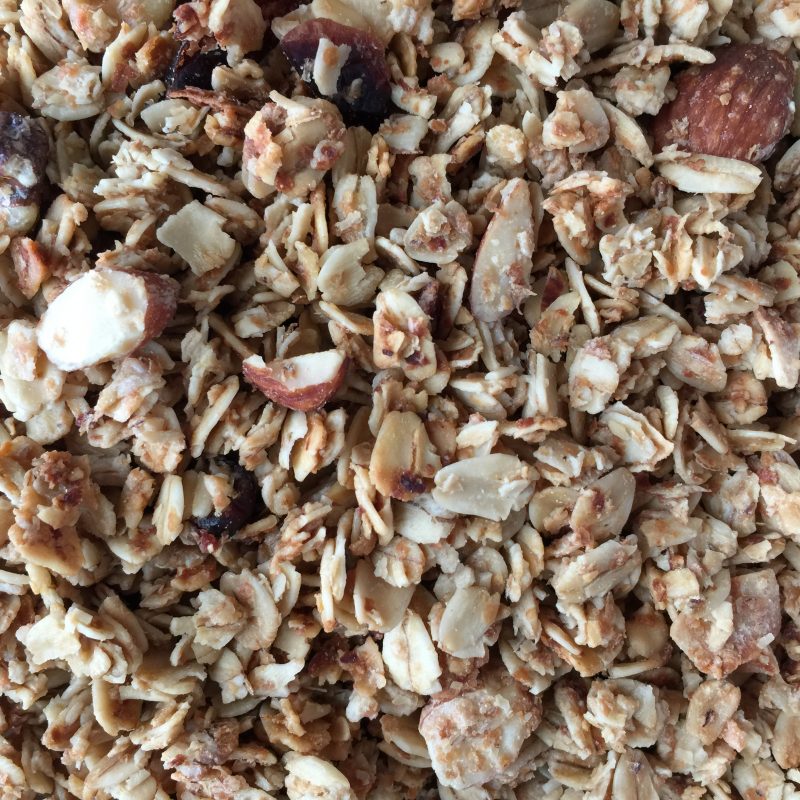
Easy Granola with Olive Oil and Maple Syrup (Cluster Method)
Homemade granola is one of those recipes where the gap between store-bought and homemade is staggering — not just in flavor, but in cost. A batch of premium organic granola at the store runs 50 cents an ounce. The same recipe made at home costs about 24 cents an ounce, and it tastes dramatically better because you control the quality of every single ingredient.
This recipe uses extra virgin olive oil and pure maple syrup — a combination that produces granola with a subtle earthy depth the neutral-oil versions can’t match. And if you follow the cluster technique below, you’ll get those massive, satisfying chunks that grocery store granola promises but rarely delivers.
A Brief History: From 19th-Century Health Spa to Woodstock
Granola was invented in 1863 by Dr. James Caleb Jackson at a health spa in New York under the name “Granula.” When John Harvey Kellogg developed a similar cereal, he was forced to rename it “Granola” to avoid a lawsuit. It remained a niche health food until the 1960s, when it became iconic with the hippie movement. At the 1969 Woodstock festival, volunteers reportedly fed around 130,000 people Dixie cups of granola — cementing its counterculture legacy. Mass commercialization followed in 1972 with brands like Nature Valley and Quaker 100% Natural Granola.
Today, granola is a $1.5 billion market, but the best version still starts with a bowl, some oats, and your own oven.
Why Olive Oil (And Why It Works So Well)
Olive oil in granola became a mainstream trend largely due to food writers like Melissa Clark, and for good reason. Compared to neutral oils like canola or vegetable oil:
- It adds a subtle earthy, slightly fruity depth that complements maple syrup’s caramel sweetness
- It’s a healthier fat — high in oleic acid (monounsaturated), low in inflammatory omega-6 fatty acids
- The flavor mellows significantly during baking, so you won’t end up with olive-oil-tasting granola
- The price difference is minimal when you’re using it in the amounts called for in granola (about 1/3 to 1/2 cup per batch)
Use a good-quality EVOO — not the cheap stuff. You don’t need a premium bottle, but you want something with actual flavor. Light/refined olive oil defeats the purpose.
The Science of Clusters (And How to Actually Get Them)
Certified culinary scientist Jessica Gavin explains the cluster chemistry: when granola bakes, the water in the maple syrup evaporates, leaving concentrated sugar solids. As the granola cools, these sugar solids harden and form the bonds that hold clusters together. The key insight is that this crystallization happens during cooling, not during baking.
This means two things:
- Don’t stir while it bakes. Stirring breaks the forming clusters. Press the mixture firmly into the pan and leave it completely undisturbed until it’s done.
- Don’t break it apart until it’s fully cool. The granola will feel soft when you pull it from the oven — this is normal. Leave it on the pan at room temperature for at least 30 minutes before breaking into clusters.
For massive clusters: add one egg white to the wet ingredients before mixing. The protein in the egg white acts as a powerful binder, gluing oats together into substantial chunks.
Choosing Your Oats
Only old-fashioned rolled oats work here. Quick-cooking or instant oats absorb moisture too rapidly, turning mushy and failing to crisp. Old-fashioned rolled oats are cut thicker and maintain their structure through the baking process. For gluten-free granola, use certified GF oats — they’re naturally gluten-free but are often processed in facilities that handle wheat.
The Golden Ratio
For a reliable base that you can customize infinitely:
- 5 cups old-fashioned rolled oats
- 1/2 cup extra virgin olive oil
- 1/2 cup pure maple syrup
- 1 teaspoon fine sea salt
This 1:1 oil-to-sweetener ratio is the professional baseline. Adjust the sweetener up or down based on preference, and consider adding extra salt — it’s the difference between granola that’s good and granola that’s addictive.
Add-In Variations
Add these to the dry oat base before baking:
- Nuts: Chopped almonds, pecans, walnuts, cashews, or macadamia nuts — all excellent. Add with the oats.
- Seeds: Pumpkin seeds, sunflower seeds, sesame seeds, chia seeds, flax seeds
- Spices: Cinnamon (1-2 tsp), cardamom, ginger, nutmeg — any warm spice works beautifully
- Vanilla: 1 teaspoon pure vanilla extract stirred into the wet ingredients
- Coconut: Unsweetened coconut flakes or chips can be mixed in with the raw oats and baked the full time. Fine shredded coconut burns faster — if using that style, add in the last 10 minutes
Add these after baking (once fully cooled):
- Dried fruit: Raisins, dried cranberries, apricots, cherries, mango — anything. Adding before baking dries them out completely.
- Chocolate chips: Dark chocolate chips melt at baking temperatures; add after cooling
- Freeze-dried fruit: Strawberries, raspberries, blueberries — these hold up better and add a bright, intense flavor
Flavor Combinations Worth Trying
- Classic: Almonds + raisins + cinnamon + maple
- Tropical: Macadamia + coconut + dried mango + a pinch of cardamom
- Chocolate Cherry: Dark chocolate chips + dried cherries + a tablespoon of Dutch cocoa in the wet mix
- Pumpkin Spice: Pepitas + cinnamon + ginger + nutmeg + cloves
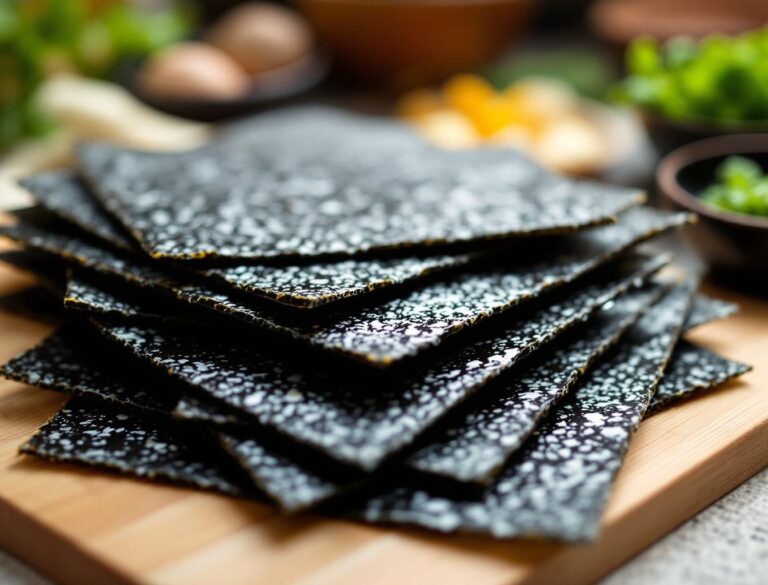
- Japanese-Inspired: Black sesame seeds + toasted white sesame + dried persimmon + ginger + a drizzle of black sesame paste in the wet mix
Cost Breakdown: Why Homemade Wins
| Product | Cost per Ounce |
|---|---|
| Premium organic store-bought granola | ~$0.50/oz |
| Kellogg’s Lowfat Granola | ~$0.37/oz |
| Homemade olive oil maple granola | ~$0.24/oz |
Switching to homemade granola can save over $200 per year for families that eat it regularly — with better ingredients and no unnecessary additives.
Storage and Shelf Life
Store in an airtight jar or container at room temperature for up to 3 weeks. The olive oil keeps it from going stale quickly. For longer storage, freeze in a zip-top bag for up to 3 months — it thaws quickly and stays crispy. Avoid refrigerating; the moisture can soften the clusters over time.
Serving Ideas
- Over Greek yogurt with fresh berries and a drizzle of honey
- With cold oat milk as a cereal (a standard 2 oz serving with 1/2 cup oat milk and a banana = about 400 calories)
- As a parfait: layered with yogurt and seasonal fruit in a glass
- As a topping for smoothie bowls
- Straight from the jar as a snack (the best use, honestly)
Frequently Asked Questions
Why is my granola not clustering?
Three likely causes: (1) you stirred it during baking — don’t; (2) you broke it apart while it was still warm — wait for full cooling; (3) not enough sweetener. Try adding 2 more tablespoons of maple syrup next time, or add an egg white to the wet ingredients.
Can I use honey instead of maple syrup?
Yes. Honey produces a slightly different flavor (floral, slightly richer) and tends to brown faster. Watch closely during the last 10 minutes to prevent burning. For a vegan version, maple syrup is the better choice.
What temperature should I bake granola at?
300-325°F (150-160°C). Lower and slower is better — it allows the sugars to caramelize without burning. At higher temperatures, the outside browns before the inside dries out, resulting in granola that’s burnt on top and chewy underneath.