Iridoufu Recipe: Japanese Scrambled Tofu (Healthy Side Dish)
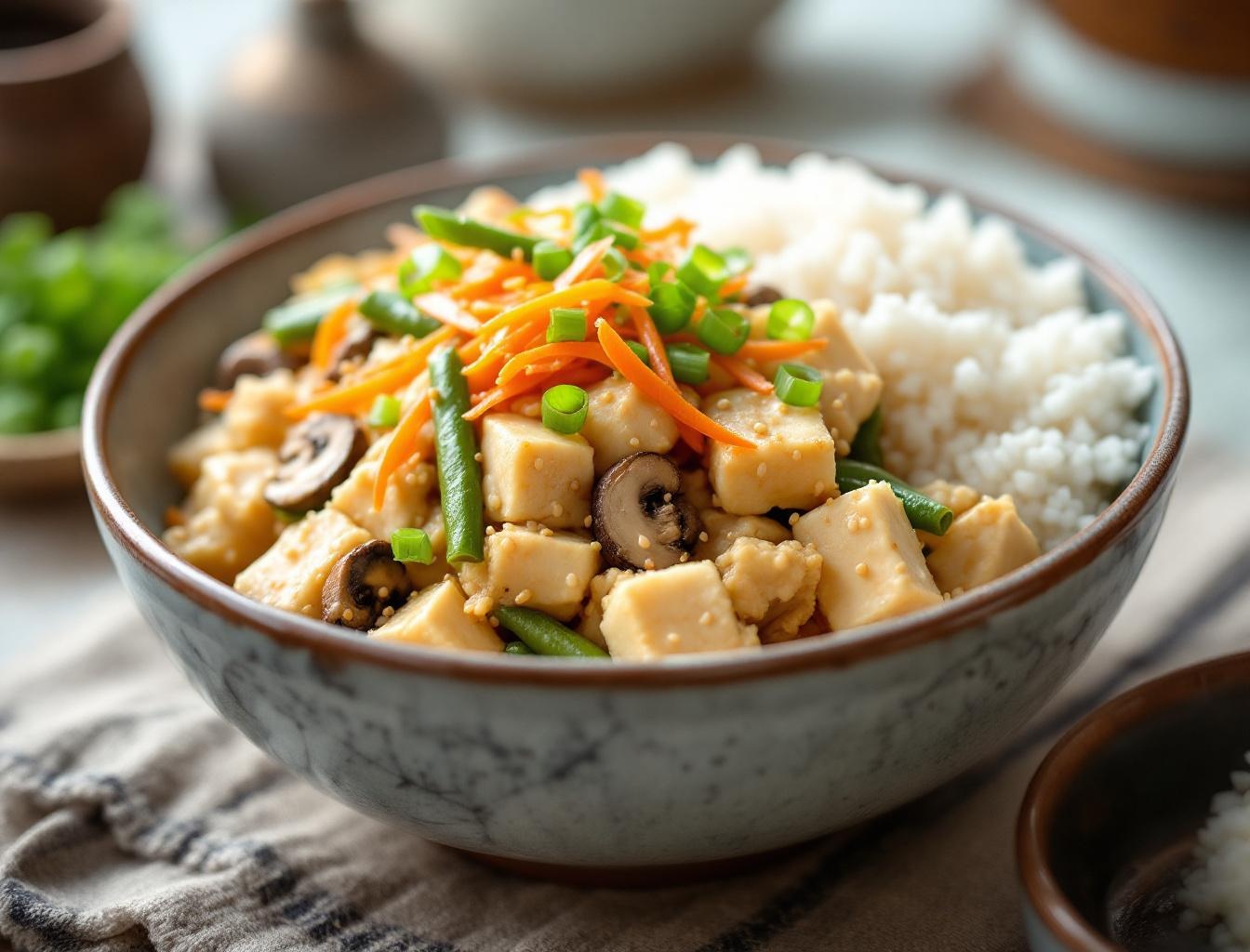
Iridoufu (煎り豆腐) is Japanese scrambled tofu — crumbled and stir-cooked with seasonal vegetables in a light dashi broth. It’s one of those quietly essential dishes in Japanese home cooking that most people outside Japan have never heard of, but once you make it, it earns a permanent spot in your rotation.
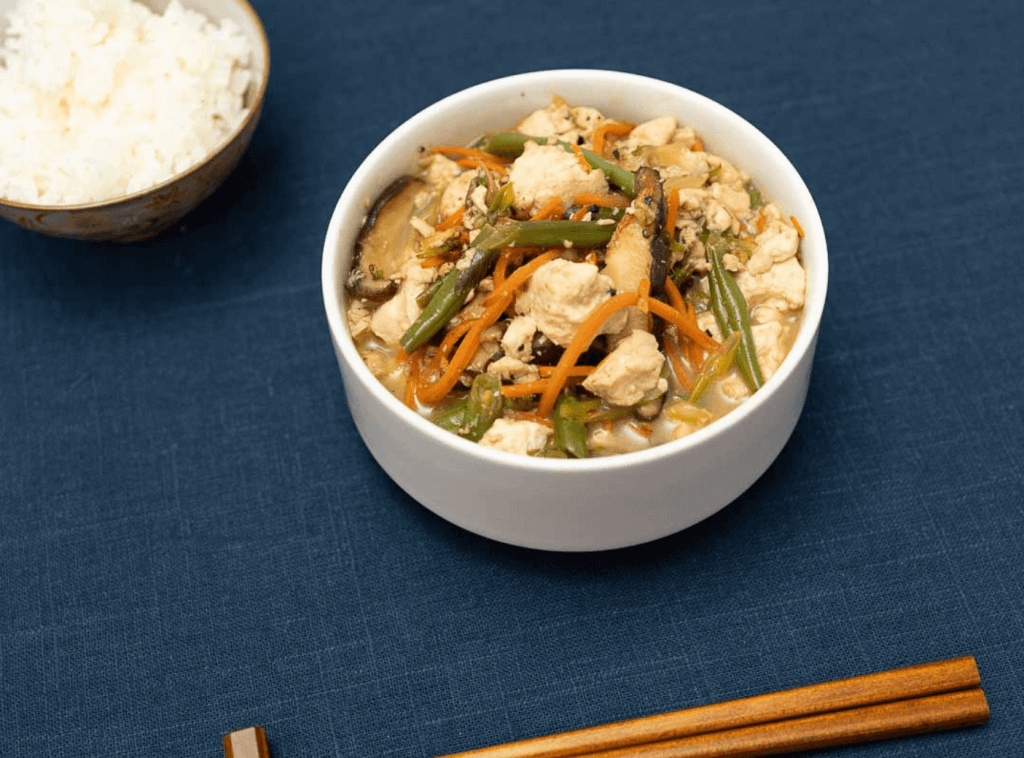
We kept this version meat-free (vegan) by using vegetable dashi. If you can’t find vegetable dashi, a quarter to half teaspoon of Better Than Bouillon vegetable stock dissolved in a little water works well — or go with konbu dashi, which is my personal favorite for this dish.
Konbu dashi is made from dried kelp and contributes a clean, mineral umami that complements tofu beautifully without overwhelming the delicate flavors. Once you try iridoufu made with good konbu dashi, it’s hard to go back.
[embedyt] https://www.youtube.com/watch?v=8Dzt_tRH0S4[/embedyt]What Is Iridoufu?
The name breaks down simply: iri (煎り) means dry-cooked or pan-roasted, and doufu (豆腐) is tofu. So iridoufu is literally “dry-cooked tofu” — tofu crumbled into a pan and cooked until most of its moisture evaporates, leaving behind something closer in texture to soft scrambled eggs than the slippery silken block you started with.
It’s a classic of washoku (traditional Japanese home cooking) and a dish that shows up frequently in teishoku sets — those satisfying Japanese set meals with a main dish, miso soup, pickles, and rice. In Japan, iridoufu is considered everyday food, something a home cook would throw together quickly on a weeknight using whatever vegetables are in the fridge.
Think of it as Japan’s answer to scrambled eggs — versatile, forgiving, and deeply satisfying when seasoned well.
Choosing the Right Tofu
Tofu choice matters more than people expect here. You want soft tofu (sometimes called “silken firm”), not extra-firm. The goal is a crumbly, slightly custardy texture — extra-firm tofu stays too dense and won’t absorb the dashi flavors the same way.
The microwaving step in this recipe is intentional: two minutes in the microwave expels a significant amount of water from the tofu before it hits the pan, which means less steaming and more actual browning. You can also press the tofu by wrapping it in a clean kitchen towel and setting a heavy pan on top for 10-15 minutes — either method works.
One note on Japanese tofu: if you can find tofu at a Japanese grocery store, it tends to have better flavor than the generic supermarket blocks. The protein concentration is often higher, and the soy flavor is more pronounced. Worth seeking out if you’re near an Asian market.
Ingredient Guide: What Each Component Does
Every ingredient in this dish earns its place:
- Soft tofu — The star. Crumbles into egg-like curds, absorbs the dashi seasoning, provides protein and substance.
- Green beans — Add a firm, slightly grassy bite that contrasts the soft tofu. Trim them well and cut into 1-inch pieces for even cooking.
- Shredded carrots — Bring natural sweetness, color, and a gentle crunch. Shredding (rather than dicing) helps them cook quickly and distribute throughout the dish.
- Shiitake mushrooms — The umami backbone alongside dashi. Fresh shiitake is preferable here; dried shiitake soaked in water will also work but intensify the mushroom flavor significantly.
- Green onions — Added at the end for freshness and a mild allium note that lifts the whole dish.
- Sesame oil — A finishing fat that adds nuttiness and that distinctly Japanese aroma. Don’t skip it or substitute it — it’s what makes this taste like Japanese cooking and not just a tofu stir-fry.
- Konbu dashi — The liquid base. Provides savory depth without any fishiness, making this dish genuinely vegan while still tasting complex.
- Light soy sauce — Use light (usukuchi) soy sauce if you can find it — it seasons without turning the tofu brown. Regular soy sauce works but will darken the dish.
- Mirin — Adds a gentle sweetness and gloss to the finished dish. It also rounds out the saltiness of the soy sauce.
Expert Tips for Perfect Iridoufu
- Don’t rush the moisture out of the tofu. The more moisture you remove before and during cooking, the better the texture. The dish is done when there’s very little liquid left in the pan — the tofu should look slightly dry, not wet and steaming.
- Cook vegetables in sequence. Harder vegetables (carrots) go in first, softer ones (green onions) go in last. This is basic Japanese cooking discipline and it matters for texture.
- Use medium-high heat. You want some evaporation happening, not gentle simmering. The tofu should sizzle when it goes in.
- Season at the end, not the beginning. Adding dashi and soy sauce before the tofu has released most of its water just creates soup. Let the tofu cook down first, then add the seasoning liquid and reduce it.
- Add eggs if you want. This is a perfectly acceptable variation — crack in 1-2 eggs right at the end and stir quickly to combine. The egg version is called iridoufu tamago-iri and is just as traditional.
Serving Suggestions
Iridoufu is a side dish (okazu) in Japanese meal structure, designed to be eaten with steamed rice. Here’s how to build a proper meal around it — and some less traditional but equally good applications:
- Classic washoku plate: Steamed rice, miso soup, iridoufu, and a small dish of pickled vegetables (tsukemono). This is the complete, satisfying Japanese home meal.
- Bento box filling: Iridoufu travels well and holds its shape. Pack it in a bento alongside tamagoyaki and onigiri for a balanced, protein-rich lunch.
- Donburi topping: Spoon it over a bowl of rice and finish with a drizzle of extra sesame oil. Simple, filling, and far better than it sounds.
- Breakfast scramble: Serve it Western-style, on toast or alongside roasted sweet potato. The textures and flavors work surprisingly well outside the Japanese context.
- Stuffed into onigiri: Iridoufu makes an excellent onigiri filling — just make sure it’s well-dried so it doesn’t make the rice soggy.
- Over soba noodles: Cold soba noodles topped with warm iridoufu and a splash of tsuyu is an underrated combination.
Variations to Try
With regular dashi: If you’re not keeping it vegan, use ichiban dashi (kombu + katsuobushi) for a more complex, classic Japanese flavor. The recipe note at the bottom of the card covers this.
With egg: As mentioned above, one or two beaten eggs stirred in at the very end transforms this into a heartier dish. Add them right before you’re about to take the pan off heat.
Seasonal vegetable swaps: Snow peas, edamame, lotus root, burdock (gobo), or corn all work well. In autumn, try adding diced kabocha squash — cook it with the carrots since it takes longer.
Spicier version: Add a pinch of shichimi togarashi at the end. It adds heat without changing the flavor profile drastically.
Storage and Meal Prep
Iridoufu keeps well refrigerated for up to 3 days. The texture actually improves slightly after a day in the fridge as the flavors meld. Reheat gently in a pan with a tiny splash of water, or microwave covered for 60-90 seconds.
It doesn’t freeze particularly well — the tofu texture becomes grainy after thawing. Make what you’ll eat within a few days.
PrintIridoufu 煎り豆腐
- Yield: 2 people 1x
Ingredients
- 1 block soft tofu
- 1 cup green beans (trimmed)
- 1 cup carrots (shredded)
- 1 cup green onions (chopped)
- 2–3 shiitake mushrooms (sliced)
- 1 tbsp sesame oil
- 1 tbsp extra-virgin olive oil
- 1 cup konbu dashi
- 2 tbsp light soy sauce
- 2 tbsp mirin
- white pepper and black pepper to taste (to taste)
Instructions
- Microwave the tofu for 2 minutes. Meanwhile, prepare and chop vegetables.
- Add extra-virgin olive oil and sesame oil to pan and cook carrots for 1-2 minutes.
- Add in the green beans, green onions, and mushrooms and cook for 2-3 minutes.
- Add in the dashi stock, mirin, and soy sauce. Add a dash of white and black pepper if desired.
- Reduce liquid to desired consistency or until heated through.
- Serve with rice.
Notes
Try making this with regular dashi for an equally tasty iridoufu!
Frequently Asked Questions
What does iridoufu taste like?
Mildly savory and slightly sweet, with an earthy mushroom note and a clean, subtle umami from the dashi. The sesame oil gives it that distinctive Japanese depth. It’s gentle, not bold — which is why it works so well as a side dish alongside rice and stronger-flavored mains.
Can I use firm tofu instead of soft?
You can, but the texture won’t be the same. Firm tofu stays in larger chunks and doesn’t crumble the same way, so you lose that egg-like quality. If firm is all you have, crumble it aggressively before cooking and extend the cooking time to help it dry out more.
What if I can’t find konbu dashi?
A quarter to half teaspoon of Better Than Bouillon vegetable base dissolved in one cup of hot water is a solid substitute. You can also use regular vegetable broth, though the flavor will be different — vegetable broth tends to be sweeter and less clean-tasting than dashi. Making quick konbu dashi yourself is also very easy: just soak a small piece of dried kombu in cold water for 30 minutes and remove it before using.
Is iridoufu vegan?
This version is, yes. We use konbu dashi (kombu seaweed + water) instead of standard dashi, which contains bonito fish flakes. Just make sure your soy sauce and mirin don’t contain any fish-based additives — most don’t, but it’s worth checking.
Can I make iridoufu ahead of time?
Yes. It’s actually a good meal prep dish. Make a batch, refrigerate it, and use it throughout the week in bento boxes, over rice, or as a quick protein addition to salads. Just don’t freeze it.
What’s the difference between iridoufu and mapo tofu?
They’re quite different despite both being tofu dishes. Mapo tofu is Chinese, boldly spiced (Sichuan peppercorn, doubanjiang), and served in a sauce. Iridoufu is Japanese, delicately seasoned with dashi and soy sauce, and is cooked dry. Same main ingredient, completely different philosophy.