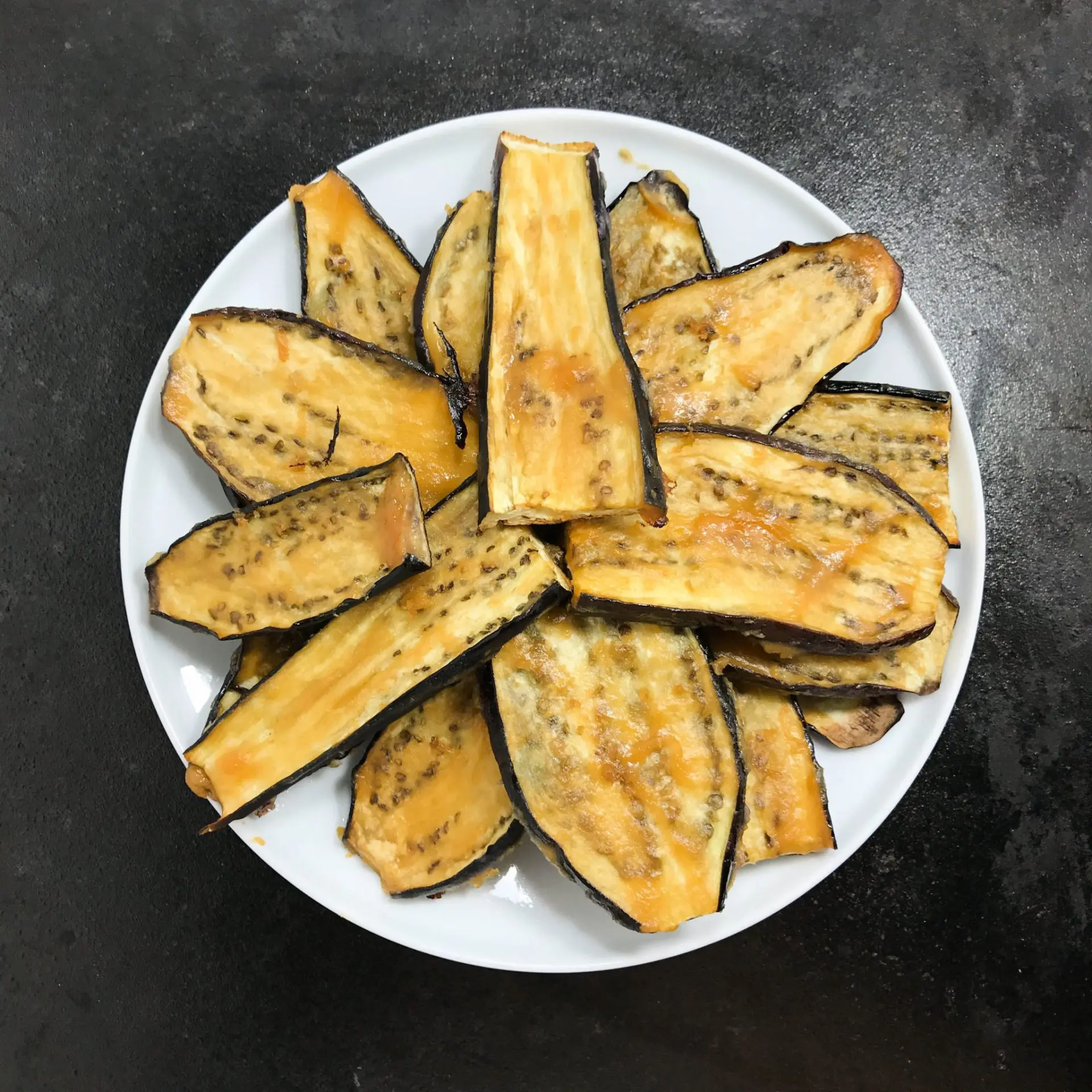
Japanese Eggplant Dengaku: Miso Glaze Delight
Serves
4 people
Ingredients
- 2 Japanese eggplants
- 3 tbsp olive oil
- 2 tbsp red curry paste
- 3 tbsp mirin
- 3 tbsp white miso paste
- 1 tbsp sake
- 1 tsp sesame oil (optional)
Instructions
- Preheat oven to 400°F (200°C)
- Prepare eggplants: Wash, slice lengthwise, and remove stem
- Prepare miso glaze: Whisk mirin, miso, sake, curry paste, and sesame oil
- Brush olive oil on eggplants and halve them
- Place cut side up in baking dish
- Spread miso glaze evenly on top of each eggplant
- Bake for 25-30 minutes until eggplant is tender
- Broil for 2-3 minutes to caramelize the glaze
- Let cool 5 minutes before serving
Notes
For extra thickness, you can add a splash of water to the glaze before baking. This dish pairs perfectly with steamed rice and makes a complete, satisfying meal.
What is Dengaku?
Dengaku is a classic Japanese cooking technique that pairs vegetables (or tofu) with a sweet and savory miso-based glaze. The term originally referred to grilled dishes, but today “dengaku” typically means the rich, caramelized topping that transforms simple ingredients into something extraordinary.
You’ll often find dengaku made with tofu in Kyoto, where it originated as a regional specialty. The combination of creamy tofu or vegetables with deeply flavorful miso glaze creates what’s called umami—that fifth taste dimension that makes food deeply satisfying.
About This Japanese Eggplant Recipe
This dish showcases Japanese eggplant at its best. Unlike Italian eggplant, Japanese eggplant has thinner skin, fewer seeds, and a sweeter, more delicate flesh that absorbs the miso glaze beautifully without becoming mushy.
The glaze strikes a perfect balance: the sweetness from mirin, the salinity from miso, and a subtle umami depth that elevates the vegetable to something special.
What You’ll Need
You only need about a tablespoon of olive oil for four eggplants, making this recipe surprisingly light and good for you. The miso glaze is naturally gluten-free and provides a complex flavor profile that’s both sweet and savory.
Serving Suggestions
This Japanese Eggplant Dengaku pairs wonderfully with a simple steamed rice or onigiri for a complete meal. It also makes an excellent side dish for grilled proteins or can be enjoyed on its own with a drizzle of sesame oil on top.
Storage and Prep
Prep takes about 10 minutes, and the cooking time is very quick—you’ll have it on the table in under an hour. The glaze comes together while the eggplant bakes the first time, so there’s no need to keep everything warm.
Pro Tips
The second time I made this, I cut the eggplant lengthwise instead of rounds, which makes it much easier to work with. For the best results, use Japanese eggplant if you can find it, or Italian eggplant as a good alternative that still works wonderfully with the miso glaze.
FAQ
Can I use regular miso paste? Yes, but make sure it’s awase (mixed) miso rather than the dark, very salty hatcho miso if you prefer a milder flavor.
Can I skip the sesame oil for brush? It adds a nice depth to the eggplant flesh, but it’s optional if you want to keep it simple.
How do I store leftovers? Store in an airtight container and refrigerate for up to 3 days. Reheat gently in the oven or microwave before serving.
Bonus Tips
For extra richness, you can add a small amount of sake to the glaze mixture before baking. The eggplant can also be prepared a day ahead and reheated just before serving, allowing the flavors to meld even more.
I made a movie of me putting this Nasu Dengaku together which you can watch for the complete process!