Plant Based Burger Bliss: Savor the Perfect Veggie Patty
Want to enjoy a nutritious and flavorful Japanese hambagu steak? Today, what we’re going to be making is hambagu. Hambagu is a Japanese-style hamburger and this one is made with all plant-based ingredients. Which in my opinion makes it extra-delicious!
Key Takeaways
- Okara is the nutrient-rich byproduct of soy milk production, offering protein and fiber that makes it a valuable plant-based cooking ingredient.
- This plant-based hambagu combines tofu, okara, and brown rice for a tender, moist texture that holds together well during cooking.
- Umami depth comes from shiitake mushrooms, shiitake dashi, and miso paste—creating a satisfying flavor comparable to traditional meat-based versions.
- Removing excess moisture from the okara before mixing and achieving a well-browned crust are the two most important steps for great texture and flavor.
- Hambagu is a yoshoku (Western-influenced Japanese) dish served as a main course with rice, vegetables, and sauce—not in a bun like a Western burger.
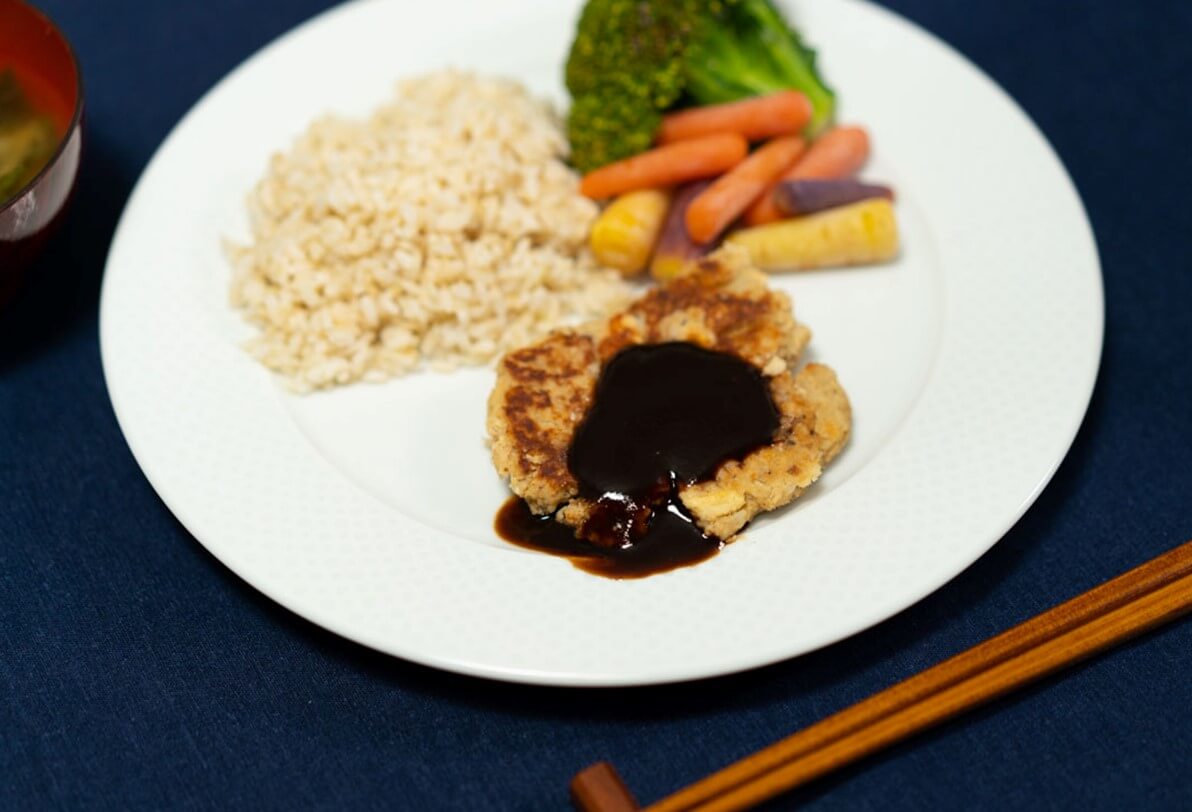
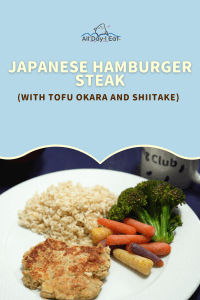
The visual below illustrates the golden-brown crust and tender interior of the finished tofu okara hambagu patty.

What is okara?
Okara is the leftover from soy milk production—a byproduct made from the solids left after soybeans are pressed and strained to create soy milk. If you happen to make soy milk at home, it’s one of the easiest ways to reuse your leftovers from soy milk production. For more, see our guide on okara cookies and our guide on more okara recipe ideas.
It’s got a lot of nutrients in it, including protein and a lot of fiber—making it particularly valuable for plant-based cooking that aims for nutritional density.
This is what this stuff looks like if you’ve never seen it before: it’s kind of like mushy soybeans with a little bit of moisture still remaining in the texture. That’s actually one of the things we’re going to be getting rid of.
We’re going to lightly cook it on the stove to evaporate some of that residual moisture, then process all of these ingredients together in a food processor (best for: combining wet and dry ingredients uniformly), form them into little patties, and then lightly pan-fry them with a little bit of sesame oil.

Why okara is a versatile ingredient
Because okara has a mild flavor—most was extracted during the soy milk production process—okara is one of the most versatile ingredients you can use in Japanese cooking and beyond. It absorbs flavors readily while providing structure and nutrition to dishes.
Okara makes a great replacement for potatoes—for example, as a filling for gyoza or korokke as well as hambagu (Japanese-style hamburger). Even better, if you love your baked goods like bread, cake, and cookies, okara is the perfect way to make each of those things more nutritious and fiber-rich than they could ever be without it.
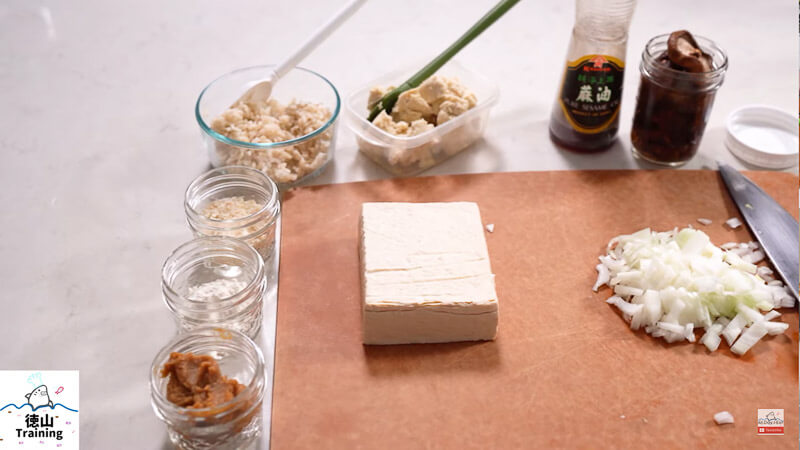
As shown in the following ingredients flat lay, each component of this plant-based hambagu—from white firm tofu and dried shiitake mushrooms to cooked brown rice and pale okara—comes together to build deep umami flavor.
What is tofu okara hamburger steak (hambagu)?
Hambagu is a Japanese-style hamburger patty served as a main dish, typically made plant-based in this recipe using tofu, okara, and mushrooms rather than meat. This is a yoshoku (western cuisine adopted and adapted into Japanese cooking) dish that represents the Japanese interpretation of the western hamburger, but this plant-based version is equally delicious without the meat.
Have you ever had hambagu before? If you have, you know it differs from an American-style hamburger or French-style hamburger in its preparation, sauce, and accompaniments. If you haven’t, chances are you’ve encountered a traditional meat-based version, but you might not even miss the ‘real’ thing after trying this plant-based rendition.
What makes these tofu okara hamburger steaks so special?
In this okara hamburger recipe, we mix a little bit of brown rice and tofu for some extra soft and moist texture that prevents the patties from being dry or crumbly. This combination creates a tender interior while maintaining structural integrity during cooking.
The shiitake mushrooms and their shiitake dashi (best for: deepening umami flavor) help to elevate all of the flavors together thanks to the power of umami—a savory, satisfying taste that makes the patties feel substantial.
Plus, there are secret ingredients: miso (best for: fermented depth and complexity) and cumin. Miso paste and cumin both help to add a complex and rich flavor that pairs well with the other ingredients and especially the sauce. Once you try miso paste and cumin powder in this recipe, you might even add it to your regular hamburgers too, if you still cook those!
What’s the best way to enjoy the tofu hamburger steak?
Serve your hambagu with a complementary sauce and simple sides for a balanced, satisfying meal. As far as Japanese hamburger steak sauces go, there are many options—off the shelf, some of my favorites include tonkatsu sauce (best for: fruity, tangy-sweet coating), chuno sauce (best for: lighter umami notes), Worcestershire sauce (best for: tangy, complex depth), or ketchup (best for: sweet, tomato-based simplicity). You could also try barbecue sauce if you want something more American in character.
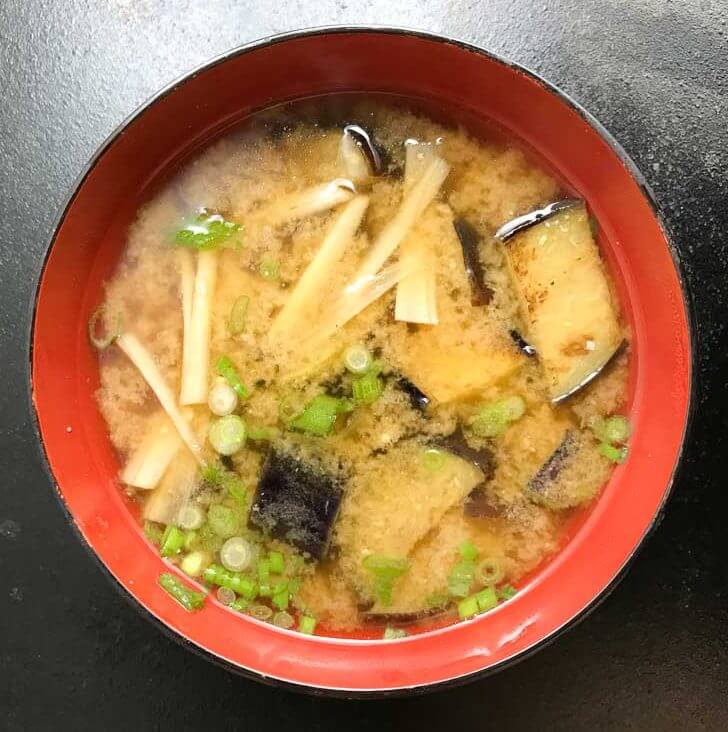
All you need to make this a complete meal is a bowl of miso soup, some steamed veggies and maybe a side of rice or roasted potatoes. Oishii soona!
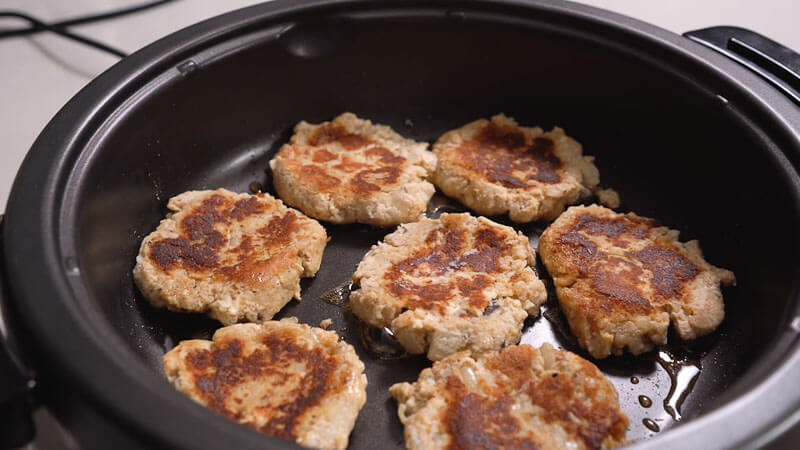
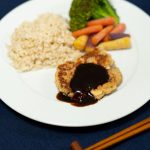
The patty pictured here demonstrates the even browning achieved by pan-frying in sesame oil over medium heat.

How Do I Make This a Complete Meal?
Whenever I make this, I usually just serve it with a little bit of rice and some steamed veggies, along with misoshiru or miso soup for a complete plant-based Japanese meal.
Don’t be fooled—this is a very filling meal because we use tofu, okara, and brown rice, all of which are nutritionally dense and filling foods.
japanese hamburger steak with tofu okara and shiitake with sauce video
Printjapanese hamburger steak with tofu okara and shiitake (plant based recipe)
- Prep Time: 15
- Cook Time: 20
- Total Time: 35 minutes
- Yield: 8 1x
- Cuisine: Japanese
Ingredients
For the tofu okara hamburger patties
- 1 ½ cups okara
- 1 cup onion, chopped
- 14 oz block firm tofu, drained
- 1 cup cooked brown rice
- ¼ cup panko
- 3 Tbsp all purpose flour
- 2 Tbsp red miso paste (best for: balanced umami)
- 4 rehydrated shiitake mushrooms, can reuse dashigara (leftover from making shiitake dashi (best for: umami stocks))
- ¼ – ½ tsp cumin powder
- dash of salt and black pepper
- dash of cayenne pepper
- 2–3 Tbsp sesame or extra-virgin olive oil (best for: pan-frying)
Instructions
- First using a medium sauté pan, add okara with a little oil and cook on medium low heat to remove excess moisture. After a minute or so, add in onions and cook together on low heat for 7-10 minutes until onions have just started to yellow, stir frequently so okara doesn’t burn.
- Meanwhile, combine tofu, rice, panko, flour, miso, mushrooms in a food processor. Process until uniform in texture and transfer to a large mixing bowl.
- Once the onion okara mixture is ready add to tofu mixture and mix thoroughly.
- If still hot allow to rest 10-20 minutes until cool enough to handle.
- Shape into the patties about ½ in. thick and 3-4 in. in diameter. Set aside.
- Heat 2-3 Tbsp extra-virgin olive oil on a large pan using medium heat. Once heated, add patties and cook until slightly browned and flip.
- Once flipped, repeat for the remaining patties.
- Once cooked, place on serving plate, top with sauce.
- Serve with steamed vegetables, potatoes and/or rice.
For the sauce
- Mix together all ingredients in a saucepan and heat on medium heat. Stir continuously and cook for 5-7 minutes.
- Once the alcohol smell is gone, remove from heat and set aside.
Notes
- If you’d like to take your hambagu or any hamburger to the next level, always ensure you’ve got a nice browned crust! It makes a difference!
- You can use many different sauces for this, for example, just ketchup, tonkatsu sauce, chuno sauce, or even soy sauce or ankake!
🤔 question of the day
Have you used okara in your Japanese dishes yet? If so, what did you make? If not, do you think you’ll try this okara recipe? Let me know in the comments!
PS: If you like this recipe and want more tofu or soy-based recipes, check out Tofu Ryouri Online and the Soy Workshop!
Frequently Asked Questions
What exactly is okara and where do I find it?
Okara is the solid pulp left over after soybeans are pressed and strained to produce soy milk. It has a soft, slightly granular texture and a very mild flavor. You can find fresh okara at Japanese grocery stores, tofu shops, or Asian supermarkets—or make it at home as a byproduct of homemade soy milk. It is high in protein and fiber, making it a smart addition to plant-based cooking.
What is the difference between hambagu and a regular hamburger?
Hambagu (ハンバーグ) is a Japanese yoshoku dish—Western cuisine adapted into the Japanese kitchen. Unlike a Western burger, it is served without a bun, plated as a main course alongside rice, steamed vegetables, and a savory sauce. The emphasis is on umami-forward flavors from ingredients like miso, mushrooms, and dashi, giving it a distinctly Japanese character.
Can I make this recipe if I don’t have okara?
Okara is central to this recipe’s texture and structure, but in a pinch you could substitute with finely ground walnuts, additional crumbled firm tofu, or a mix of cooked lentils and panko. Keep in mind the flavor profile and fiber content will differ from the original version.
How do I store and reheat leftover tofu okara hamburger patties?
Store cooked patties in an airtight container in the refrigerator for up to 3–4 days, or freeze them individually for up to 3 months. To reheat, warm them in a skillet over medium heat with a small amount of oil until heated through, or in an oven at 350°F (175°C). Reheating in a skillet helps restore the browned crust.
Why is browning the crust of the patty so important?
A well-browned crust develops through the Maillard reaction, which creates deeper, more complex flavors in the outer layer of the patty. For a plant-based hambagu, this crust also provides better structure, preventing the patty from becoming too soft or falling apart when you cut into it or top it with sauce.
Thanks for sharing your recipe! Sounds delicious, I will try to make this dish.
I use Okara to make “Mock” Crabcakes.
P.S. Congratulations on being a new Dad!!
thank you Karen!
is it as simple as subbing the crab or do you make other changes?