Simple Japanese Style Macaroni Salad with Ham: Flavorful Delight!
Today, what we will be making is a simple and quick Japanese-style pasta salad using macaroni pasta.
Last updated: April 2026
KEY TAKEAWAYS
- Features ham instead of traditional hard-boiled eggs for a unique twist on classic Japanese pasta salad
- Quick to prepare with simple ingredients and perfect for summer barbecues or packed lunches
- The salad develops richer, more complex flavors when refrigerated overnight as the sauce fully penetrates the vegetables
- Customizable mayo-based sauce can be adjusted by adding milk or olive oil to reduce mayo content
- Best served cold and ideal for meal prep or entertaining
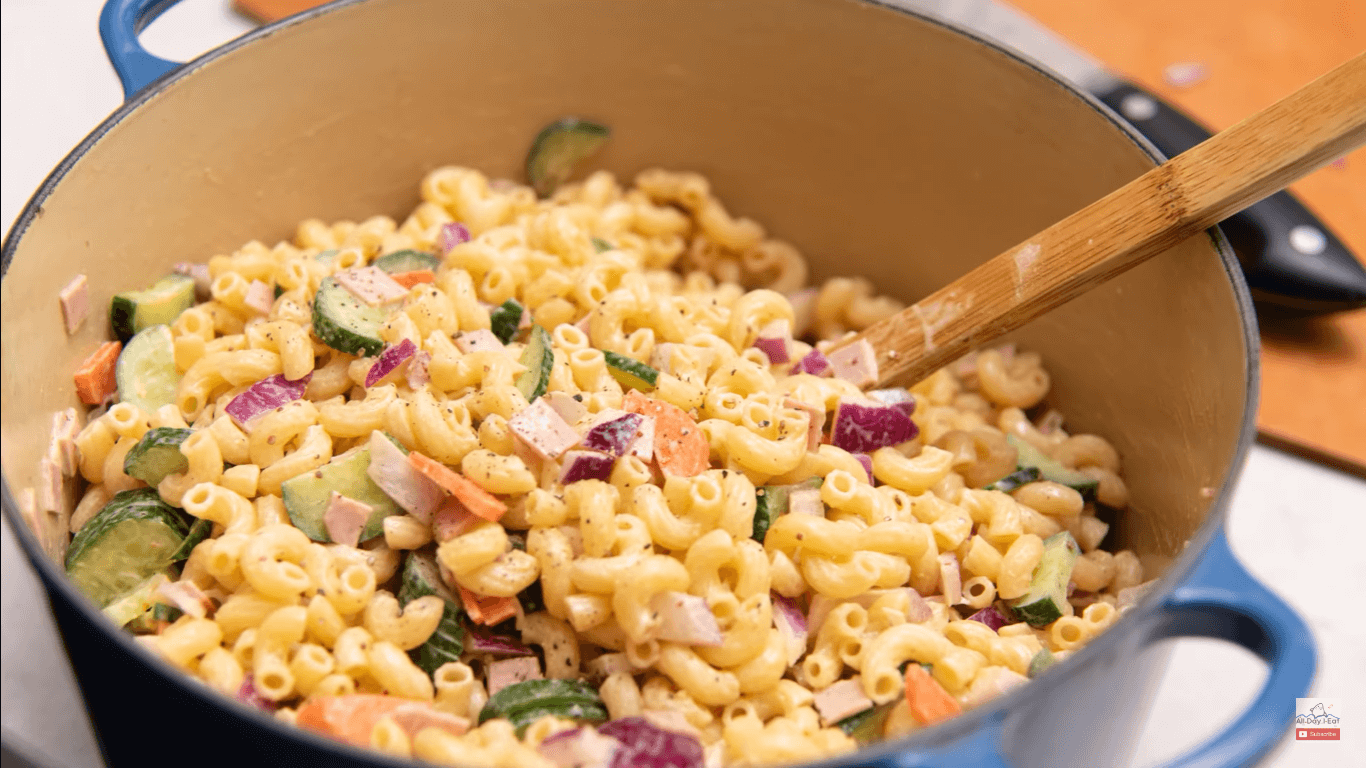
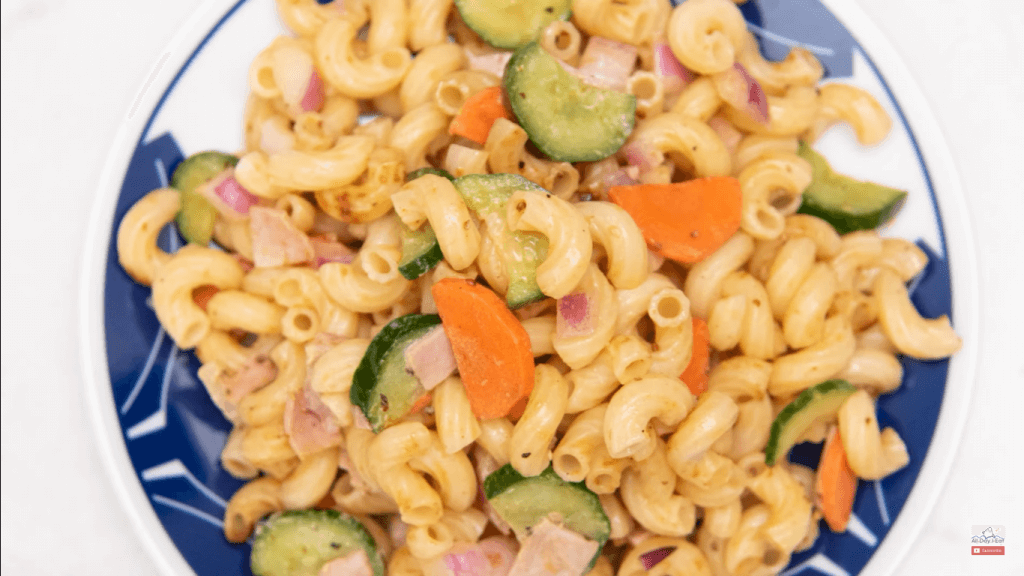
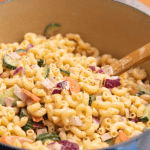
The visual below illustrates the finished Japanese-style macaroni salad, highlighting its creamy mayo dressing, pink ham, and vibrant vegetable mix.
What Makes This Macaroni Salad Special?
Japanese-style macaroni salad (makaroni sarada / マカロニサラダ) is a creamy, mayo-dressed pasta salad rooted in Japan’s yōshoku tradition — the category of Western-influenced dishes adapted to Japanese tastes during the Meiji era. It became widely popular through konbini (convenience store) deli counters and shokudo (casual canteen) side dishes, typically featuring elbow macaroni, finely cut vegetables, and Japanese mayonnaise such as Kewpie — distinguished from Western mayo by its use of egg yolks only and a tangy rice-vinegar base.
This version stands out because it uses ham as the protein instead of the traditional hard-boiled eggs found in many Japanese variants. We combine quite a lot of ingredients to create a richly flavored dish that goes beyond typical simple pasta salads. The combination of multiple seasonings creates depth and complexity that develops even more as the salad sits.
Pasta salad goes great in the summertime if you have a barbecue, or if you want to take something for lunch to work. For more, see our guide on broccoli salad variation or potato salad variant.
Protein Options for Japanese Macaroni Salad: At a Glance
| Protein | Flavor Profile | Texture | Best For |
|---|---|---|---|
| Ham ★ (this recipe) | Savory, lightly smoky | Tender, soft | Rich umami depth; lunch boxes & BBQs |
| Hard-Boiled Eggs | Mild, creamy | Firm yet yielding | Traditional Japanese konbini / deli style |
| Canned Tuna | Bold, briny | Flaky, light | Budget-friendly; pantry-staple version |
| Diced Chicken | Neutral, absorbs dressing well | Hearty, chunky | High-protein meal prep |
| Firm Tofu | Mild, neutral | Soft, silky | Vegetarian / plant-based adaptation |
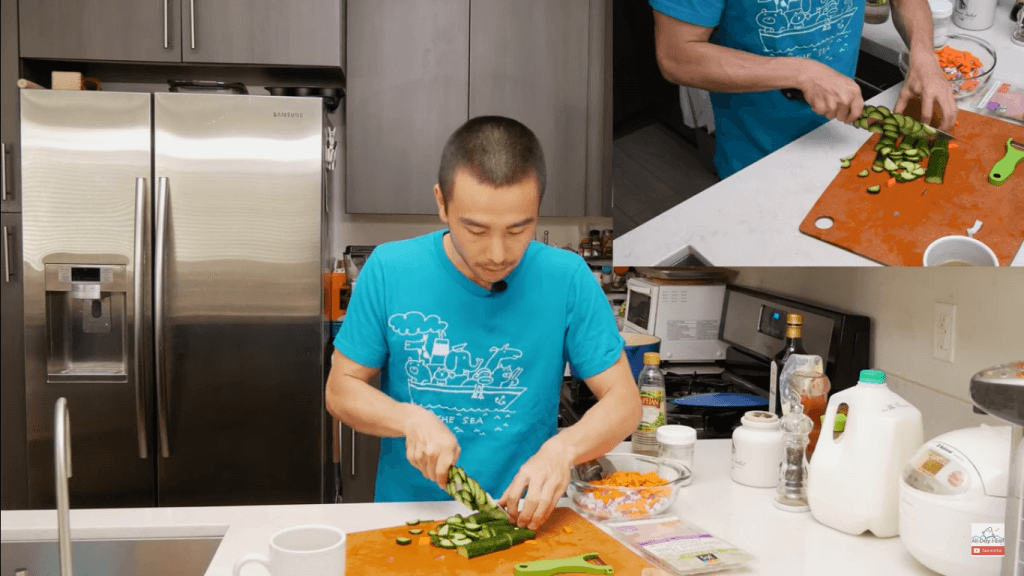
As shown in the following preparation image, thinly slicing the Japanese cucumber into uniform half-moon pieces is key to even seasoning and texture throughout the salad.
What Are the Best Tips for Making Japanese-Style Macaroni Salad?
Why Salt Your Vegetables First
Salting your vegetables before combining them is the single most important step for avoiding a watery salad. Salt draws out excess moisture and concentrates the natural flavors of the vegetables before they meet the dressing. This step ensures better flavor development throughout the salad and prevents the sauce from becoming diluted.
Choosing Your Dressing Base
Many Japanese-style pasta salads use mayonnaise (Best for: Creating rich, creamy Japanese-style dressings) as the base — and Kewpie brand (kyūpī mayonēzu / キューピーマヨネーズ), made with egg yolks and rice vinegar, is the preferred choice for its distinctively tangy, umami-forward flavor. If you want to reduce mayo content, consider adding milk or olive oil (Best for: Lighter dressing alternative that adds subtle fruity notes) to lighten the dressing without sacrificing flavor.
Enhancing Flavor With Brightness
Add white pepper or lemon juice for brightness and complexity — these are the quickest ways to elevate a straightforward mayo dressing into something more layered. These optional additions enhance the overall flavor profile without overwhelming the delicate balance of the salad.
The Overnight Advantage
Refrigerating this pasta salad overnight produces a noticeably more flavorful result than serving it immediately. The different sauce ingredients continue to blend and penetrate the vegetables and pasta, creating a more cohesive, deeply seasoned dish. If you have time, making it the night before is strongly recommended.
[embedyt] https://www.youtube.com/watch?v=ZX5ri3V8Ors[/embedyt]
PrintJapanese style macaroni salad with ham (Simple)
Ingredients
- 1 lb elbow pasta
- 1 carrot
- 1 large japanese cucumber
- red onion
- 3 slices ham
For the sauce:
- 1 tbsp white vinegar (Best for: Adding bright, tangy notes)
- 1 tbsp ketchup (Best for: Subtle sweetness and umami depth) ((use sugar if you don’t like/have ketchup))
- 1 tbsp milk
- 1/4 cup mayonnaise (Best for: Creamy binding and richness) ((I use the Kewpie brand))
- 2 tbsp extra-virgin olive oil (Best for: Fruity undertones and lighter texture)
- 1 tsp mustard (Best for: Tangy, slightly pungent flavor)
- 1 tsp soy sauce (Best for: Savory umami complexity)
- cracked pepper
Instructions
For the pasta:
- In a pot, put in water and a small amount of salt.
- Bring them to a boil.
- Add in the 1lb elbow macaroni.
- Stir occasionally so the pasta cooks evenly.
- When pasta is cooked, drain, dry, and cool.
Preparing the vegetables:
- Chop up the red onion into little pieces. Just a little bit over a cup of chopped red onion.
- Thinly cut the carrots and cucumbers into half-moon slices.
- Put all the sliced vegetables in a bowl.
- Add in about ¼ to ½ teaspoon of salt.
- Mix and set aside
Preparing the sauce:
- Mix in all the ingredients for the sauce in a bowl.
- Set aside.
Preparing the salad:
- Drain the vegetables of water
- In a large bowl or pot, add in the vegetables, sliced ham, and pasta.
- Add in the sauce, and mix everything together evenly.
- Optional: add some white pepper and/or lemon juice for more flavor.
- Put in the refrigerator if you want to serve it cold, or eat right away and enjoy!
Frequently Asked Questions
Can I make this Japanese macaroni salad ahead of time?
Yes! This salad actually improves when made 1-2 days in advance. The flavors meld together and penetrate the pasta and vegetables more thoroughly, creating a more developed, delicious dish. Store it in an airtight container in the refrigerator for up to 3-4 days.
What are good substitutes if I don’t have mayonnaise?
You can reduce or replace mayo with a mixture of milk and olive oil, Greek yogurt mixed with a bit of oil for creaminess, or even Japanese-style salad dressing. The key is maintaining some creamy component to bind the salad together. Adjust quantities to reach your desired consistency.
Can I use regular cucumber instead of Japanese cucumber?
Yes, you can use regular cucumbers, though Japanese cucumbers have thinner skin and fewer large seeds, making them more pleasant in texture for this salad. If using regular cucumbers, consider seeding them or choosing English cucumbers, which are closer in texture and flavor profile to Japanese varieties.
What other proteins can I add to this salad?
Beyond ham, you can use hard-boiled eggs, canned tuna, diced chicken, or even tofu for a vegetarian option. The versatility of this base recipe makes it easy to customize with your preferred proteins while maintaining the authentic Japanese-style flavor profile.
Why does my salad taste watery?
The vegetables likely weren’t salted properly or drained sufficiently before combining with the sauce. Make sure to salt the chopped vegetables (about ¼ to ½ teaspoon) and let them sit for 10-15 minutes to release excess moisture. Drain them thoroughly in a colander before adding to the pasta and sauce.