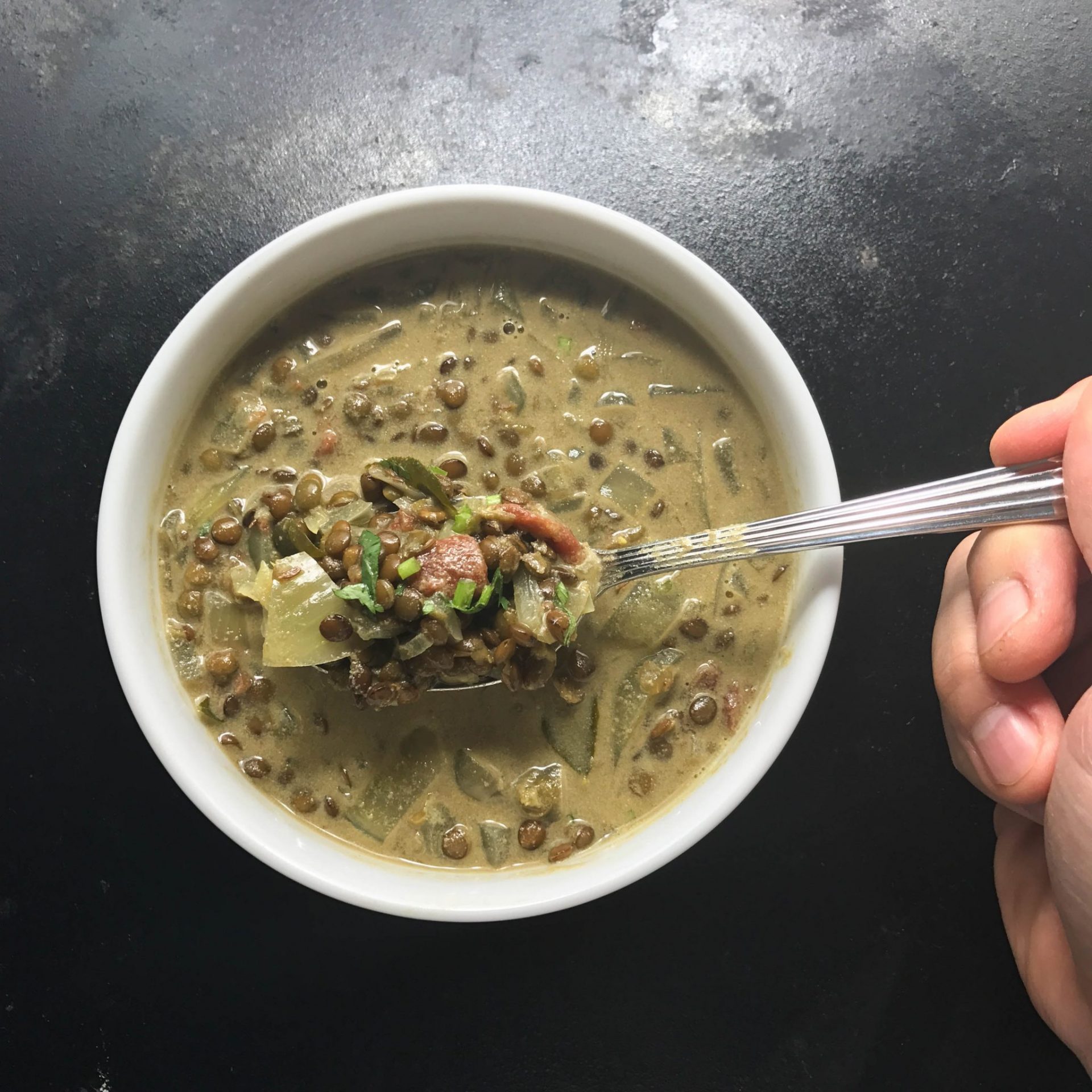
Vegan Masoor Dal with Curry Leaves and Coconut Milk
Masoor Dal with Curry Leaves and Coconut Milk
- Prep Time: 10 minutes
- Cook Time: 30 minutes
- Total Time: 40 minutes
- Yield: 6 people 1x
- Category: Main Dish
- Cuisine: Indian
Ingredients
Lentils
- 2 cups whole masoor dal (or green lentils)
- 6 cups water
- 1 medium Onion (chopped)
- 1 cup tomatoes (i used canned)
- 1/2 teaspoon cayenne pepper
- 1 teaspoon ground cumin
- 1 teaspoon ground coriander
- 1/2 teaspoon ground turmeric
- 1 1/2 teaspoons salt
- 14 oz coconut milk (full fat)
Tadka (for tempering)
- 2 tablespoons olive oil
- 2 teaspoons cumin seeds
- 1 teaspoon yellow mustard seeds
- 1/2 medium Onion (finely chopped)
- 30 fresh curry leaves (dried is okay too)
Instructions
Lentils
- In a large dutch oven or pot, combine the lentils, coarsely chopped onion, tomatoes, cayenne, ground cumin, coriander, turmeric, and salt. Add 6 cups of water and bring to a simmer. Cook uncovered for about 30 minutes, or until the lentils begin to soften.
Tadka
- In a small skillet on medium heat, add olive oil. Once shimmering, add the cumin seeds and the mustard seeds.
- As soon as the seeds begin to sputter, add the chopped onion and the curry leaves and saute for about 1-2 minutes, Stir constantly to prevent the leaves from burning.
- Add the Tadka to the lentils. Also stir in the coconut milk. Cook for 10-15 minutes until heated through. Add salt to taste if needed and serve with basmati rice!
Here at Alldayieat.com, our passion lies in exploring the vast and delicious world of plant-based cuisine, always with an eye towards balance, flavor, and wholesome ingredients—principles deeply rooted in Japanese culinary philosophy. While our hearts beat for the delicate artistry of Japanese dishes, we believe true culinary appreciation transcends borders. That’s why today, we’re venturing into the vibrant and comforting realm of Indian cooking to bring you a truly exceptional dish: **Vegan Masoor Dal with Curry Leaves and Coconut Milk**.
My journey with dal began many years ago during a trip to India. I remember savoring countless variations, each telling a unique story of its region. This particular recipe, with its rich **coconut milk** and aromatic **curry leaves**, transports me back to the lush landscapes and distinct flavors of Kerala in South India. It was there that I discovered the profound depth coconut milk can bring to savory dishes, a revelation that has since influenced my cooking across various cuisines.
This **Vegan Masoor Dal** isn’t just a meal; it’s an experience. It’s a testament to how simple, wholesome ingredients can come together to create something incredibly satisfying and profoundly flavorful. It’s quick enough for a weeknight, yet elegant enough to impress. And for those of us who cherish plant-based eating, it’s a powerhouse of **plant-based protein** and fiber, making it a truly nourishing choice.
Introduction to Masoor Dal: A Hearty & Flavorful Vegan Staple
What is Masoor Dal?
**Masoor Dal** refers to split red lentils, a staple in Indian cuisine. These small, reddish-orange lentils are known for their quick cooking time and creamy texture once cooked. Unlike some other lentils, **Masoor Dal** doesn’t require pre-soaking, making it an ideal choice for a quick and easy meal. Beyond their convenience, these lentils are packed with **nutritional benefits**, offering a significant source of **plant-based protein**, dietary fiber, and essential minerals like iron and folate. They break down beautifully during cooking, creating a naturally thick and comforting stew.
Why You’ll Love This Vegan Masoor Dal Recipe
- **Creamy Texture:** Thanks to the **red lentils** and luscious **coconut milk**, this dal boasts an incredibly smooth and comforting consistency.
- **Aromatic Spices:** A carefully balanced blend of **mustard seeds**, **cumin seeds**, **turmeric powder**, and fresh **curry leaves** creates an intoxicating aroma and depth of flavor.
- **Quick Preparation:** With no pre-soaking required for the lentils, this dish comes together surprisingly fast, perfect for busy weeknights.
- **Healthy & Wholesome:** Rich in **plant-based protein** and fiber, it’s a nourishing meal that will keep you feeling full and satisfied.
- **Naturally Vegan & Gluten-Free:** A delicious option for those with dietary restrictions or anyone looking to incorporate more plant-based meals into their diet.
The Alldayieat Touch: A Nod to Global Flavors
While our roots are deeply embedded in the rich culinary traditions of Japan, Alldayieat celebrates the universal language of delicious, nourishing food. This **Vegan Masoor Dal**, with its vibrant spices and comforting warmth, is a perfect example of how global flavors can enrich our plant-based journey. Just as we appreciate the delicate balance and seasonal ingredients in Japanese cooking, we find similar harmony in the thoughtful layering of flavors in this Indian classic. It’s about embracing wholesome ingredients and creating meals that bring joy and satisfaction, no matter their origin.
Key Ingredients for Our Aromatic Masoor Dal
Crafting the perfect dal starts with understanding its core components. Here’s a deep dive into the essential ingredients that make this **Vegan Masoor Dal** truly special:
The Lentils: Red Split Lentils (Masoor Dal)
As the star of our dish, **red split lentils** are crucial. They cook down quickly into a creamy consistency, making them ideal for a comforting dal. Look for bright orange-red lentils, ensuring they are fresh for the best flavor and texture. No need to soak them!
Aromatic Foundation: Onion, Garlic, Ginger
These three form the holy trinity of flavor in many cuisines, and Indian cooking is no exception. Freshly minced **garlic** and grated **ginger** provide a pungent warmth, while finely chopped **onion** creates a sweet and savory base as it caramelizes.
The Spice Blend: Mustard Seeds, Cumin Seeds, Turmeric Powder, Coriander Powder, Red Chili Powder
This combination is where the magic happens. **Mustard seeds** and **cumin seeds** are typically tempered in hot oil (the *tadka*), releasing their nutty, earthy aromas. **Turmeric powder** lends its vibrant color and earthy notes, while **coriander powder** adds a citrusy, floral undertone. **Red chili powder** (or **Kashmiri chili powder** for a milder heat and beautiful color) provides a gentle warmth. Adjust the amount of chili powder to your preferred spice level.
Freshness & Flavor: Curry Leaves, Tomatoes
**Curry leaves** are non-negotiable for an authentic South Indian flavor profile. Their unique, slightly nutty, citrusy aroma is incomparable. If you can find fresh ones, they are highly recommended. For the **tomatoes**, canned diced tomatoes work wonderfully for convenience and consistent flavor, but fresh, ripe tomatoes can also be used.
Creaminess & Richness: Coconut Milk
**Full-fat coconut milk** is key to achieving the luxurious, creamy texture and subtle sweetness that balances the spices. It’s what gives this dal its distinctive South Indian character. Opt for good quality, full-fat canned coconut milk for the best results.
Finishing Touches: Fresh Cilantro, Lemon Juice
A generous sprinkle of fresh **cilantro** (coriander leaves) adds a burst of freshness and a vibrant green color. A squeeze of fresh **lemon juice** at the end brightens all the flavors, adding a delightful tang.
Essential Pantry Staples: Vegetable Broth or Water, Salt, Oil
You’ll need **vegetable broth** or water to cook the lentils. **Salt** is essential for seasoning, and a neutral-flavored **oil** (like **coconut oil** or **vegetable oil**) is used for sautéing and tempering the spices.
Step-by-Step Guide to Making Perfect Vegan Masoor Dal
The recipe card below contains detailed, step-by-step instructions for preparing this delicious dal. Follow it closely for the best results!
Serving Suggestions & Perfect Pairings
This **Vegan Masoor Dal** is incredibly versatile and pairs beautifully with a variety of accompaniments, transforming a simple meal into a feast. Here are some of our favorite ways to enjoy it:
Classic Accompaniments: Basmati Rice, Brown Rice, Quinoa
The most traditional pairing for dal is a fluffy grain. **Basmati rice** is a classic choice, its fragrant grains perfectly complementing the rich dal. For a healthier option, **brown rice** or even **quinoa** can provide a hearty base.
Breads: Naan, Roti, Chapati
Warm, soft breads are excellent for scooping up every last bit of this flavorful dal. **Naan**, **roti**, or **chapati** are all fantastic choices. You can find vegan versions of these at most Indian grocery stores or make your own.
Fresh Sides: Cucumber Raita, Pickles, Salad
To balance the richness of the dal, consider fresh, cooling sides. A vegan **cucumber raita** (made with plant-based yogurt) offers a refreshing contrast. Indian **pickles** (achar) add a tangy, spicy kick, while a simple green salad provides crunch and freshness.
Japanese-Inspired Twist: A Fusion Meal
Here at Alldayieat, we love finding harmonious connections between different culinary traditions. Imagine a comforting bowl of this creamy **Masoor Dal**, served alongside perfectly **steamed Japanese rice** (short-grain or medium-grain) instead of just basmati. The sticky texture of Japanese rice provides a wonderful counterpoint to the dal’s creaminess. For an authentic Alldayieat fusion experience, add a side of crisp **Japanese pickles (tsukemono)** like **takuan** or **kyuri asazuke**. Their refreshing crunch and tangy notes offer a delightful contrast, much like they would balance a rich Japanese meal. A small bowl of clear **miso soup** could also complement the dal, creating a unique East-meets-South Asia fusion that embodies our philosophy of balanced and delightful eating.
Tips for the Best Vegan Masoor Dal
Don’t Skip the Tadka
The *tadka* (also known as *tarka*) is a crucial step in Indian cooking where whole spices are tempered in hot oil or ghee (or oil for vegan). This process awakens the flavors and aromas of the spices, infusing the entire dish with incredible depth. For this dal, the **mustard seeds**, **cumin seeds**, and **curry leaves** in the *tadka* are what truly elevate its flavor profile. Don’t rush this step!
Adjusting Consistency
Lentils can absorb a lot of liquid. If your dal becomes too thick for your liking during or after cooking, simply add a little more hot water or **vegetable broth** until it reaches your desired consistency. Stir well and heat through.
Spice Level Customization
The amount of **red chili powder** can be adjusted to your preference. For a milder dal, reduce the amount or omit it entirely. For more heat, feel free to add a pinch more, or even a fresh green chili, finely chopped, to the *tadka*.
Using Fresh vs. Canned Tomatoes
While canned diced tomatoes offer convenience and consistent flavor, fresh, ripe tomatoes can also be used. If using fresh, aim for about 1 cup, finely chopped, and cook them down until they soften and release their juices before adding the lentils.
Storage, Freezing, and Reheating Instructions
How to Store Leftovers
Allow the **Vegan Masoor Dal** to cool completely before transferring it to an airtight container. Store it in the refrigerator for up to 3-4 days. The flavors often deepen overnight, making it even more delicious the next day!
Can You Freeze Masoor Dal?
Absolutely! **Masoor Dal** freezes beautifully. Once cooled, transfer it to freezer-safe containers or heavy-duty freezer bags, leaving a little headspace. It can be frozen for up to 3 months. Thaw overnight in the refrigerator before reheating.
Best Way to Reheat
Reheat the dal gently on the stovetop over medium-low heat, stirring occasionally. You may need to add a splash of water or **vegetable broth** to thin it out, as it tends to thicken upon cooling. If reheating from frozen, thaw first, then follow the stovetop instructions. You can also reheat individual portions in the microwave.
Frequently Asked Questions (FAQs)
What kind of lentils are Masoor Dal?
**Masoor Dal** refers specifically to split red lentils. They are small, orange-red in color, and have a mild, earthy flavor. They cook quickly and break down easily, making them perfect for creamy dals.
Is Masoor Dal naturally vegan?
Yes, **Masoor Dal** itself is naturally vegan, as it is a legume. This recipe is specifically designed to be **vegan** by using **coconut milk** and vegetable oil, ensuring no animal products are used.
Can I make this in an Instant Pot or slow cooker?
Yes, you can!
- **Instant Pot:** Sauté the aromatics and spices (tadka) using the “Sauté” function. Add the lentils, tomatoes, water/broth, and spices (excluding coconut milk). Cook on high pressure for 5-7 minutes, then quick release. Stir in the coconut milk and simmer for a few minutes.
- **Slow Cooker:** Sauté the aromatics and spices (tadka) in a separate pan. Add them to the slow cooker along with the lentils, tomatoes, water/broth, and spices (excluding coconut milk). Cook on low for 4-6 hours or on high for 2-3 hours, until lentils are tender. Stir in the coconut milk and cook for another 30 minutes.
What can I substitute for curry leaves?
**Curry leaves** have a unique flavor that is hard to replicate perfectly. However, if you absolutely cannot find them, you can try a small amount of fresh basil and a tiny pinch of lime zest for a somewhat similar aromatic profile, though the taste will be different. Dried curry leaves can also be used, but they are less potent than fresh ones.
How to make it spicier or milder?
To make it spicier, increase the amount of **red chili powder**, or add a finely chopped green chili to the *tadka*. For a milder dal, reduce or omit the **red chili powder** entirely.
Nutritional Information (Per Serving)
While exact nutritional values can vary based on specific ingredients and portion sizes, this **Vegan Masoor Dal** is a highly nutritious dish. A typical serving (approximately 1 cup) provides:
- **Calories:** ~250-300 kcal
- **Protein:** ~12-15g (excellent source of **plant-based protein**)
- **Fiber:** ~8-10g (contributes significantly to daily fiber intake)
- **Fat:** ~10-15g (primarily from **coconut milk** and oil, including healthy fats)
- **Carbohydrates:** ~30-40g
- Rich in Iron, Folate, and other essential minerals.
This dal is a fantastic way to enjoy a delicious, wholesome, and satisfying meal that is both good for you and the planet.


Hey Pat, thanks for this recipe! Its awesome i actually was looking this recipe i found your site at google. Keep It Up.
Thanks..!
Hey Pat, thanks for this recipe! I’ll definitely be making it this week. I’m surprised that you haven’t run into any South Indian restaurants! I’ve lived in Atlanta and Cincinnati and they had awesome purely South Indian cuisine! I’m excited to try this, I love dal!!!!
As a South Indian, I love this! My parents grow the curry leaves and seeing yours totally made me miss them. That’s an impressive plant!!
thank you! I didn’t know that’s where you’re from, do you cook a lot of Indian food?
Honestly no, but I think I’m going to be starting! I had always had my mom to make Indian food, but now that we live far away it has become a necessity 🙂
would love to see them on ur blog if u do!