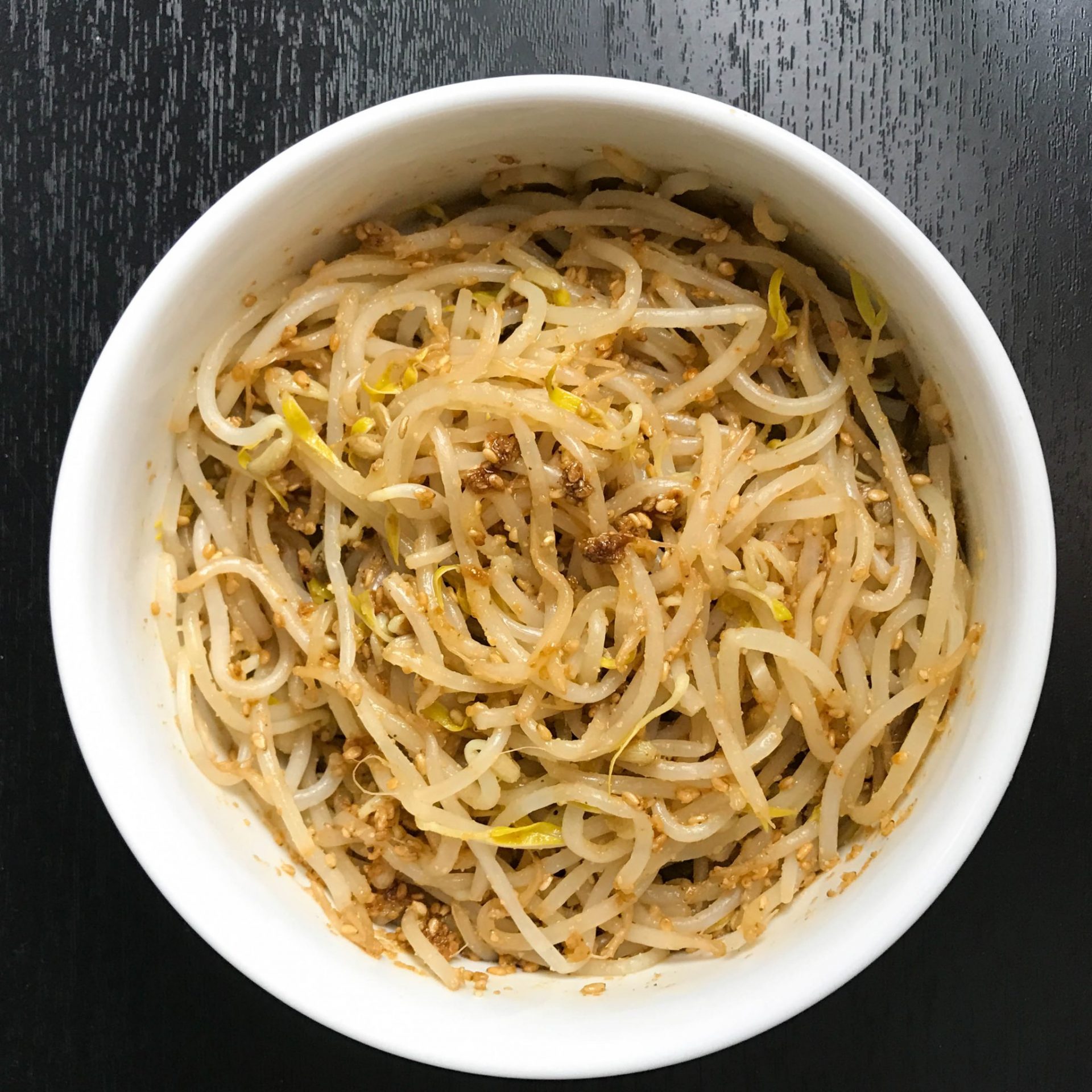
Moyashi Goma-ae Recipe: Japanese Bean Sprout Sesame Salad (10 Minutes)
Last updated: April 2026
Moyashi goma-ae (もやし胡麻和え) is a classic Japanese side dish of blanched bean sprouts tossed in a sweet sesame soy dressing. Ready in about 12 minutes, this simple recipe is a staple of Japanese home cooking — affordable, nutritious, and packed with nutty sesame flavor.
- Moyashi goma-ae (もやし胡麻和え) is a 12-minute Japanese side dish — blanched mung bean sprouts tossed in a ground sesame, soy sauce, and sugar dressing.
- The goma-ae sauce (ground sesame + soy + sugar + sesame oil) is a versatile Japanese staple that works on spinach, green beans, okra, and more.
- Toasting and partially grinding the sesame seeds is the single most important technique: it unlocks the oils and nutty flavor that define the dish.
- Bean sprouts release water quickly — always drain thoroughly and toss with sauce just before serving to avoid a watery result.
- According to USDA FoodData Central (2024), mung bean sprouts are very low in calories (approximately 31 calories per cup raw), making this one of the lightest side dishes in Japanese home cooking.
What Is Moyashi?
Moyashi (もやし) is the Japanese word for bean sprouts — specifically mung bean sprouts (Vigna radiata). You’ll find them at pretty much every supermarket in Japan, usually sold in bags for around 30 yen (roughly 20 cents). They’re a staple that Japanese home cooks rely on because they’re cheap, nutritious, and cook in under two minutes. For more, see our guide on enoki mushroom namuru.
Growing up, moyashi showed up at our dinner table regularly. My mom would add them to miso soup, stir-fries, and of course, goma-ae. They have a clean, slightly nutty crunch that works well in so many dishes.
You’ve probably had mung bean sprouts in Pad Thai or floating in a bowl of pho. But the Japanese approach is different — we tend to keep things simpler, letting the natural texture of the sprouts come through rather than burying them in heavy sauces.
What Is Goma-ae?
Goma-ae (胡麻和え) is a Japanese sesame dressing technique: goma (胡麻) means “sesame” and ae (和え) means to dress or mix vegetables with seasoning. In practice, it’s ground sesame seeds mixed with soy sauce, sugar, and a touch of sesame oil.
It’s one of the fundamental sauce preparations in Japanese home cooking. You can use goma-ae sauce on spinach (hourensou no goma-ae is a classic), green beans, okra, and even tomato. It’s a multipurpose sauce that’s worth learning because you’ll use it over and over again.
Since I don’t like my vegetables too sweet, I always cut back on the sugar when I make goma-ae at home. You should adjust to your own taste — that’s normal in Japanese cooking, where seasoning is personal.
Understanding the Ingredients
Moyashi goma-ae uses a short list of pantry staples, but each one matters:
- Mung bean sprouts (moyashi): Choose sprouts that are white, firm, and crisp. Avoid any that look brown or limp — they’re past their prime. Fresh moyashi should have a clean, faintly grassy smell.
- White sesame seeds: The backbone of the dressing. Toasting and grinding them releases the oils and transforms the flavor from flat to deeply nutty. Best for: goma-ae and other Japanese sesame dressings.
- Soy sauce (shoyu): Provides the savory umami base. I use regular Japanese soy sauce (koikuchi). If you only have low-sodium, you may want to add a small pinch of salt.
- Sugar: Balances the salt and bitterness. Japanese home cooks often use plain white sugar here. You can substitute with mirin for a more complex sweetness.
- Sesame oil: A small drizzle amplifies the sesame flavor. Use toasted sesame oil — the kind that’s dark amber and fragrant.
Equipment You’ll Need
This is a simple dish, but having the right tools helps:
- Suribachi and surikogi (Japanese mortar and pestle): The traditional way to grind sesame seeds. The ridged interior of a suribachi creates the perfect texture — partially ground with some whole seeds remaining. A food processor or spice grinder works too, but go easy — you want a coarse grind, not a paste. Best for: anyone making goma-ae regularly.
- Medium pot: For blanching the sprouts. Nothing special needed.
- Colander or strainer: Essential for draining the blanched sprouts quickly.
- Paper towels or clean kitchen towel: For pressing excess moisture out of the sprouts after draining.
Tips for Making Moyashi Goma-ae
Here are a few things I’ve learned from making this dish countless times:
- Don’t overcook the sprouts. About 90 seconds in boiling water is all you need. Overcooked moyashi turns limp and watery — you want that crunch.
- Grind at least half the sesame seeds. This releases the oils and flavor locked inside the seeds. A suribachi (Japanese mortar) is ideal, but a food processor or even a ziplock bag and rolling pin will work.
- Toast the sesame seeds first. Raw sesame seeds taste flat. Toasted ones are fragrant and nutty — it makes a real difference in the finished dish. Toast in a dry skillet over medium heat for 2-3 minutes, shaking frequently, until golden and fragrant.
- Drain the sprouts well. Excess water will dilute your goma-ae sauce. After boiling, drain thoroughly and even press them gently with a paper towel.
- Mix the sauce right before serving. If you let it sit too long, the sprouts release moisture and the dish gets watery.
- Ice bath optional but effective. Shocking the blanched sprouts in ice water stops the cooking immediately and locks in their crunch. Pat dry thoroughly afterward.

Variations and Substitutions
This recipe is flexible. Here are some ways to change it up:
- Different vegetables: No moyashi? Use blanched spinach, green beans, snap peas, or okra with the same goma-ae sauce. Keep the vegetable-to-sauce ratio roughly the same.
- Add protein: Toss in shredded chicken breast or some sliced ham to make it more substantial.
- Use black sesame seeds: Black sesame seeds give the dish a more dramatic look and a slightly deeper, earthier flavor. Best for: presentation-focused bento boxes or dinner parties.
- Premade goma-ae sauce: If you don’t want to make the sauce from scratch, premade packets are available online or at Japanese grocery stores. Best for: weeknight shortcuts when you want the dish done in under 5 minutes.
- Spicy version: Add a small pinch of shichimi togarashi (Japanese seven spice) for a little heat.
- Korean-style twist: Add a dash of gochugaru (Korean chili flakes) and a splash of rice vinegar for a spicier, tangier take that leans toward Korean bean sprout namul.
Serving Suggestions
Moyashi goma-ae is a side dish — what we call okazu (おかず) in Japanese. It’s meant to be part of a larger meal, not eaten on its own. Here’s how I typically serve it:
- As part of a ichiju sansai (one soup, three sides) meal with rice, miso soup, and one or two other side dishes
- Alongside grilled fish like shioyaki mackerel or miso-marinated chicken
- As a light appetizer before a heavier main course
- In a bento box — it holds up reasonably well for a few hours
- Next to chicken katsu or katsudon as a refreshing counterpoint to fried dishes
- Alongside curry udon or Japanese curry rice for a balanced plate
How to Store Moyashi Goma-ae
Raw bean sprouts are fairly perishable. Here’s how to handle them:
- Raw moyashi: Store in the refrigerator in an airtight container or the original bag. Use within 2-3 days of purchasing for the best crunch.
- Prepared goma-ae: Keep refrigerated in a sealed container. It’s best eaten the same day, but will keep for up to 2 days. The sprouts release water as they sit, so drain before serving leftovers.
- Extending shelf life: Store raw bean sprouts submerged in water in a container in the fridge, changing the water daily. This can extend their life to about a week.
- Freezing: I don’t recommend freezing moyashi goma-ae. The sprouts lose their crunch entirely when thawed. If you must freeze raw bean sprouts, blanch them first and use within a month — but the texture won’t be the same.
Nutritional Benefits of Moyashi
Bean sprouts are surprisingly nutritious for how inexpensive they are:
- Low calorie: According to USDA FoodData Central (2024), a full cup of raw mung bean sprouts contains approximately 31 calories, making this one of the lightest Japanese side dishes you can serve.
- Good source of vitamin C: Sprouting increases the vitamin C content significantly compared to the dried bean.
- Contains folate and vitamin K: Both important for cell function and bone health.
- High in water content: Helps with hydration, especially in summer meals.
- Sesame adds healthy fats: The goma-ae dressing provides beneficial omega-6 fatty acids and calcium from the sesame seeds.
In Japan, moyashi is considered a budget-friendly way to add volume and nutrition to any meal. Combined with the protein and healthy fats from sesame seeds, this dish punches above its weight nutritionally. (USDA FoodData Central, 2024)
Watch: How to Make Moyashi Goma-ae
Here’s a live replay where I recreated potato salad (minus the ham), plus moyashi goma-ae and miso marinated chicken:

Moyashi Goma-ae (mung bean sprouts with sweet sesame soy)
- Prep Time: 10 minutes
- Cook Time: 2 minutes
- Total Time: 12 minutes
- Yield: 4 people 1x
- Category: side
- Cuisine: Japanese
Ingredients
- 1/2 pound moyashi (~250 grams or 1 bag)
- 3 Tablespoons sesame seeds (toasted)
- 1 tablespoon soy sauce
- 1 teaspoon sugar
- 1 teaspoon sesame oil
- 1 teaspoon sake
Instructions
- Fill a medium pot with about 4 cups water and 1 teaspoon of salt. Bring to a boil
- Once boiling, add the sprouts and cook for about 1 minute and 30 seconds. Drain and set aside.
- Meanwhile toast the sesame seeds until fragrant.
- Place the sesame seeds in a suribachi and grind at least half.
- Add the remaining ingredients and mix well.
- Combine the sprouts with the sauce and serve.
Frequently Asked Questions
What does moyashi mean in Japanese?
Moyashi (もやし) means “bean sprout” in Japanese — in everyday use it almost always refers specifically to mung bean sprouts. The word derives from the verb moyasu (萌やす), meaning “to sprout” or “to bud.”
What is goma-ae sauce made of?
Goma-ae sauce is made from ground toasted sesame seeds, soy sauce, sugar, and sesame oil — and sometimes a splash of sake or mirin. The essential step is grinding the sesame seeds to release their natural oils, which creates the rich, nutty base of the dressing.
Can I use soybean sprouts instead of mung bean sprouts?
Yes, but soybean sprouts (daizu moyashi) behave quite differently from mung bean sprouts and require a longer cooking time of about 3–5 minutes. For goma-ae, mung bean sprouts are preferred because they are thinner and more delicate. Here’s a quick comparison:
| Feature | Mung Bean Sprouts (Moyashi) | Soybean Sprouts (Daizu Moyashi) |
|---|---|---|
| Size | Thin, delicate | Larger, thicker with yellow bean head |
| Blanching time | ~90 seconds | 3–5 minutes |
| Texture when cooked | Tender, light crunch | Firmer, more substantial |
| Best for goma-ae? | Yes — preferred choice | Works, but less traditional |
| Cuisine association | Japanese | Japanese & Korean (kongnamul) |
Is moyashi goma-ae vegan?
Yes, this recipe is naturally vegan — all five ingredients are plant-based. Just confirm your soy sauce doesn’t contain any fish-based additives; standard Kikkoman soy sauce is vegan.
How long does moyashi goma-ae last in the fridge?
Prepared moyashi goma-ae keeps for up to 2 days refrigerated in a sealed container, though it is best eaten fresh the same day. The sprouts release water as they sit, so drain off any excess liquid before serving leftovers.
What other vegetables work with goma-ae sauce?
Blanched spinach (hourensou no goma-ae) is the most classic version. Green beans, okra, snap peas, broccoli, and even asparagus all work well. The sauce is very versatile.
Can I make goma-ae sauce ahead of time?
Yes — the sesame dressing keeps well in the fridge for up to a week in a sealed jar. Store the sauce separately and don’t mix it with the sprouts until you’re ready to serve, or the dish will get watery.
What’s the difference between goma-ae and namul?
Goma-ae is a Japanese sesame dressing; Korean namul (or muchim) is a related but distinct preparation that uses sesame oil, garlic, and often gochugaru or rice vinegar. Both are blanched-vegetable side dishes, but the flavor profiles are meaningfully different — goma-ae is sweeter and nuttier while namul is more garlicky and savory.
| Feature | Goma-ae (Japanese) | Namul / Muchim (Korean) |
|---|---|---|
| Key flavoring | Ground sesame seeds + soy sauce + sugar | Sesame oil + garlic + gochugaru / rice vinegar |
| Flavor profile | Sweet, nutty, mild | Garlicky, savory, sometimes spicy or tangy |
| Sesame form used | Ground seeds (paste-like) | Sesame oil (whole seeds optional) |
| Garlic | Not typically used | Core ingredient |
| Best for | Japanese ichiju sansai meals, bento | Bibimbap, Korean side dishes (banchan) |
If you’d like help making Japanese food at home, consider checking out one of my online cooking programs here.


very tasty! I reduced the sugar and added some Hondashi seasoning as well. My whole family enjoyed it.
thats awesome Margaret! thank you for sharing the feedback! have you made gomaae with other veggies too?