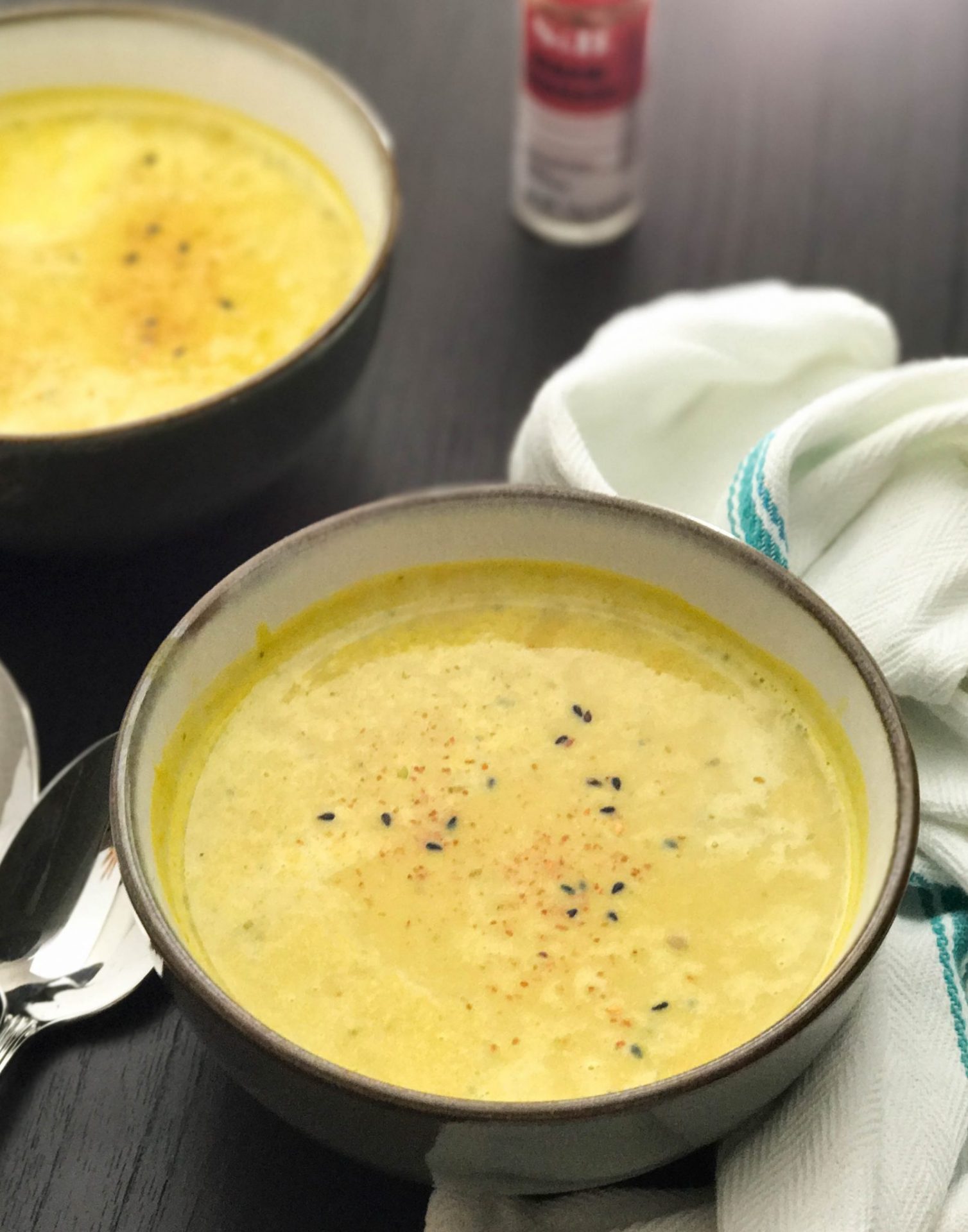
Delicious Kabocha Soup Recipe | Easy Japanese Pumpkin Soup
Simple Kabocha (Japanese pumpkin) Soup

- Prep Time: 20 minutes
- Cook Time: 20 minutes
- Total Time: 40 minutes
- Yield: 6 people 1x
- Cuisine: Japanese
Ingredients
- 1/2 whole kabocha (approximately 4 cups chopped)
- 1 medium onion
- 2 tablespoons olive oil or butter
- 1.5 cups chicken broth (use less if you want a thicker soup or use a little more to thin)
- 1 tsp white sugar
- 1 teaspoon soy sauce
- 2 cups whole milk
- shichimi ("7 flavor" pepper to taste)
Instructions
- Microwave the kabocha to soften it. I usually microwave a whole kabocha on high for 4-5 minutes. (Be careful since it gets hot!!)
- Once cooled, cut up the kabocha into small pieces approximately 1 in in length. It doesn’t need to be pretty since you are going to puree it.
- Slice and saute the onions for a few minutes until lightly browned.
- Add the rest of the ingredients including pumpkin and bring to a boil.
- Simmer for 20 -30 minutes until the pumpkin is soft.
- Once soft, use an immersion blender to puree the soup.
- After it has been pureed add in the milk and serve!
Notes
If you want a rich gold color versus the yellow/green of my soup, you can deskin the pumpkin prior to cooking. But I like to keep the skin on for the nutrition!
You can use more pumpkin if you want it will just be a thicker soup!
The autumn air in Japan always brings with it a special kind of comfort. As a child, I remember the crisp scent of fallen leaves and the anticipation of coming home to a warm, inviting bowl of my grandmother’s kabocha soup. It wasn’t just soup; it was a hug in a bowl, a taste of home that instantly chased away the chill. The vibrant orange hue, the velvety texture, and that uniquely sweet, earthy flavor of kabocha squash – it’s a memory I cherish, and one I’m thrilled to share with you today.
Here at Alldayieat.com, we believe in bringing authentic Japanese flavors to your kitchen, and this kabocha soup recipe is a perfect example. Forget the generic pumpkin soups; this is a taste of Japan, crafted with care and tradition.
Why You’ll Love This Japanese Kabocha Soup
A Taste of Home: My Childhood Memories of Kabocha
For many Japanese families, kabocha soup is more than just a dish; it’s a staple of autumn and winter, a symbol of warmth and nourishment. My grandmother, a master of simple yet profound flavors, would always make it after we visited the local market, where the round, dark green kabocha squashes were piled high. She’d tell me stories while she meticulously peeled and chopped, her hands moving with practiced ease. The aroma of simmering kabocha and dashi would fill our small kitchen, promising a delicious meal. This recipe is my homage to her, a way to share that same comforting experience with you.
The Magic of Kabocha: Sweet, Nutty, and Velvety Smooth
What makes this soup truly special is the star ingredient: kabocha squash. Unlike many Western pumpkins, kabocha boasts a naturally sweet, slightly nutty flavor and a dense, flaky texture when cooked. It purees into an incredibly smooth, almost custard-like consistency, making it ideal for a luxurious soup without needing excessive cream. It’s this inherent richness that elevates our Japanese version.
Quick & Easy: Perfect for Weeknight Dinners
Despite its sophisticated flavor, this creamy kabocha soup is surprisingly simple to prepare. With just a few key ingredients and straightforward steps, you can have a delicious, wholesome meal on the table in under an hour. It’s perfect for those busy weeknights when you crave something comforting but don’t have hours to spend in the kitchen.
What is Kabocha Squash? (Japanese Pumpkin)
Understanding Kabocha: Appearance, Texture, and Flavor Profile
Kabocha squash (カボチャ), often called Japanese pumpkin, is a winter squash with a distinctive dark green, sometimes mottled, skin and a squat, round shape. Its flesh is a vibrant orange-yellow, firm, and less watery than many other squash varieties. When cooked, it becomes incredibly tender, almost fluffy, with a rich, sweet flavor reminiscent of sweet potato and chestnut. The skin is edible, especially when cooked until very soft, and adds nutritional value.
Kabocha vs. Other Pumpkins/Squash: Why it’s Superior for Soup
While you *can* make soup with butternut squash or other pumpkins, kabocha truly shines. Its lower water content means a thicker, creamier soup with a more concentrated flavor. The natural sweetness of kabocha also reduces the need for added sugars, allowing its pure, earthy taste to come through. It’s the secret to that authentic Japanese flavor profile.
Health Benefits of Kabocha: A Nutritional Powerhouse
Beyond its delicious taste, kabocha squash is packed with nutrients. It’s an excellent source of Vitamin A (beta-carotene), Vitamin C, and B vitamins, as well as dietary fiber and minerals like potassium and iron. It’s also relatively low in calories, making this soup a healthy and satisfying choice. Keeping the skin on, as we often do in Japan, further boosts its nutritional content.
Essential Ingredients for Japanese Kabocha Soup
The Star: Choosing the Best Kabocha Squash
Look for a kabocha squash that feels heavy for its size, indicating dense flesh. The skin should be firm and free of soft spots. A slight patch of yellow or orange on the dark green skin is a good sign of ripeness. While a perfectly green kabocha is fine, that hint of color often means it’s at its peak sweetness. You’ll typically find kabocha in Asian markets or well-stocked grocery stores.
Flavor Foundation: Onion, Garlic, and Ginger
These aromatics form the delicious base of our soup. Sautéing finely chopped onion until translucent brings out its natural sweetness. A touch of minced garlic adds depth, and a small amount of freshly grated ginger provides a subtle warmth and a classic Japanese flavor note that beautifully complements the kabocha.
Liquid Gold: Dashi (or Vegetable Broth)
This is where the authentic Japanese flavor truly comes alive! While many Western recipes call for chicken or vegetable broth, traditional Japanese kabocha soup uses dashi. Dashi is a fundamental Japanese stock, typically made from kombu (dried kelp) and katsuobushi (dried bonito flakes). It provides a profound umami depth that enhances the kabocha’s sweetness without overpowering it. You can make simple dashi from scratch, or use instant dashi granules for convenience. If dashi is unavailable, a good quality vegetable broth can be used, but you’ll miss that unique umami signature.
Creaminess Factor: Milk (or Soy Milk/Coconut Milk for Dairy-Free)
Whole milk provides a rich, creamy texture and a subtle sweetness that rounds out the soup. For a dairy-free or vegan version, unsweetened soy milk or light coconut milk works wonderfully. Coconut milk will impart a slightly different flavor, but it’s a delicious alternative that many enjoy.
Seasoning: Salt, White Pepper, a touch of Soy Sauce
Simple seasonings are best to let the kabocha shine. Fine sea salt and a pinch of white pepper are essential. A small splash of soy sauce (shoyu) at the end is a common Japanese trick to add an extra layer of umami and depth, balancing the sweetness without making the soup taste overtly like soy sauce.
Optional Garnishes: Chives, Parsley, a swirl of Cream, Toasted Pumpkin Seeds
Garnishes add both visual appeal and textural contrast. Freshly chopped chives or parsley provide a pop of color and freshness. A swirl of heavy cream (or coconut cream for dairy-free) can add extra richness. For a delightful crunch, sprinkle with toasted pumpkin seeds or even a few croutons.
Pro Tips for the Best Kabocha Soup
Don’t Overcook the Kabocha!
While you want the kabocha to be very tender for easy blending, avoid overcooking it to the point of mushiness. This can lead to a less vibrant flavor. Simmer just until a fork easily pierces the flesh.
Adjusting Consistency: Thicker or Thinner?
If your soup is too thick after blending, gradually add a little more dashi or milk until it reaches your desired consistency. If it’s too thin, you can simmer it gently for a few more minutes to allow some liquid to evaporate, or stir in a tablespoon of cornstarch slurry (cornstarch mixed with a little cold water) and simmer until thickened.
Enhancing Umami: A Secret Ingredient
For an even deeper umami boost, consider stirring in a tiny amount (about half a teaspoon) of white miso paste at the very end, after blending. Dissolve it in a little warm soup first before adding to the pot to prevent lumps. This adds a complex savory note that is truly authentic.
Roasting Kabocha First (for deeper flavor)
While this recipe calls for simmering, an alternative method for a richer, more caramelized flavor is to roast the kabocha first. Toss chopped kabocha with a little olive oil, salt, and pepper, then roast at 400°F (200°C) for 20-25 minutes until tender and slightly browned. Then proceed with the recipe, adding the roasted kabocha to the sautéed aromatics and simmering with dashi and milk.
Common Questions & Troubleshooting
Can I make this soup vegan/dairy-free?
Absolutely! Simply use vegetable broth instead of dashi (or make a kombu-only dashi), and substitute whole milk with unsweetened soy milk, almond milk, or light coconut milk. Ensure your soy sauce is vegan (most are, but check labels).
How to store leftover kabocha soup?
Allow the soup to cool completely, then transfer it to an airtight container. It can be stored in the refrigerator for up to 3-4 days.
Can I freeze kabocha soup?
Yes, kabocha soup freezes beautifully! Once cooled, pour the soup into freezer-safe containers or heavy-duty freezer bags, leaving some headspace for expansion. It can be frozen for up to 3 months. Thaw overnight in the refrigerator and reheat gently on the stovetop or in the microwave.
My soup is too thin/thick – how to fix it?
If your soup is too thin, simmer it uncovered for a bit longer to reduce the liquid, or mix a teaspoon of cornstarch with a tablespoon of cold water, stir into the soup, and simmer until thickened. If it’s too thick, simply stir in more dashi, vegetable broth, or milk until it reaches your desired consistency.
What can I substitute for dashi?
While dashi provides the most authentic Japanese flavor, you can substitute it with a good quality vegetable broth. For a closer approximation of dashi’s umami, you could add a small piece of kombu to your vegetable broth while simmering, or stir in a tiny amount of white miso paste at the end.
Serving Suggestions for Kabocha Soup
Classic Japanese Pairings: Onigiri, Crusty Bread, Simple Salad
In Japan, kabocha soup is often enjoyed as a comforting starter or a light meal. Pair it with freshly made onigiri (Japanese rice balls) for a truly authentic experience. A slice of warm, crusty bread or even a piece of fluffy shokupan (Japanese milk bread) is perfect for soaking up every last drop. A simple green salad with a light Japanese dressing, like a sesame vinaigrette, makes for a refreshing contrast.
Making it a Meal: Grilled Chicken, Tofu, or a Light Sandwich
To make this soup a more substantial meal, serve it alongside grilled chicken or pan-fried tofu. The delicate flavors of the soup complement lean proteins beautifully. A light sandwich, perhaps with egg salad or a simple vegetable filling, also makes for a satisfying lunch or dinner.
Oooh, this looks fantastic! I adore kabocha. Usually I just cook it as is with a bit of soy sauce and sugar. The only time I ever did anything else with it was to make a kabocha pumpkin pie…which was amazing! I have to try out this soup now. Anything with kabocha is a winner 😛
Thanks Elle!! let me know how it turns out!
Looks like good soup! Thanks for the tips. I didn’t have any options at the grocery store where I went, because they only had two, and I bought them both! Have a great rest of your day!
Dave, thanks for stopping by! it was a great soup!