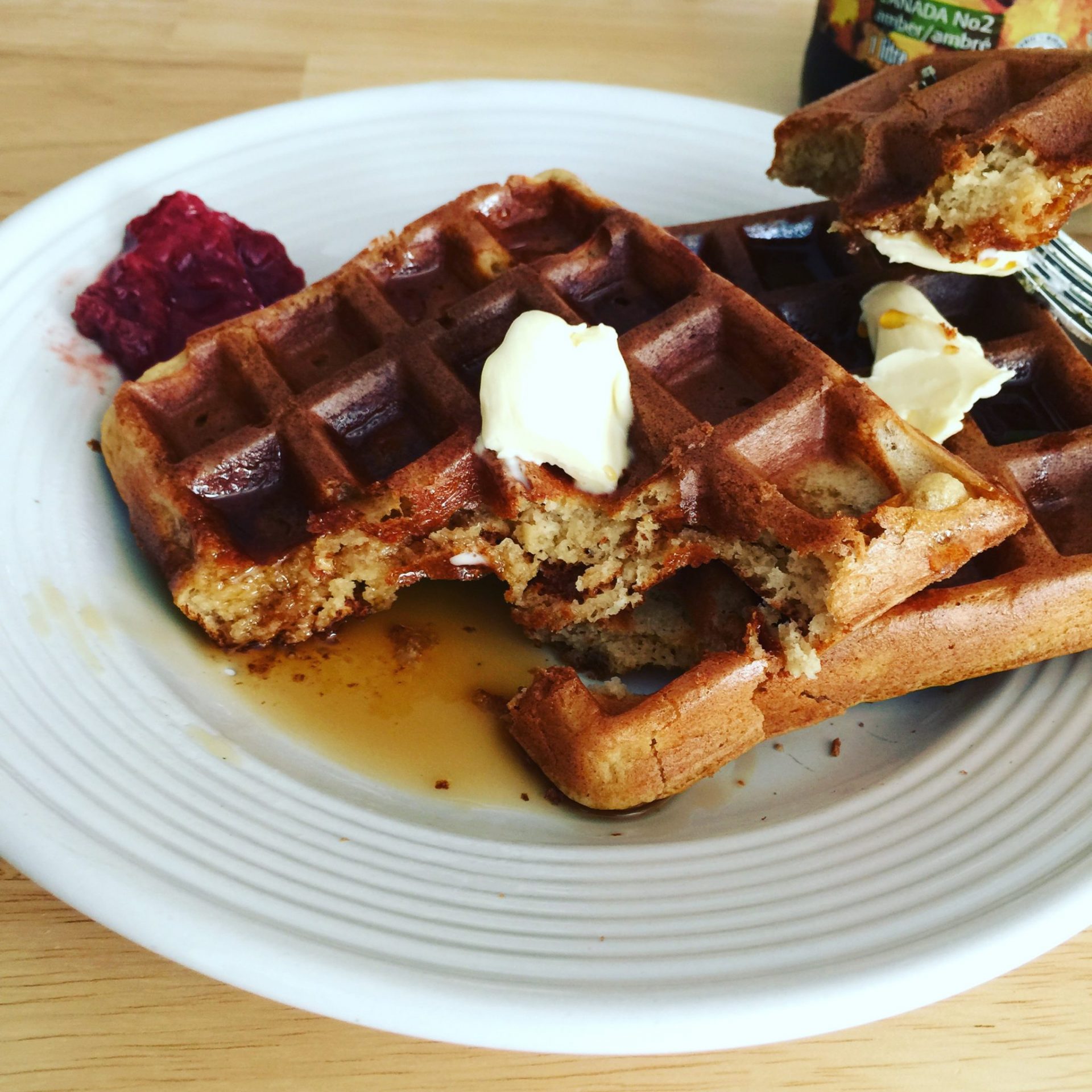
Gluten-Free Waffles with Rolled Oats and Olive Oil: Irresistible Recipe
Waffles with Rolled oats and Olive oil

- Prep Time: 15 minutes
- Cook Time: 15 minutes
- Total Time: 30 minutes
- Yield: 4 people 1x
- Category: Main Dish
- Cuisine: New American
Ingredients
- 1.5 cups oat flour (finely ground rolled oats)
- 2 teaspoons baking powder
- 1/4 teaspoon salt
- 1/4 cinnamon
- 3/4 cup milk
- 1/4 cup olive oil
- 2 large eggs
- 1 tablespoon maple syrup
- 1 teaspoon vanilla extract
Instructions
- If starting with rolled oats measure and put into blender or food processor to make into a fine powder/flour. (I used my vitamix on high for about 30 seconds)
- In a large bowl, whisk the dry ingredients: oat flour, baking powder, salt and cinnamon.
In another bowl, whisk together the wet ingredients: milk, eggs, olive oil, maple syrup and vanilla extract. - Pour the wet ingredients into the dry ingredients and mix until just combined.
- Allow the batter rest for 15 minutes to allow the oats to absorb some of the water. While waiting you can plug in your waffle maker in to preheat.
- Pour batter onto the heated waffle maker and follow manufacturer instructions on making the waffle.
- Repeat until batter is gone and serve with butter, maple syrup or other fruit preserves!
Authentic Japanese-Inspired Gluten-Free Waffles with Rolled Oats and Olive Oil: Crispy, Fluffy, and Wholesome
There’s something incredibly comforting about the aroma of freshly made waffles on a quiet morning. For me, growing up in Japan, breakfast often centered around simpler, more savory fare – miso soup, rice, grilled fish, and pickles. Yet, the allure of Western breakfasts, particularly waffles, always held a special charm. It was a treat, a moment of indulgence that felt distinctly different from our daily routine.
As I’ve explored the world of cooking, I’ve come to appreciate how Japanese culinary philosophy, with its emphasis on fresh, seasonal ingredients (shun) and balanced meals (ichiju sansai), can beautifully intertwine with global flavors. This recipe for **Gluten-Free Waffles with Rolled Oats and Olive Oil** is a perfect example. It takes a beloved Western breakfast staple and infuses it with a wholesome, mindful approach that resonates deeply with the principles of washoku.
Forget the heavy, overly sweet waffles you might be used to. These aren’t just any gluten-free waffles; they are a testament to how simple, quality ingredients can create something truly extraordinary. They are crispy on the outside, wonderfully fluffy and tender within, and surprisingly nourishing. And the best part? They come together quickly, making a delightful breakfast accessible even on busy mornings. Let’s embark on this delicious journey together!
Why These Gluten-Free Waffles Will Become Your New Favorite Breakfast
The Alldayieat Difference: A Touch of Japanese Culinary Philosophy
At Alldayieat, we believe in celebrating food that nourishes both body and soul. This recipe embodies that spirit. While waffles might not be a traditional Japanese dish, the philosophy behind these particular waffles aligns perfectly with Japanese values: using wholesome ingredients, appreciating natural flavors, and creating a balanced, satisfying experience. We focus on the inherent goodness of **rolled oats** and the healthy fats from **olive oil**, creating a breakfast that feels light yet fulfilling, much like a well-composed Japanese meal.
Wholesome Ingredients for a Nourishing Start
In a world often filled with processed foods, finding a breakfast option that is both delicious and genuinely good for you can be a challenge. These waffles rise to that challenge. By using **gluten-free rolled oats** as our primary flour, we’re packing in fiber and sustained energy. The inclusion of **olive oil** not only contributes to an incredible texture but also adds beneficial monounsaturated fats. It’s a breakfast that fuels your day without weighing you down.
Crispy Edges, Fluffy Interior: The Perfect Texture Balance
The hallmark of a truly great waffle is its texture. We’re not looking for a dense, cake-like consistency here. Instead, this recipe delivers that coveted contrast: a beautifully golden, **crispy waffle** exterior that gives way to a soft, airy, and **fluffy waffle** interior. The secret lies in the precise balance of ingredients and a few expert tips we’ll share to ensure your waffles are perfect every single time.
The Power of Our Key Ingredients: Oats, Olive Oil, and Gluten-Free Goodness
Rolled Oats: Your Gluten-Free Flour Base (and why “certified GF” matters)
**Rolled oats** are the star of this **gluten-free waffle** recipe. They provide a wonderful nutty flavor, a hearty texture, and a significant boost of fiber. To use them in waffles, we transform them into **oat flour** by simply blending them. This allows for a smooth batter that still retains the wholesome benefits of whole grains.
A crucial point for anyone with celiac disease or gluten sensitivity: always opt for **certified gluten-free oats**. While oats are naturally gluten-free, they are often processed in facilities that also handle wheat, barley, and rye, leading to cross-contamination. “Certified GF” ensures they meet strict standards for gluten-free purity.
Olive Oil: The Secret to a Tender Crumb and Healthy Fats
You might be surprised to see **olive oil** in a waffle recipe, but trust us, it’s a game-changer! Unlike butter, which can sometimes make waffles dense, olive oil contributes a delicate tenderness to the crumb and helps achieve that desirable crispy exterior. It’s a source of **healthy fats**, making these waffles a more heart-healthy option. Don’t worry about a strong olive oil flavor; we recommend a light or mild-flavored olive oil, which blends seamlessly into the batter without overpowering the other ingredients. Its role here is similar to how we might use a neutral oil or even a touch of sesame oil in Japanese cooking for texture and subtle richness.
Understanding Gluten-Free Baking: Tips for Success
**Gluten-free baking** can sometimes be tricky, as gluten provides structure and elasticity. However, with oats, we get a naturally cohesive flour that behaves beautifully in this recipe. The key is to allow the batter to rest for about 15 minutes. This crucial step allows the oat flour to fully hydrate, resulting in a thicker batter and a more tender, less crumbly waffle. Precision in measuring is also more important in gluten-free baking, so use a kitchen scale if possible for the most accurate results.
Other Essential Ingredients and Their Roles
- Baking Powder: This is our leavening agent, responsible for those delightful fluffy pockets and the rise of the waffle.
- Eggs: **Eggs** bind the ingredients together, add richness, and contribute to the structure and tenderness.
- Milk: Provides moisture and helps create a smooth batter. You can easily make these **dairy-free waffles** by substituting with your favorite plant-based milk (almond, soy, or oat milk work wonderfully).
- Maple Syrup: A touch of natural sweetness. You can adjust the amount to your preference or omit it if you prefer to rely solely on toppings for sweetness.
- Cinnamon & Vanilla Extract: These warm spices enhance the flavor profile, adding a comforting aroma that makes these waffles irresistible.
How to Make the Best Gluten-Free Waffles: Step-by-Step Recipe
Equipment You’ll Need
- Waffle Iron: A good quality **waffle iron** is essential. Whether you have a classic square model or a Belgian-style deep-pocket iron, ensure it’s clean and well-seasoned.
- Blender or Food Processor: To turn your **rolled oats** into fine **oat flour**.
- Mixing Bowls: One large for dry ingredients, one medium for wet.
- Whisk: For combining ingredients smoothly.
- Measuring Cups and Spoons: For accurate ingredient proportions.
Ingredient Preparation
The first step is to prepare your **oat flour**. If you’re starting with **rolled oats**, simply place them in your **blender** or food processor and blend until they reach a fine, flour-like consistency. This usually takes about 30 seconds to a minute, depending on your machine. Ensure there are no large oat pieces remaining.
Mixing the Batter: Achieving the Right Consistency
Combine your dry ingredients first, then your wet ingredients separately. This ensures even distribution of leavening agents and spices. When combining wet and dry, mix until *just* combined. Overmixing can lead to tougher waffles. The batter will be thick, but pourable. The resting period is crucial here.
Cooking Your Waffles to Golden Perfection
Preheat your **waffle iron** thoroughly. Lightly grease it if your iron isn’t non-stick. Pour the recommended amount of batter for your specific waffle iron (usually about 1/2 to 3/4 cup per waffle). Close the lid and cook according to your manufacturer’s instructions, typically until the steam subsides and the waffle is golden brown and crispy.
Pro Tips for Crispy Waffles Every Time
- Don’t skimp on preheating: A hot waffle iron is key to crispiness and preventing sticking.
- Don’t overfill: Too much batter can lead to uneven cooking and a soggy texture.
- Resist peeking: Opening the waffle iron too early can deflate your waffles. Wait until the steam significantly reduces.
- Serve immediately: Waffles are best fresh off the iron. If making a batch, keep cooked waffles warm on a wire rack in a low oven (around 200°F / 95°C) to maintain crispiness.
Serving Suggestions: Elevate Your Waffle Experience, Japanese Style
While **maple syrup** and fresh fruit are always welcome, let’s explore how to give your **Gluten-Free Waffles** an authentic Japanese twist, transforming them into a truly unique and balanced meal.
Traditional Toppings with a Twist
- Matcha Powder Dust: A light dusting of vibrant **matcha powder** adds a subtle earthy bitterness that beautifully balances the sweetness of the waffle and any added syrup. It’s a sophisticated touch.
- Anko (Red Bean Paste): For a truly Japanese indulgence, a dollop of sweet, smooth **anko** (red bean paste) is divine. Its rich, earthy sweetness pairs wonderfully with the oat flavor.
- Kinako (Roasted Soybean Flour): Sprinkle some fragrant **kinako** over your waffles for a nutty, slightly savory note. It’s often used with mochi and adds a unique depth of flavor.
- Kuromitsu (Japanese Black Sugar Syrup): If you enjoy a deeper, caramel-like sweetness, drizzle your waffles with **kuromitsu**. It’s similar to molasses but with a distinct Japanese flavor.
- Fresh Fruit: Naturally, fresh berries, sliced bananas, or even seasonal Japanese fruits like persimmon or Asian pear add freshness and natural sweetness.
Savory Pairings for a Balanced Meal
In Japan, breakfast is often a harmonious blend of savory and sweet. Extend this philosophy to your waffles:
- Tamagoyaki: A small, perfectly rolled Japanese omelet (tamagoyaki) provides a savory, slightly sweet, and custardy counterpoint.
- Smoked Salmon: Thin slices of **smoked salmon** with a dollop of cream cheese or avocado create a sophisticated and protein-rich pairing.
- Avocado: Sliced **avocado** adds healthy fats and a creamy texture, complementing the crispiness of the waffle.
- A Small Salad: A simple green salad with a light vinaigrette can add freshness and vegetables to your breakfast plate.
Beverage Pairings
- Hojicha: A warm cup of **hojicha** (roasted green
tea ) with its comforting, nutty aroma is the perfect companion, especially on a cool morning. - Sencha: For a brighter, more invigorating start, a cup of classic **sencha** green
tea is an excellent choice. - Iced Matcha Latte: A creamy, refreshing **iced matcha latte** offers a delightful blend of earthy matcha and milk, a modern Japanese cafe favorite.
Common Questions & Troubleshooting for Gluten-Free Waffles
Why are my waffles soggy?
Soggy waffles can be due to several factors:
- Not enough preheating: Ensure your **waffle iron** is fully heated before adding batter.
- Overcrowding: Don’t add too much batter, which can prevent even cooking.
- Steam trapped: Don’t stack hot waffles directly on top of each other. Place them on a wire rack to cool slightly or keep warm in a low oven to allow steam to escape and maintain crispiness.
- Batter too thin: If your batter is too watery, the waffles won’t crisp up. The resting time for this recipe helps thicken the batter.
How do I prevent my waffles from sticking?
- Grease your waffle iron: Even non-stick irons benefit from a light spray or brush of oil between batches, especially with gluten-free batters.
- Proper preheating: A hot surface is less likely to stick.
- Don’t open too early: Let the waffle cook fully before attempting to open the iron.
Can I make these dairy-free or egg-free?
Yes!
- Dairy-Free: Easily substitute regular milk with an unsweetened plant-based milk like almond, soy, or oat milk. This will result in delicious **dairy-free waffles**.
- Egg-Free/Vegan: While we haven’t tested it extensively for this specific recipe, you can often substitute eggs with “flax eggs” (1 tablespoon ground flaxseed meal + 3 tablespoons water, let sit for 5 minutes until gel-like, per egg). This would also make them **vegan waffles**. The texture might be slightly denser, but still enjoyable.
How to store and reheat leftover waffles?
- Storage: Allow cooked waffles to cool completely on a wire rack. Once cool, store them in an airtight container or freezer bag. They will keep in the refrigerator for 3-4 days or in the freezer for up to 3 months.
- Reheating: For best results, reheat frozen or refrigerated waffles in a toaster, toaster oven, or even a preheated waffle iron until warm and crispy. Microwaving is not recommended as it will make them soggy.
What’s the difference between rolled oats and quick oats for this recipe?
**Rolled oats** (also known as old-fashioned oats) are whole oat groats that have been steamed and flattened. They have a chewier texture and absorb liquid well. **Quick oats** are rolled oats that have been cut into smaller pieces and steamed longer, so they cook faster. For this recipe, **rolled oats** are preferred because they create a better texture when ground into **oat flour** – less gummy and more substantial. While quick oats can work in a pinch, the resulting flour might be finer and absorb liquid differently, potentially altering the waffle’s texture.
Nutritional Information (Approximate per serving)
Please note that nutritional values are estimates and can vary based on specific ingredients and portion sizes. This is for one waffle, based on a recipe yielding 7 waffles.
- Calories: ~200-250 kcal
- Fat: ~10-15g (primarily from olive oil)
- Carbohydrates: ~20-25g (including fiber)
- Protein: ~5-7g
- Fiber: ~3-5g
These waffles are a good source of **whole grains** and **fiber-rich** oats, providing sustained energy and supporting digestive health. The **olive oil** contributes beneficial **healthy fats**.

I made oat flour in my blender once just for the heck of it, but I had no idea what to do with it haha. These look like a good idea!
yes, definitely give them a try and let me know how they turned out ! 🙂