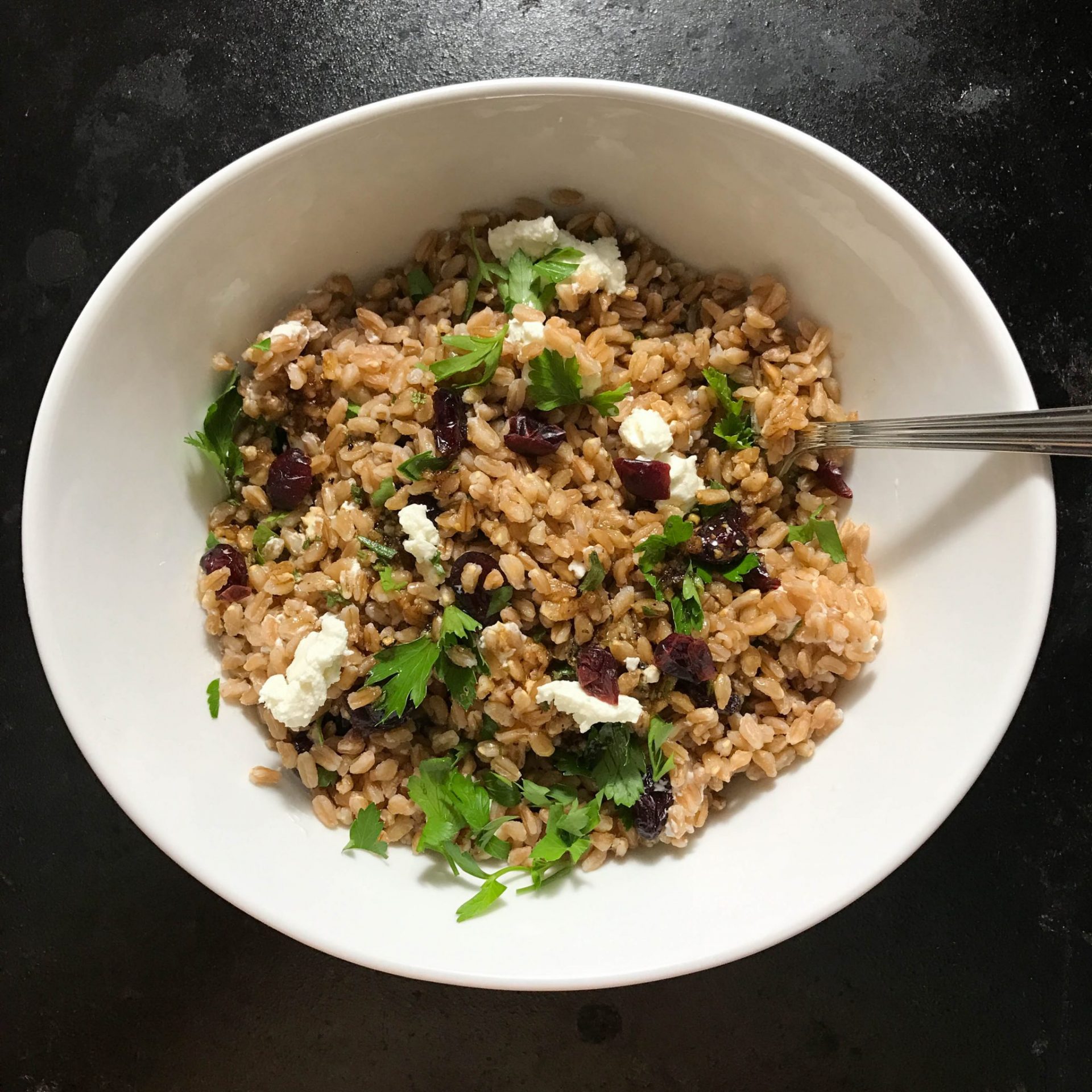
Delicious Warm Farro Salad with Easter Egg Radishes & Broccoli
Warm Farro Salad with Fresh Herbs, Goat Cheese and Dried Cherries
- Prep Time: 10 minutes
- Cook Time: 15 minutes
- Total Time: 25 minutes
- Yield: 4 people 1x
- Category: Main Dish, side
- Cuisine: New American
Ingredients
- 2 cups farro
- 3 Tablespoons balsamic vinegar
- 1 teaspoon Dijon mustard
- 2 cloves garlic (crushed, use more if you like garlic!)
- 2 teaspoons Fresh Rosemary (finely chopped)
- ¼ cup extra-virgin olive oil
- 1 dash fresh cracked pepper
- 1 dash salt
- 1/2 cup dried cherries (or cranberries)
- ⅓ cup Fresh Parsley (Chopped )
- 4 ounces Goat Cheese
Instructions
- Cook farro according to package directions. Meanwhile, make the dressing.
- Whisk balsamic, Dijon mustard, garlic, rosemary, salt, pepper, and olive oil in a bowl.
- Once farro is ready, drain excess water and toss with 3/4 of the dressing and taste. If it needs more, add to taste.
- Add cherries, parsley and goat cheese and serve!
Konnichiwa, food lovers! Here at Alldayieat.com, we’re always exploring new ways to bring delicious, wholesome food to your table, often with a unique Japanese twist. Today, I’m thrilled to share a recipe that perfectly embodies this philosophy: a **Warm Farro Salad with Roasted Vegetables & Umami Dressing**.
You might be thinking, “Farro? Isn’t that a Western grain?” And you’d be right! But just as Japanese cuisine beautifully incorporates ingredients from around the world, I found myself captivated by farro’s hearty texture and nutty flavor. I remember first encountering farro during my travels, and its satisfying chewiness immediately brought to mind the comforting textures of Japanese grains like barley or even certain preparations of rice. It sparked an idea: how could I infuse this ancient grain with the profound, savory depth of Japanese umami?
The result is this incredible warm farro salad. It’s a dish that bridges cultures, offering the wholesome goodness of a grain-based salad with the irresistible, savory notes that are the hallmark of Japanese cooking. It’s a testament to the idea that delicious food knows no boundaries, and that sometimes, the most exciting flavors emerge when traditions meet. So, let’s embark on this culinary journey together!
Why You’ll Love This Warm Farro Salad
This isn’t just any salad; it’s a culinary experience designed to delight your senses and nourish your body. Here’s why it’s destined to become a staple in your kitchen:
A Hearty & Healthy Meal
Packed with fiber, protein, and essential nutrients from the **farro** and a vibrant array of **roasted vegetables**, this salad is a powerhouse of goodness. It’s incredibly satisfying, keeping you full and energized without feeling heavy. It’s a fantastic choice for a wholesome lunch or a light, yet fulfilling, dinner.
Perfect for Any Season
While we’re featuring **Easter Egg Radishes** and **Broccoli** for a delightful crunch and color, this salad is wonderfully adaptable. In spring, think asparagus and snap peas. Summer calls for cherry tomatoes and zucchini. For autumn, consider roasted butternut squash or Brussels sprouts. And in winter, root vegetables like carrots and parsnips shine. Its warm nature makes it comforting year-round.
Quick & Easy to Prepare
Despite its gourmet appeal, this **warm farro salad** comes together surprisingly quickly. With a little multi-tasking – cooking the farro while roasting the vegetables and whisking the dressing – you can have a delicious, healthy meal on the table in under 30 minutes. It’s perfect for busy weeknights or when you need a nutritious meal without a fuss.
What is Farro? Your Guide to This Ancient Grain
Before we dive into the recipe, let’s get acquainted with our star ingredient: **farro**. This ancient grain, a staple in the Mediterranean diet for centuries, is gaining popularity worldwide for its nutritional benefits and delightful texture. But what exactly is it?
Types of Farro: Pearled vs. Semi-Pearled vs. Whole
- Whole Farro: This is the most nutritious form, retaining all three parts of the grain: the bran, germ, and endosperm. It requires the longest cooking time (around 40-60 minutes) and needs to be soaked overnight. It has the chewiest texture.
- Semi-Pearled Farro: A portion of the bran is removed, reducing cooking time (20-30 minutes) and eliminating the need for soaking. It still offers significant nutritional value and a pleasant chew. This is often the most common type found in stores and a great balance for this recipe.
- Pearled Farro: Most of the bran has been removed, making it the quickest to cook (15-20 minutes) but also the least nutritious. It has a softer texture, similar to barley.
For this **warm farro salad**, I recommend using **semi-pearled farro** for its ideal balance of texture, nutrition, and cooking convenience.
Health Benefits of Farro
**Farro** is a nutritional powerhouse. It’s an excellent source of:
- Protein: A great plant-based protein source, essential for muscle repair and growth.
- Minerals: Rich in magnesium, iron, zinc, and B vitamins.
- Antioxidants: Helps protect your cells from damage.
Where to Buy Farro
You can typically find **farro** in the grain or pasta aisle of most well-stocked supermarkets. Specialty health food stores and Italian markets are also good sources. For a wider selection, including different types of farro, check online retailers.
Key Ingredients for Our Warm Farro Salad
This salad shines with a combination of fresh, wholesome ingredients, elevated by our special **Umami Dressing**.
The Star: Farro
As discussed, **semi-pearled farro** is our grain of choice for its texture and quick cooking. It provides a robust, nutty base that holds up beautifully to the vibrant flavors of the dressing and vegetables.
Roasted Vegetables: Easter Egg Radishes, Broccoli, and More!
Roasting vegetables brings out their natural sweetness and creates a wonderful caramelized texture. Our recipe features:
- Easter Egg Radishes: These colorful radishes lose their sharp bite when roasted, becoming tender and subtly sweet with a beautiful hue.
- Broccoli: Roasting transforms broccoli into tender, slightly crispy florets with a deeper, richer flavor.
Feel free to experiment with other seasonal favorites like **sweet potatoes**, **kale**, **mushrooms** (especially shiitake for an extra umami kick!), **Brussels sprouts**, **carrots**, or **bell peppers**.
Fresh Herbs & Flavor Boosters: Goat Cheese, Dried Cherries, Toasted Nuts
- Fresh Parsley: Adds a bright, herbaceous freshness that cuts through the richness.
- Goat Cheese: Offers a creamy, tangy counterpoint that melts slightly into the warm salad, adding a luxurious touch.
- Dried Cherries: Provide bursts of sweet and tart flavor, complementing the savory notes. Dried cranberries or apricots also work wonderfully.
- Toasted Nuts: A sprinkle of **pecans**, **walnuts**, or **pine nuts** adds a delightful crunch and nutty depth.
The Umami-Rich Dressing
This is where our Japanese influence truly comes alive! Our special dressing is a harmonious blend of savory, tangy, and slightly sweet notes, designed to infuse every bite with the elusive fifth taste: **umami**. It features classic Japanese pantry staples that elevate this salad from good to unforgettable.
Crafting the Perfect Warm Farro Salad: Step-by-Step Instructions
The full, detailed instructions are in the recipe card below, but here are some expert tips to ensure your **warm farro salad** is absolutely perfect.
How to Cook Farro to Perfection
Treat **farro** much like pasta. Use plenty of salted water (about 3-4 cups of water per cup of farro). Bring to a boil, then reduce heat and simmer until tender but still chewy (al dente). This usually takes 15-20 minutes for pearled, and 20-30 minutes for semi-pearled. Drain well. For an even quicker method, an Instant Pot can cook farro in about 7-10 minutes with a natural release.
Roasting Your Vegetables
The key to perfectly roasted vegetables is not overcrowding the pan. Give them space so they can caramelize rather than steam. Toss them with a little olive oil, salt, and pepper. Roast at a high temperature (around 400°F / 200°C) until tender and slightly charred at the edges. This brings out their natural sweetness and adds a wonderful depth of flavor.
Assembling Your Salad
The magic of a **warm farro salad** lies in its temperature. Dress the farro while it’s still warm – this allows the grains to absorb the dressing’s flavors more effectively. Then, gently fold in the warm roasted vegetables, fresh herbs, dried fruit, and goat cheese. The warmth slightly softens the cheese, creating a creamy texture throughout.
The Secret to Our Umami Dressing
Our **Umami Dressing** is a simple yet powerful blend. Whisk together **soy sauce**, **rice vinegar**, a touch of **mirin** (for sweetness and glaze), **sesame oil**, and a hint of **garlic** and **ginger**. For an extra layer of umami, consider adding a tiny spoonful of **white miso paste** or a pinch of **dashi powder**. The balance of salty, sweet, tangy, and savory is what makes this dressing truly special.
The Alldayieat.com Twist: Infusing Japanese Flavors
This is where our **warm farro salad** truly stands out. We’re not just adding a few Japanese ingredients; we’re embracing the philosophy of flavor balance and depth that defines Japanese cuisine.
Umami in Every Bite: Our Special Dressing
**Umami**, often described as the “fifth taste,” is a savory, rich, and deeply satisfying flavor. Discovered by Japanese chemist Kikunae Ikeda in 1908, it’s a cornerstone of Japanese cooking. Our **Umami Dressing** harnesses this power. Ingredients like **soy sauce** and **miso paste** are naturally rich in glutamates, the compounds responsible for umami. When combined with the tang of **rice vinegar** and the nutty aroma of **sesame oil**, they create a dressing that doesn’t just coat the salad but infuses it with an incredible depth of flavor, making every bite incredibly satisfying.
Japanese-Inspired Ingredient Swaps
Want to lean even further into the Japanese influence? Here are some delicious ideas:
- Miso-Glazed Vegetables: Instead of plain roasted vegetables, toss your **broccoli** or **sweet potatoes** with a light miso glaze (white miso, mirin, a touch of sugar) before roasting.
- Toasted Sesame Oil: Use this fragrant oil not just in the dressing, but a tiny drizzle over the finished salad for an extra layer of nutty aroma.
- Rice Vinegar: Its mild acidity is perfect for balancing rich flavors.
- Shichimi Togarashi: For a delightful kick, sprinkle this Japanese seven-spice blend over the finished salad. It adds a complex heat and citrusy notes.
- Edamame: Add shelled **edamame** to the salad for a boost of plant-based protein and a vibrant green color.
Pairing with Japanese Dishes
This **warm farro salad** isn’t just a standalone meal; it’s a versatile component that pairs beautifully with other Japanese-inspired dishes:
- Serve it alongside perfectly **grilled fish** (like salmon or mackerel) or pan-fried **tofu** marinated in ginger-soy.
- It makes an excellent, hearty addition to a **bento box** lunch, offering a satisfying grain and vegetable component.
- Enjoy it as a side with a light miso soup or a simple seaweed salad.
Tips for the Best Warm Farro Salad
Achieving the perfect **warm farro salad** is all about technique and attention to detail.
Don’t Overcook the Farro!
The hallmark of great farro is its chewy, al dente texture. Overcooked farro can become mushy. Keep an eye on it and taste frequently towards the end of its cooking time. It should have a slight bite to it.
Roasting Vegetables for Maximum Flavor
As mentioned, don’t overcrowd your baking sheet. Use two if necessary. High heat and single-layer placement are crucial for achieving that delicious caramelization and tender-crisp texture. A little char is a good thing!
Dressing While Warm
This is a non-negotiable step for a truly flavorful **warm farro salad**. The warmth of the freshly cooked farro and roasted vegetables helps them absorb the dressing’s flavors more deeply, creating a more cohesive and delicious dish.
Make Ahead & Storage Tips
This salad is fantastic for **meal prep**! You can cook the farro and roast the vegetables ahead of time. Store them separately in airtight containers in the refrigerator for up to 3-4 days. When ready to serve, gently warm the farro and vegetables (microwave or stovetop), then toss with the dressing, fresh herbs, goat cheese, and dried cherries. Leftovers can be stored in the refrigerator for 2-3 days and are delicious served cold or gently reheated.
Variations & Substitutions
The beauty of this **warm farro salad** lies in its flexibility. Feel free to customize it to your taste, dietary needs, or what you have on hand.
Protein Boosters
- Chicken: Shredded rotisserie chicken or pan-seared chicken breast.
- Shrimp: Sautéed or grilled shrimp adds a delicate seafood note.
- Chickpeas/Lentils: For a vegan option, roasted chickpeas or cooked lentils are excellent choices.
- Tempeh/Tofu: Pan-fried or baked **tempeh** or **tofu** (especially marinated in a soy-ginger sauce) provides a hearty plant-based protein.
Cheese Alternatives
- Feta: Crumbled feta offers a saltier, tangier profile.
- Parmesan: Shaved or grated Parmesan adds a nutty, savory depth.
- Vegan Cheese: Many delicious plant-based feta or goat cheese alternatives are available.
Vegetable Swaps
Embrace seasonality! Beyond our suggested **Easter Egg Radishes** and **Broccoli**, consider:
- Spring: Asparagus, snap peas, green beans.
- Summer: Cherry tomatoes, zucchini, corn.
- Autumn: Butternut squash, sweet potatoes, Brussels sprouts, kale.
- Winter: Carrots, parsnips, leeks.
Dressing Variations
While our **Umami Dressing** is a star, you can explore other flavor profiles:
- Lemon-Tahini: A creamy, nutty dressing with bright citrus notes.
- Balsamic Vinaigrette: A classic choice, especially if you prefer a more traditional flavor.
- Herb Vinaigrette: Blend fresh herbs like basil, dill, or chives with olive oil and vinegar.
Frequently Asked Questions (FAQs)
Can I make this salad ahead of time?
Absolutely! This **warm farro salad** is excellent for **meal prep**. You can cook the farro and roast the vegetables up to 3-4 days in advance. Store them separately in airtight containers in the refrigerator. When ready to serve, gently reheat the farro and vegetables, then toss with the dressing, fresh herbs, goat cheese, and dried cherries.
Is farro gluten-free?
No, **farro** is not gluten-free. It is a type of wheat and contains gluten. If you require a gluten-free option, you can substitute farro with other grains like quinoa, brown rice, or millet, adjusting cooking times accordingly.
How long does cooked farro last?
Cooked **farro** can be stored in an airtight container in the refrigerator for up to 5 days. It’s perfect for adding to salads, soups, or as a side dish throughout the week.
What can I use instead of farro?
If you don’t have farro or prefer an alternative, excellent substitutes include **quinoa**, **brown rice**, **barley**, or **freekeh**. Each will offer a slightly different texture and flavor, but all will work well in this **warm salad** concept.


OMG! Just by the pics, got me so hungry! Can’t believe it could be this easy. Thanks for the share Pat. xx
Meatless Monday?!?! No way! Well, if I had to, this salad wouldn’t be a bad option. I mean you’re making farro look pretty darn tasty those dried cherries!!!!
haha Danielle you made me laugh out loud!! i love meat too, but sometimes i like going meat free!!