Yakiudon with Tofu Recipe (焼うどん) — Japanese Stir-Fried Udon
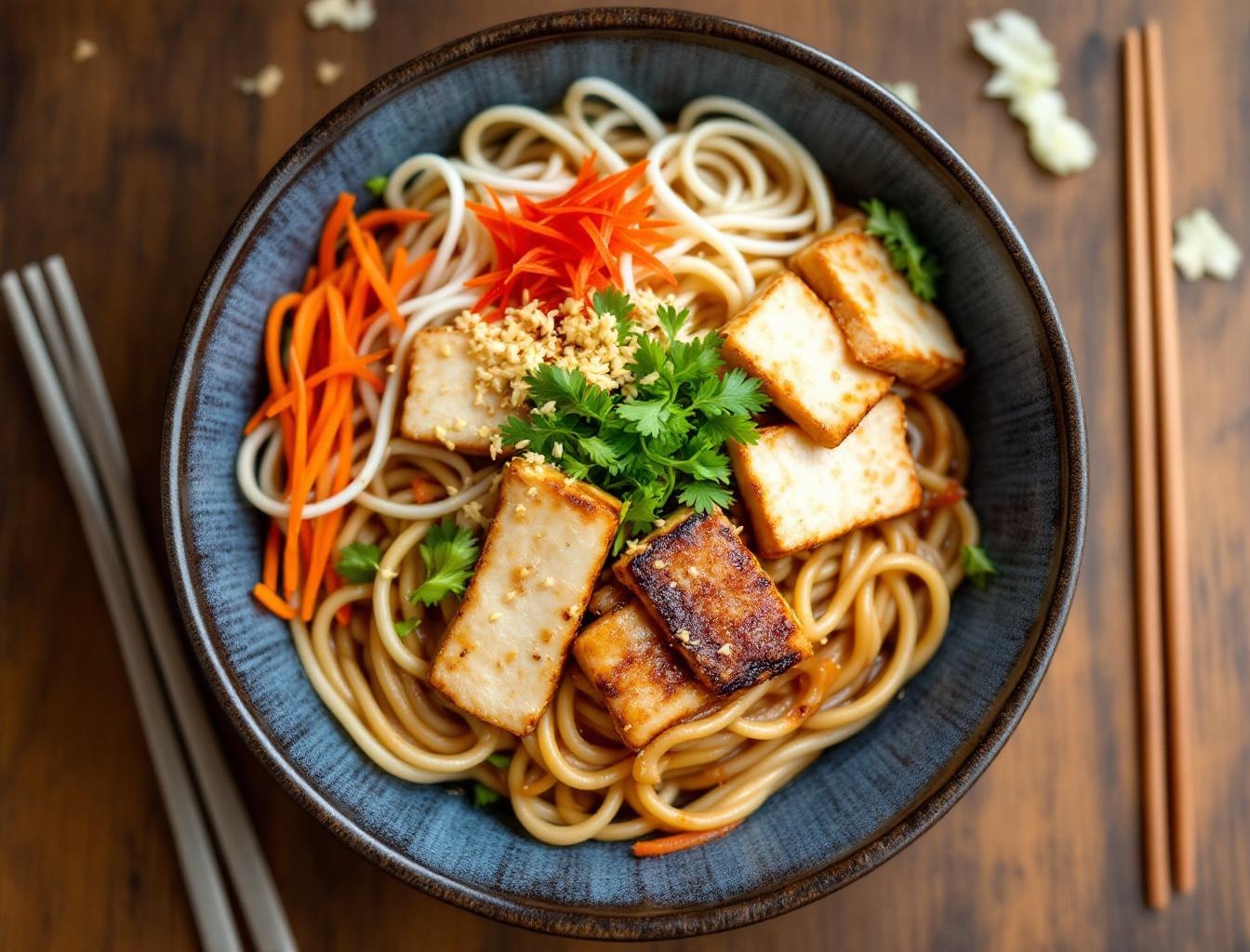
Yakiudon is one of those dishes I always end up making when I want something deeply satisfying without a lot of fuss. It’s stir-fried udon — thick, springy noodles — tossed in a savory soy-chuno sauce with vegetables and crispy tofu. If you’ve had yakisoba before, yakiudon is its heartier, chewier cousin. This version is meat-free, but you won’t miss it.
What Is Yakiudon (焼うどん)?
Yakiudon — literally “grilled udon” — is a Japanese stir-fried noodle dish that originated in Kitakyushu, Fukuoka Prefecture. The story goes that a local restaurant ran out of soba noodles in the post-WWII years and substituted udon, inadvertently creating one of Japan’s most beloved comfort foods. Today it’s a staple at Japanese homes, izakayas (casual drinking restaurants), and matsuri (festival) food stalls across the country.
What sets yakiudon apart from other stir-fried noodle dishes is the texture. Udon noodles are thick, chewy, and have a dense bite that stands up to high-heat cooking. The sauce — usually a blend of soy sauce and a sweet, tangy Worcestershire-style sauce — clings to every noodle. The dish is customizable by nature: whatever vegetables and protein you have on hand can go in.
This recipe keeps things vegetarian with firm tofu, but the technique and sauce work equally well with pork belly, chicken, shrimp, or beef if you prefer.
Yakiudon vs. Yakisoba: What’s the Difference?
The name sounds similar, but these are distinct dishes built on very different noodles:
| Yakiudon | Yakisoba | |
|---|---|---|
| Noodle | Udon (wheat, thick and chewy) | Chukamen (Chinese-style wheat, thin and curly) |
| Texture | Dense, springy, substantial | Lighter, silkier |
| Sauce | Soy sauce + chuno or Worcestershire | Typically otafuku or dedicated yakisoba sauce |
| Origin | Kitakyushu, Fukuoka | Nationwide, popularized post-WWII |
| Heartiness | Very filling — a full meal | Lighter, often a side or snack |
If you’ve made yakisoba before, yakiudon cooks the same way — just expect the udon to need a bit more time to loosen and absorb the sauce.
Choosing the Right Udon Noodles
This is the most important decision in the recipe, and it has a clear answer: frozen udon.
Frozen Udon (Sanuki-Style) — Best Choice
Frozen udon noodles — often sold in individual vacuum-sealed portions as Sanuki-style udon — are the gold standard for yakiudon. They’re par-cooked, then flash-frozen at peak texture. When you microwave them for a couple minutes (with a splash of sake, as the recipe calls for), they come out perfectly chewy without any sticking or mushiness. The sake doesn’t just loosen the noodles — it also adds a subtle depth and helps them absorb the sauce more readily. Look for these at Japanese or Asian grocery stores in the freezer section. Brands like Miyakoichi and Marukin are widely available.
Fresh Udon — Second Best
If you’re lucky enough to find fresh udon (usually in the refrigerated section), use it. No prep needed beyond a quick blanch in boiling water for 1–2 minutes. Fresh noodles have an even better texture than frozen, but they’re more perishable and harder to find outside of Japan or specialty stores.
Dried Udon — Works, with Caveats
Dried udon noodles require boiling until al dente (usually 8–10 minutes), then draining before stir-frying. The texture is slightly less chewy than frozen or fresh, and they can get a bit gummy if overcooked. Always undercook dried udon slightly before adding to the pan — carry-over heat will finish the job.
Instant Udon — Last Resort
Instant udon noodles (the kind that come with a soup packet) are softer and break apart more easily during stir-frying. They’ll work in a pinch, but the texture will be noticeably different. Discard the flavoring packet and use them only as a backup.
Tofu Tips: Getting a Perfect Sear
To get a perfect sear on tofu, do two things: press the tofu to remove excess water, then cook it over high heat without moving it until a golden crust forms. Tofu has a reputation for being bland and rubbery, but that reputation is usually earned by skipping those two steps. Do both, and you’ll get golden-edged, savory tofu that adds real substance to the dish.
Use Firm or Extra-Firm Tofu
Silken and soft tofu will break apart during stir-frying. Firm tofu holds its shape while cooking, and extra-firm tofu gives you the best sear. For yakiudon, either firm or extra-firm works.
Press It
Water is the enemy of browning. Wrap the tofu block in a clean kitchen towel or several layers of paper towels, place a heavy pan or book on top, and let it sit for 10–15 minutes. The difference in browning is dramatic. If you have time, you can also place the wrapped tofu in the refrigerator for an hour or overnight — it firms up even further and the texture becomes almost meaty.
Cut It Right
The recipe cuts tofu into ¼-inch strips, which gives you good surface area for browning while keeping the pieces sturdy enough to hold together through the stir-fry. Cubes work too, but strips tend to distribute more evenly through the noodles.
High Heat, Don’t Touch It
Add pressed tofu to a hot pan with a thin layer of oil and resist the urge to move it for at least 1–2 minutes. It will stick at first, then release naturally once a golden crust forms. This is what makes the difference between rubbery tofu and something that tastes like it belongs in the dish.
Understanding the Sauce Ingredients
The sauce for yakiudon is simple — three or four components — but each one does specific work. Here’s what’s happening:
Shoyu (Soy Sauce)
The backbone of the sauce. Japanese shoyu brings salt and umami without the sharpness of Chinese or Western soy sauces. Koikuchi (dark) shoyu is the standard here. Two tablespoons seasons the noodles without overwhelming them.
Chuno Sauce (中濃ソース)
This is the ingredient most people outside Japan might not have on hand — and the one that makes yakiudon taste distinctly Japanese rather than generic stir-fried noodles. Chuno sauce is a medium-thick Japanese Worcestershire-style sauce, thicker than tonkatsu sauce, with a sweet-savory-tangy flavor profile built on vegetables and fruit. The brand Otafuku makes a widely available version. If you can’t find it, a 50/50 blend of Worcestershire sauce and oyster sauce approximates the flavor. For a vegan version, omit the oyster sauce and use extra soy sauce instead.
Sake
Used twice in this recipe — once to microwave-steam the frozen udon, and optionally once more in the pan. Sake deglazes the pan, picks up the browned bits, and adds a mild sweetness that rounds out the saltiness of the soy and chuno.
Katsuobushi (Dried Bonito Flakes)
Bonito flakes are both cooked into the sauce and used as a topping. When cooked in with the noodles, they dissolve into a smoky umami base. As a topping, they add that distinctive quivering-flake effect from the heat of the dish. Learn more about katsuobushi here. Vegan note: Skip the katsuobushi entirely — the chuno sauce and soy provide enough umami on their own.
Benishouga (Red Pickled Ginger)
These bright red ginger strips cut through the richness of the stir-fry with acidity and a mild heat. They’re made by pickling ginger in plum vinegar, which gives them their distinctive color. You’ll find them at Japanese grocery stores. Don’t substitute regular pickled ginger (sushi ginger) — the flavor profile is different. Benishouga is sharper and more assertive.
Variations and Customizations
Yakiudon is easy to customize: keep the soy-and-chuno sauce as your base, then swap in different proteins, vegetables, or heat to suit what you have on hand. Once you know the base, you can take it in a lot of directions:
Protein Swaps
- Pork belly — The most traditional yakiudon protein. Thinly sliced pork belly renders its fat into the pan, which flavors everything else. Cook the pork first, before the vegetables.
- Chicken thigh — Cut into bite-sized pieces, cook until golden before adding vegetables.
- Shrimp — Add near the end to avoid overcooking. Shrimp yakiudon is particularly good with a squeeze of sudachi or yuzu at the table.
- Mixed mushrooms — For a fully vegan version, shiitake, shimeji, or king oyster mushrooms add meatiness and deep umami.
Vegetable Variations
- Green onions — Add color and a milder allium flavor than onion
- Napa cabbage — Wilts quickly, absorbs sauce beautifully
- Snap peas or edamame — Add crunch and sweetness
- Corn — A popular addition in Japan, especially in Hokkaido-style preparations
- Japanese eggplant — Slice thin, sear until caramelized before adding other vegetables
Make It Spicy
Add a tablespoon of gochujang (Korean chili paste) or ichimi togarashi (Japanese red pepper) to the sauce for heat. Sansho pepper as a topping gives a citrusy tingle that’s distinctly Japanese.
Mentsuyu Shortcut
If you have mentsuyu (concentrated noodle soup base) on hand, you can simplify the sauce: 2 tablespoons mentsuyu + 1 tablespoon chuno sauce. The mentsuyu brings dashi flavor and a rounded sweetness.
How to Serve Yakiudon
Toppings transform yakiudon from a noodle stir-fry to something that looks and tastes fully composed. The standard topping spread:
- Katsuobushi — The dancing bonito flakes are visual theater as well as flavor
- Aonori (dried seaweed powder) — Subtle ocean flavor, green color contrast
- Benishouga — For acidity and crunch
- Fried egg — Sunny side up, placed on top. The runny yolk becomes an extra sauce.
- Sansho pepper — A few shakes of this citrusy Japanese pepper wakes up the whole dish
- Ichimi or shichimi togarashi — For heat lovers, a pinch of single-pepper or seven-spice blend
- Sesame seeds — Toasted, for nuttiness
Serve yakiudon immediately — the noodles will continue absorbing the sauce as they sit, and the toppings (especially katsuobushi) are best applied right before eating.
Storage and Reheating
Refrigerator: Store leftover yakiudon in an airtight container for up to 3 days. The noodles will absorb the remaining sauce and become denser — this isn’t a bad thing, just a different texture.
Reheating: Reheat in a pan over medium heat with a tablespoon of water or soy sauce to loosen the noodles. Avoid the microwave if possible — it tends to make the noodles uneven (some parts rubbery, some parts dried out). If you do microwave, cover the dish and use medium power.
Freezing: Not recommended. Udon noodles that have already been cooked and stir-fried tend to get mushy after freezing and thawing a second time.
Frequently Asked Questions
Is yakiudon the same as yaki udon?
Yes — yakiudon and yaki udon are the same dish, just two ways to romanize the Japanese 焼うどん. “Yaki” means grilled or fried; “udon” refers to the thick wheat noodles. Both spellings are correct.
Can I use regular soy sauce instead of Japanese soy sauce?
You can, but Japanese shoyu (particularly Kikkoman or Yamasa) has a more balanced flavor — less salty and more rounded than most Chinese or Western soy sauces. If regular soy sauce is all you have, start with 1.5 tablespoons instead of 2 and taste as you go.
What can I substitute for chuno sauce?
Chuno sauce (中濃ソース) is a Japanese Worcestershire-style sauce with a sweet, tangy, fruity depth. Substitutes: a 50/50 mix of Worcestershire sauce and oyster sauce works well. For a vegan version, use Worcestershire sauce alone, or just increase the soy sauce slightly.
Are udon noodles gluten-free?
Standard udon noodles are made from wheat flour and contain gluten. There are rice-based or konjac-based noodles that can substitute, though the texture will be different. Shirataki noodles are the closest gluten-free alternative that hold up to stir-frying.
Why do my noodles clump together?
Clumping usually means the noodles are cold or dry when they hit the pan. Make sure to microwave your frozen udon with sake before cooking — this loosens the noodles and adds moisture. Have your vegetables and sauce ready to go before adding noodles to the pan, and work quickly over high heat once they go in.
Can I make this ahead of time?
Yakiudon is best eaten fresh — the tofu is crispiest, the toppings are freshest, and the textures are at their best right off the pan. That said, the flavor actually deepens a bit the next day. If you’re meal-prepping, store without the toppings and add fresh katsuobushi and benishouga when reheating.
PrintYakiudon with tofu 焼うどん
Yakiudon is a Japanese stir-fried udon noodle dish — thick, chewy noodles tossed in a savory soy-chuno sauce with vegetables and tofu. This vegetarian version uses firm tofu as the protein, packed with bean sprouts, cabbage, carrots, and onion, then topped with katsuobushi and benishouga for authentic Japanese flavor.
- Prep Time: 15 min
- Cook Time: 15 min
- Total Time: 30 min
- Yield: 2 people 1x
- Category: Main
- Cuisine: Japanese
Ingredients
- 2 portions frozen udon noodles (microwaved with 2 Tbsp of sake for about 2 minutes)
- 1/2 block firm tofu (7oz) (excess water removed cut into strips 1/4in. thick; alternatively protein of choice)
- 1 cup moyashi (bean sprouts)
- 1 cup carrots (shredded)
- 1 cup onions (sliced)
- 1/4 head cabbage (sliced)
- 1 tbsp sake
- 2 tbsp shouyu (soy sauce)
- 1 tbsp chuno sauce
- black pepper and white pepper (to taste)
- 1–2 tbsp benishouga (pickled ginger)
- 2–3 tbsp katsuobushi
- 2–4 tbsp olive oil
- Toppings ((sansho pepper, ichimi or shichimi pepper, katsuobushi, nori (dried seaweed), benishouga (pickled ginger), fried egg))
Instructions
- Prepare all vegetables and set aside.
- Cover udon noodles with plastic wrap and microwave with 2 tbsp sake for 2-2½ minutes.
- Heat a large pan with olive oil and cook carrots and tofu for 1-2 minutes. Add a few dashes of pepper if desired.
- Add in onions and cook until slightly browned.
- Add in cabbage, bean sprouts, benishouga.
- Add in the sake, soy sauce, chuno sauce, noodles and katsuobushi
- Stir to ensure all vegetables are evenly mixed.
- Cook until liquid is gone.
- Top with toppings and enjoy!
Notes
Noodle tip: Frozen udon noodles work best here — they thaw quickly and stay chewy. Microwave them with a splash of sake before adding to the pan so they don’t clump.
Tofu tip: Press your firm tofu for at least 10 minutes before cooking. Dry tofu browns beautifully and doesn’t steam the other ingredients.
Sauce tip: Chuno sauce is a Worcestershire-style Japanese sauce (thinner than tonkatsu sauce). If you can’t find it, use a 50/50 mix of Worcestershire sauce and oyster sauce — or just use extra soy sauce.
Make it vegan: Skip the katsuobushi (bonito flakes) in the sauce and toppings. The dish is fully plant-based without it.
Storage: Refrigerate leftovers in an airtight container for up to 3 days. Reheat in a pan with a splash of water or soy sauce.
Nutrition
- Serving Size: 1 bowl
- Calories: 420
More Japanese Noodle Recipes
- Udon Noodle Salad — cold udon with sesame dressing, great for summer
- Gomadare Somen — thin somen noodles with a rich sesame sauce
- The Complete Guide to Japanese Noodles — udon, soba, ramen, somen and more
- Black Sesame Tofu — another creative tofu preparation with deep, nutty flavor
- Katsuobushi Guide — everything about dried bonito flakes and how to use them