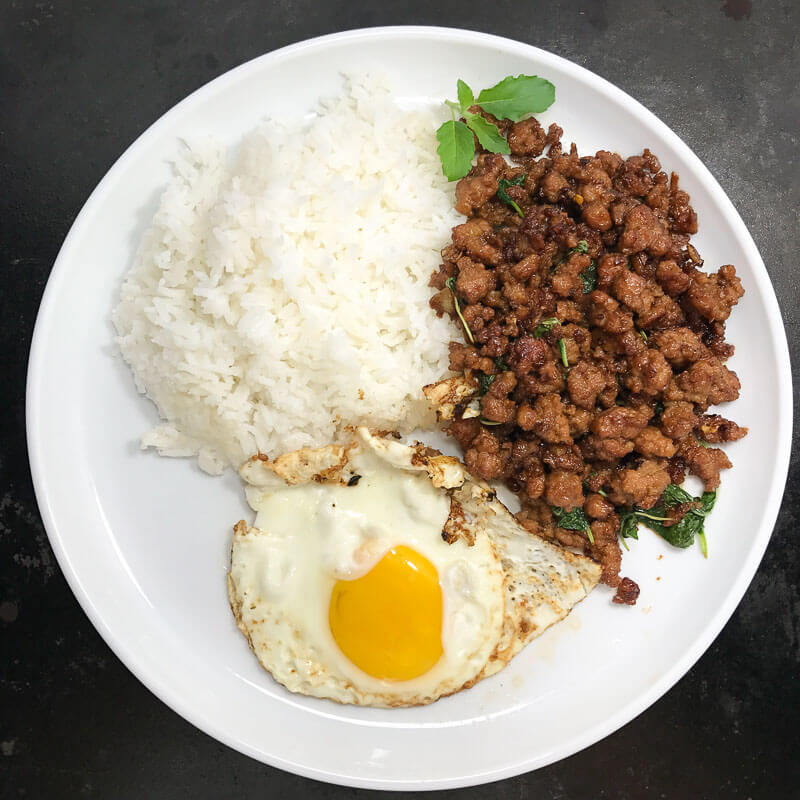
Pad Kra Pao Moo: Authentic Thai Holy Basil Stir-Fried Pork Recipe
Disclosure: As an Amazon Associate, all day i eat like a shark earns from qualifying purchases. This post contains affiliate links — we may earn a commission at no extra cost to you.
Pad kra pao moo (also spelled pad krapao, pad gaprao, or kapao moo) is Thailand’s most beloved stir-fried pork dish, featuring fragrant holy basil, garlic, chilies, and savory sauces over steaming jasmine rice. This authentic kra pao moo recipe comes together in under 15 minutes and delivers bold, punchy Thai street food flavor right in your own kitchen.
Last updated: April 2026
- Pad kra pao moo (ผัดกระเพราหมู) is widely regarded as Thailand’s most popular street food dish, cooked and eaten daily across Bangkok and beyond — and it takes under 15 minutes to make at home.
- Holy basil (Ocimum tenuiflorum) is the non-negotiable ingredient — its peppery, clove-like heat is irreplaceable by Thai basil, which tastes sweet and anise-like instead.
- High-heat wok cooking creates wok hei (鑊氣, the smoky “breath of the wok”) — the defining flavor note that separates authentic stir-fry from a pan-steamed result.
- The dish works with virtually any protein: pork, chicken, beef, seafood, crispy pork belly, or tofu — the technique and sauce stay the same.
- Serve over jasmine rice topped with a khai dao (ไข่ดาว, crispy fried egg) — the runny yolk enriches the sauce and is the traditional Bangkok street-stall finish.
What Is Pad Kra Pao Moo?
Pad kra pao moo (ผัดกระเพราหมู) is a classic Thai stir-fry dish that translates literally to “stir-fried holy basil pork” — and it is arguably the most popular street food dish in all of Thailand. The dish originated in the bustling food-stall culture of Bangkok and has spread throughout the country, becoming the default lunch order for office workers at roadside stalls and food courts across Chiang Mai, Phuket, and everywhere in between. Holy basil (Ocimum tenuiflorum), known in Thai as bai krapao, is the herb that gives the dish its name and its singular peppery character; it is entirely different from the sweet Thai basil (Ocimum basilicum var. thyrsiflora) commonly found in Western supermarkets.
The dish is deceptively simple: ground pork (moo — Thai for “pork”) is stir-fried at high heat with garlic, chilies, and a quick sauce made from fish sauce, soy sauce, and a touch of sugar. If you love bold ground pork dishes, this one ranks right alongside mapo tofu with pork and red miso as a weeknight favorite. At the very end, a generous handful of holy basil leaves gets tossed in and wilted by the residual heat. The whole thing gets served over jasmine rice, almost always topped with a crispy fried egg called khai dao (ไข่ดาว — literally “star egg”).
You might see this dish spelled many different ways — pad krapao moo, pad gaprao, kra pao moo, kapao moo, pad ka prao, or even pad krapow. They are all the same dish. The variation in spelling comes from the difficulty of transliterating Thai script into English. No matter how you spell it, the flavor is unmistakable.
How I Came Across Thai Holy Basil
I am a big fan of basil. Actually, of all basils.
So naturally, the first time I heard there was a Thai holy basil, I was very keen on trying it.
I think the first time I came across this was when I was watching a video by Mark Wiens. (He has a pretty extensive blog on Thai street food, worth checking out.)
Ever since seeing that and having my first taste, it easily became one of my favorite herbs. The aroma is completely different from the sweet basil or even the Thai basil you typically find at the grocery store. Holy basil has this peppery, almost clove-like intensity that hits you right when the leaves touch the hot wok. That fragrance is what makes pad kra pao so special — without it, the dish just is not the same.
When I finally traveled to Thailand and tried pad kra pao moo from a street vendor in Bangkok, it confirmed everything I had imagined. The wok hei (鑊氣 — the smoky, charred “breath of the wok” produced by high-heat stir-frying), the punch of fresh chilies, the fragrance of holy basil wilting into the pork — it was one of those food moments that sticks with you. I knew I had to recreate it at home.
Holy Basil vs. Thai Basil: Why It Matters for Pad Kra Pao
For authentic pad kra pao, you must use holy basil (bai krapao) — Thai basil is a different plant with a completely different flavor profile and cannot replicate the dish’s defining character. Holy basil (Ocimum tenuiflorum) delivers a peppery, almost clove-like heat, while Thai basil (Ocimum basilicum var. thyrsiflora) tastes sweet and anise-flavored. The difference in the finished dish is dramatic and immediately noticeable to anyone who has eaten pad kra pao in Thailand.
Holy Basil (Bai Krapao / Tulsi)
- Flavor profile: Peppery, spicy, slightly clove-like with a sharp, almost medicinal edge
- Leaves: Slightly fuzzy, with serrated edges. Leaves are often flatter and less glossy than Thai basil
- Color: Can range from green to purple-tinged stems
- Heat sensitivity: Best added at the very end of cooking so the heat releases the essential oils without destroying them
- Other names: Krapao, gaprao, Tulsi (in Ayurvedic tradition), Ocimum tenuiflorum
Thai Basil (Bai Horapa)
- Flavor profile: Sweet, anise-like, slightly licorice-flavored
- Leaves: Smooth, glossy, sturdy leaves on purple stems
- Common uses: Thai curries, pho, pad thai, stir-fries where a sweeter herbal note is desired
- Availability: Much easier to find in Western grocery stores and Asian markets
Holy Basil vs. Thai Basil: At a Glance
| Feature | Holy Basil (Bai Krapao) | Thai Basil (Bai Horapa) |
|---|---|---|
| Latin Name | Ocimum tenuiflorum | Ocimum basilicum var. thyrsiflora |
| Flavor | Peppery, spicy, clove-like | Sweet, anise/licorice |
| Leaf Texture | Slightly fuzzy, serrated edges | Smooth, glossy |
| Stem Color | Green to purple-tinged | Distinctly purple |
| Best For | Pad kra pao; any Thai stir-fry calling for bold heat and spice | Thai curries, pho, pad thai, dishes that benefit from a sweeter herbal note |
| Availability | Southeast Asian & Indian markets; grow from seed | Widely available in Western supermarkets & Asian markets |
| Other Names | Krapao, gaprao, Tulsi (Ayurvedic) | Horapa, sweet Thai basil |
For a truly authentic pad krapao, you want holy basil (bai krapao). Thai basil will work in a pinch, and some Thai-American restaurants use it as a substitute, but the flavor profile will be noticeably different. Thai basil gives you sweetness where holy basil gives you heat and spice. If you can only find Thai basil, it will still be delicious — just a different experience from what you would get at a street stall in Bangkok.
Sourcing Thai Holy Basil
If you have difficulty sourcing Thai holy basil, your best bet may be to grow your own!
I actually bought my seeds on Amazon and they germinated really well!
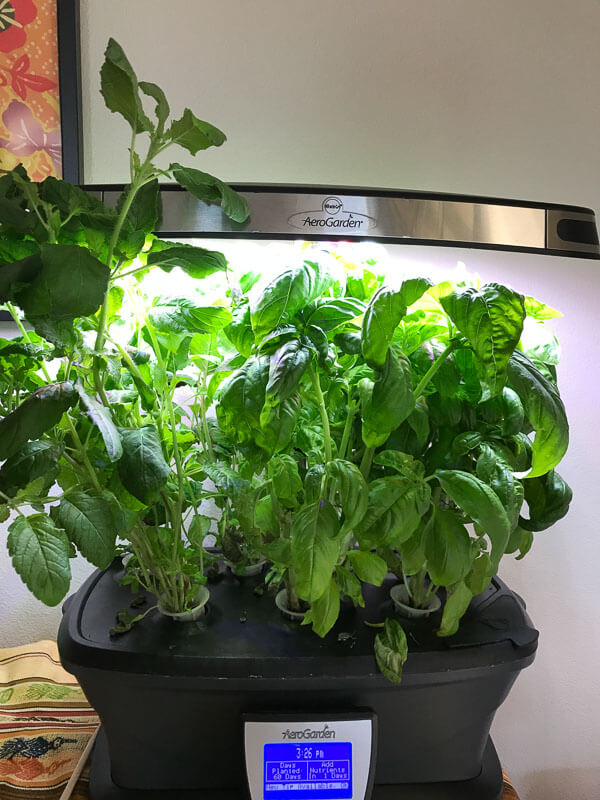
It grows quickly just like regular basil and if you have an Aerogarden (Best for: year-round indoor growing regardless of climate or season) or grow it hydroponically, you will be able to harvest within 3-4 weeks of planting.
Here is some that I grew earlier this year!
Some other places to look for fresh holy basil:
- Southeast Asian grocery stores — These are your best bet. Look for it labeled as “krapao,” “holy basil,” or sometimes just “Thai basil” (check the leaves to confirm)
- Indian grocery stores — Holy basil is called Tulsi in Indian cooking and Ayurvedic medicine, so Indian markets often carry it
- Farmers markets — Some specialty herb growers cultivate holy basil, especially during summer months
- Online seed suppliers — If you enjoy gardening at all, growing your own is genuinely the most reliable option
Holy Basil Tea : A Bonus Use for Your Plants
Thai holy basil has another name, Tulsi, and is used medicinally in Ayurveda as a
Since I had a steady supply of the leaves, I gave the
The
There are different recipes you can try, some with just water and some with
If you have ever had basil ice cream or mint
That is what holy basil did for me. It is a nice way to cool down and get refreshed, especially on a hot day!

Key Ingredients for Authentic Pad Kra Pao Moo
What makes this Thai basil pork stir-fry so appealing is its simplicity. You do not need a pantry full of exotic ingredients. Here is what matters most and why each component plays an important role:
Ground Pork (Moo)
“Moo” means pork in Thai, and ground pork is the traditional protein for this version of pad kra pao. You want a standard ground pork — not too lean, as some fat helps carry the flavor of the sauces and keeps everything moist during the high-heat stir-fry. I use roughly 100 grams per serving, but you can easily scale up. According to USDA FoodData Central (U.S. Department of Agriculture, 2024), 100g of raw ground pork provides approximately 17–20 grams of protein depending on fat content, making it a substantial, protein-rich foundation for the dish. Best for: traditional Bangkok street-food flavor, richness, and the classic pad kra pao experience.
Garlic
Garlic is essential. For pad kra pao, I crush the garlic rather than mincing it finely. Crushed garlic gives you bigger, more rustic pieces that get slightly caramelized in the hot oil and deliver intense flavor bursts throughout the dish. Do not be shy with it. Best for: maximum caramelized depth and rustic texture — minced garlic burns more easily and loses the bold character the dish relies on.
Fish Sauce
Fish sauce is the backbone of the savory, umami flavor in pad krapao moo. I use Three Crabs brand, which has a clean, well-balanced flavor that is not overly pungent. If you are new to fish sauce, start with the amount in the recipe and adjust to taste — a little goes a long way. Best for: cooks who want authentic Thai umami depth without MSG or artificial enhancers; Three Crabs is a widely trusted pantry staple for Thai cooking.
Dark Soy Sauce (Black Soy Sauce)
Dark soy sauce adds a touch of sweetness, color, and depth that regular soy sauce cannot match. It gives the pad kra pao that slightly caramelized, rich look you see at Thai street stalls. If you cannot find dark soy sauce, regular soy sauce with a tiny pinch of brown sugar can approximate the effect. Best for: achieving the glossy, caramelized finish and color typical of restaurant-quality pad kra pao.
Chilies (Optional but Recommended)
Thai bird’s eye chilies (prik kee noo — พริกขี้หนู) are the traditional choice. They pack serious heat. If you want something milder, red Fresno peppers or serrano peppers work well. For the authentic Bangkok street food experience, the dish should have a noticeable kick — but this is completely customizable to your preference. Best for: anyone who wants the full Thai street food experience — bird’s eye chilies deliver the sharp, piercing heat that is authentic to the dish and complements holy basil’s natural peppery quality.
Tips for the Best Pad Kra Pao
After making this Thai holy basil stir-fry dozens of times, here are the tips that make the biggest difference:
- Get your wok screaming hot. This is non-negotiable. Pad kra pao is a fast, high-heat dish. If your wok is not hot enough, you will steam the pork instead of stir-frying it, and you will miss out on that smoky wok hei flavor.
- Crush the garlic, do not mince it. Use the flat side of your knife or a mortar and pestle. Crushed garlic has more surface area for browning and releases more allicin, which means more flavor.
- Break the pork into small pieces. You want the ground pork in tiny, crumbly bits — not large chunks. This maximizes the surface area that gets seared and ensures every bite is coated in sauce.
- Add the basil last. Holy basil should go in at the very end, off heat or with just residual heat. You want the leaves to wilt but not turn black or mushy. The steam from the hot pork and sauce is enough to release those incredible aromatic oils.
- Do not skip the fried egg. A crispy-edged fried egg (khai dao) with a runny yolk on top of pad kra pao moo is traditional and, frankly, makes the whole dish. The richness of the yolk balances the heat and saltiness perfectly.
- Use jasmine rice. Jasmine rice is the only appropriate pairing here. Its fragrant, slightly sticky texture is designed to soak up the sauces and juices from the stir-fry.
Protein Variations: Beyond Pork
Pad kra pao can be made with virtually any protein — while “moo” (pork) is the traditional and most popular choice, Thai street stalls offer a full range of variations using the same technique and sauce. Here are the most common versions you will find in Thailand:
- Pad kra pao gai (chicken): Ground chicken is the second most popular version. It is a bit leaner than pork, so consider adding an extra splash of oil. Best for: a lighter, leaner pad kra pao with milder flavor.
- Pad kra pao nuea (beef): Ground beef or thinly sliced beef. Beef versions often have a slightly richer, meatier flavor profile. Best for: those who prefer a heartier, more robust meat flavor.
- Pad kra pao talay (seafood): Shrimp, squid, or a combination of seafood. This version is lighter and cooks even faster than pork. Best for: a lighter, quick-cooking weeknight dinner with a coastal Thai character.
- Pad kra pao tao hu (tofu): Firm tofu, pressed and crumbled or diced. A great vegetarian option — just make sure to use vegetarian soy sauce and mushroom sauce in place of fish sauce. Best for: vegetarian and vegan diners who still want the bold garlic-basil flavor of the dish.
- Pad kra pao moo grob (crispy pork belly): This is a popular upgrade you will see at Thai restaurants. Crispy pork belly adds incredible texture contrast to the dish. Best for: special occasions or when you want a restaurant-quality upgrade with crunch and richness.
The cooking technique stays the same regardless of the protein. Just adjust the cooking time based on what you are using — shrimp cooks faster, beef might take slightly longer if you use sliced rather than ground.
Adjusting the Spice Level
Pad kra pao moo can be made mild, medium, or fiery hot — the heat level is entirely adjustable without changing the dish’s character. Here is how to control it:
- Mild: Skip the chilies entirely. The dish is still incredibly flavorful from the garlic, fish sauce, and holy basil alone.
- Medium: Use 1-2 red Fresno or serrano peppers, seeds removed. This gives a pleasant warmth without overwhelming heat.
- Hot (Thai street food level): Use 3-5 Thai bird’s eye chilies, bruised in a mortar and pestle with the garlic before stir-frying. Seeds in. This is how most street vendors in Bangkok prepare it.
- Extra hot: Use 5+ Thai bird’s eye chilies and ask yourself if you are ready. Some Thai food stalls will ask “pet mak mai?” (very spicy?) and if you say yes, they will go heavy on the chilies.
I have listed the chilies as optional in my recipe because I know heat tolerance varies widely. But if you can handle some spice, I strongly recommend including at least a little — the heat complements the peppery holy basil beautifully and makes the dish taste more complete.
Serving Suggestions for Pad Kra Pao Moo
The classic way to serve pad krapao moo is simple, and there is a reason for that — it does not need much embellishment:
- Steamed jasmine rice — This is essential. The fragrant rice soaks up the sauces and juices.
- Fried egg (khai dao / ไข่ดาว) — Fried in plenty of oil until the edges are crispy and lacy, with a runny yolk. This is how you will see it served at almost every street stall in Thailand. Best for: the full authentic experience — the runny yolk enriches the sauce and softens the heat.
- Prik nam pla — A simple condiment of fish sauce with sliced chilies and a squeeze of lime. It sits on the table at every Thai street food stall and lets you add extra salt, heat, and acidity to taste.
- Prik Pao (Thai chili jam) — A spoonful of this roasted chili paste on the side adds a sweet-smoky dimension. Best for: diners who enjoy a deeper, more complex sweet-spicy layer alongside the dish.
- Sliced cucumber — A few slices of fresh cucumber on the side provide a cool, crunchy contrast to the hot, savory stir-fry.
- Simple side salad — A quick salad of shredded cabbage or greens tossed in homemade Japanese sesame dressing makes a refreshing complement alongside the rich stir-fry.
See that image below? Those are the dominant flavors in this dish — garlic and basil. They are best friends. If you like both, I think you will have a very good chance of liking this dish!

(video demo below!)
How to Store and Reheat Pad Kra Pao
Pad kra pao moo is best eaten fresh, right out of the wok — but it stores and reheats well for meal prep. Here is how to handle storage to preserve as much flavor as possible:
Refrigerator Storage
- Let the stir-fry cool to room temperature before transferring to an airtight container
- Store in the refrigerator for up to 3-4 days
- Keep the rice separate from the stir-fry if possible to prevent the rice from getting soggy
Freezer Storage
- Pad kra pao freezes well for up to 2-3 months
- Freeze in individual portions for easy weeknight dinners
- Thaw overnight in the refrigerator before reheating
Reheating Tips
- Best method: Reheat in a hot wok or skillet over medium-high heat. Add a small splash of water or oil to prevent sticking and to revive the sauce. This takes about 2-3 minutes.
- Microwave: Works in a pinch. Cover and heat in 30-second intervals, stirring between each. The texture will not be quite as good as wok-reheated, but the flavor holds up well.
- Add fresh basil: If you have extra holy basil on hand, toss in a few fresh leaves when reheating. The fresh basil will revive the aromatic quality that fades during storage.
Pad Kra Pao Moo (Stir Fried Pork with Thai Holy Basil)
- Prep Time: 5 minutes
- Cook Time: 10 minutes
- Total Time: 15 minutes
- Yield: 2 people 1x
- Category: Main Dish
- Cuisine: Thai
Ingredients
- 1 tablespoon olive oil
- 1 tablespoon garlic
- 100 grams Ground pork ((1/4 cup))
- red pepper or thai chile to taste (optional)
- 1 tablespoon fish sauce (i used 3 crabs)
- 1 teaspoon black soy sauce
- 1 dash sugar
- 2–3 tablespoons water
- 1 large handful holy basil leaves (rinsed)
Instructions
- Add oil to hot wok or cast iron.
- Crush garlic and add to pan.
- Stir fry until just turning brown and quickly add pork.
- Break it up into little bits as much as possible.
- Add sauces and sugar and mix in.
- Once mostly absorbed, add the water and the basil leaves.
- If cooking egg, push meat and basil aside to make space for egg.
- Add egg and fry until to desired doneness. (I like mine runny!)
- Serve with hot jasmine rice and Prik Pao if desired~
Nutritional Profile of Pad Kra Pao
Beyond its incredible flavor, pad kra pao moo is a surprisingly well-balanced meal when served in traditional portions. Here is what makes it a solid nutritional choice:
- High protein: According to USDA FoodData Central (U.S. Department of Agriculture, 2024), raw ground pork provides approximately 17–20 grams of protein per 100g serving depending on fat content — making a standard portion of pad kra pao moo a filling, protein-rich main course.
- Holy basil as a culinary herb: Holy basil (Ocimum tenuiflorum) is valued in Ayurvedic tradition as an adaptogenic herb and has been cultivated in South and Southeast Asia for centuries. In pad kra pao it functions as both a primary flavoring ingredient and a culturally significant herb.
- Natural umami from fish sauce: Fish sauce provides deep, savory umami flavor without relying on MSG or artificial flavor enhancers. It is simply fermented fish and salt — a clean, traditional seasoning used across Southeast Asian cooking.
- Complete meal with rice and egg: When served over jasmine rice and topped with a fried egg (khai dao), pad kra pao moo becomes a complete meal with protein, carbohydrates, and fat in one bowl.
- Relatively low calorie for Thai food: Unlike Thai curries that rely on coconut milk or deep-fried dishes with heavy batters, pad kra pao uses only a small amount of oil for the stir-fry. There are no coconut milk or heavy sauces adding hidden calories, making it one of the lighter Thai mains you can enjoy.
Frequently Asked Questions
[display-posts tag=”thai”]
Love basil. Your recipe looks delicious!
😊 thanks!!
I enjoy Thai basil in my stir fries and the flavours in your fried pork sound delicious.
thank you! i’ve been experimenting with different thai basils and haven’t found too much of a difference in flavor. do you have a favorite?
I’ve only tried one version … Thai Silver Queen basil, available from Canadian sources.
Here’s a post with a picture of one scraggly specimen. 🙂