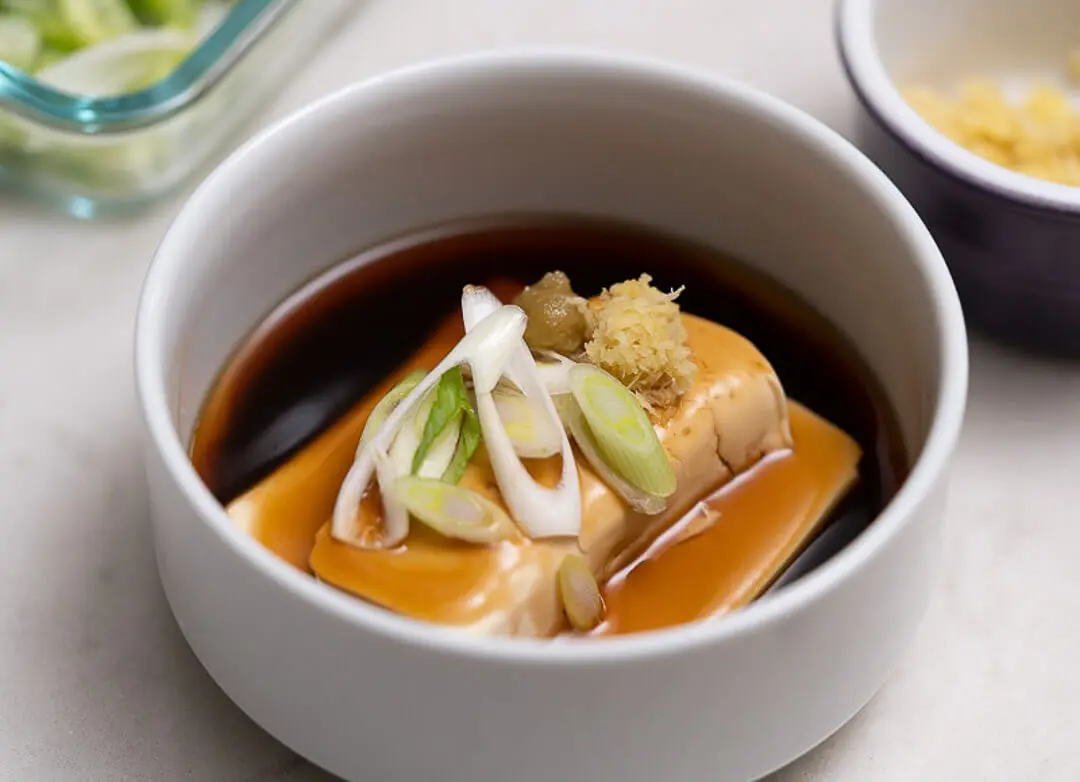
Ankake Tofu Recipe: Japanese Silken Tofu with Savory Dashi Sauce (Ankake Doufu)
Disclosure: As an Amazon Associate, all day i eat like a shark earns from qualifying purchases. This post contains affiliate links — we may earn a commission at no extra cost to you.
Last updated: April 2026
Ankake tofu (ankakedoufu) is one of the most comforting and satisfying ways to enjoy Japanese tofu. Silky soft tofu simmered in dashi, then smothered in a thick, savory ankake sauce made from dashi broth, soy sauce, and a touch of sweetness. If you love umami-rich Japanese food but want something simple and wholesome, this ankake tofu recipe is a great place to start.
KEY TAKEAWAYS
- Ankake (あんかけ) is a Japanese cooking technique where a thick, starchy dashi-based sauce — called an — is poured over dishes like tofu, noodles, or rice.
- Silken tofu (kinugoshi) is the best choice for this recipe: its smooth, custard-like texture absorbs warm dashi and contrasts beautifully with the glossy ankake sauce.
- Simmering the tofu in konbu dashi before adding the sauce is the key step — it layers umami flavor from the inside out.
- Potato starch (katakuriko) gives the most authentic, translucent, glossy finish; cornstarch is the easiest everyday substitute.
- Ankake sauce is best made fresh each time — refrigeration and reheating break down the starch and thin the sauce.

What is Ankake? (Ankake Meaning)
Ankake (あんかけ) literally translates to “sauce poured over” or “covered in sauce.” In Japanese cooking, it refers to a thick, glossy sauce — called an (あん) — that is ladled over dishes like tofu, vegetables, noodles, or rice. The defining characteristic of ankake is its starch-thickened consistency: unlike a thin broth or a cream-based Western sauce, an is translucent, clinging, and deeply umami.
The “an” itself is a savory sauce typically made with dashi broth that is thickened using a starch like potato starch (katakuriko / 片栗粉) or arrowroot starch (kuzuko / 葛粉). Think of it like a Japanese-style gravy, but lighter — no fat, just pure umami richness from the dashi and soy sauce base.
If you have ever had a thick, starchy sauce clinging to noodles at a Chinese restaurant, ankake works on a similar principle. The difference is that Japanese ankake sauce leans on dashi for its flavor foundation, giving it a more delicate, umami-forward taste.
Why This Ankake Tofu Recipe Works
This ankake tofu recipe works because it delivers rich, restaurant-quality umami flavor in under 25 minutes using just a handful of pantry-friendly ingredients. The thick dashi ankake sauce clings to every piece of silken tofu, so each bite is fully coated in savory depth — with none of the fuss of more complex Japanese dishes.
The real secret here? Simmering the tofu in konbu dashi before saucing it. Tofu is naturally mild and slightly porous, so it absorbs the savory dashi as it gently heats through. This extra step only takes a few minutes, but it layers in flavor from the inside out. You can use this same trick for other tofu dishes like hiyayakko (Japanese cold tofu) or ankake yudofu (hot tofu in broth).

Understanding Dashi: The Foundation of Ankake Sauce
Dashi is the umami-rich Japanese stock that forms the backbone of ankake sauce — without it, the dish loses its characteristic depth and delicacy. If you are new to making dashi at home, do not worry. It is one of the simplest broths you can make, and the type you choose will shape the entire character of the finished sauce.
For this recipe, you can use any style of dashi:
- Shiitake konbu dashi — my go-to for plant-based cooking, full of deep umami. Best for: vegan and plant-based ankake.
- Katsuobushi (bonito) dashi — the classic choice with a smoky, savory depth. Best for: traditional ankake with the most rounded umami.
- Konbu dashi — the most subtle option, great if you want the tofu flavor to shine. Best for: light, delicate ankake where the tofu is the star.
| Dashi Type | Flavor Profile | Vegan? | Best For |
|---|---|---|---|
| Shiitake konbu dashi | Deep, earthy umami | Yes | Plant-based / vegan ankake |
| Katsuobushi (bonito) dashi | Smoky, savory, complex | No | Classic, traditional ankake |
| Konbu dashi | Subtle, clean, mild | Yes | Light ankake; tofu-forward dishes |
For a step-by-step guide, see my dashi broth recipe using katsuobushi and konbu.
Understanding the Ingredients
Ankake tofu uses just a handful of ingredients, but each one plays a specific role. Understanding them helps you make better substitutions and get the best flavor from this dish.
- Silken tofu (kinugoshi dofu) — This soft, custard-like tofu is ideal for ankake because its delicate texture absorbs the warm dashi sauce beautifully. Kinugoshi means “strained through silk,” which describes its smooth, almost pudding-like consistency. It is very different from the firm, pressed tofu (momen dofu) used for stir-frying.
- Dashi — The umami foundation of the entire dish. The best ankake starts with a well-made dashi, ideally from katsuobushi (bonito flakes) and konbu (dried kelp). This combination delivers a deep, layered umami that no single ingredient can replicate. Learn how to make dashi from scratch here.
- Soy sauce (usukuchi vs koikuchi) — For ankake, usukuchi (light soy sauce) is the traditional choice because it keeps the sauce lighter in color, letting the golden clarity of the dashi shine through. Koikuchi (dark soy sauce) works too but will produce a deeper brown sauce. Despite the name, usukuchi is actually saltier than koikuchi, so use a lighter hand if substituting.
- Mirin — This sweet rice wine adds subtle sweetness and a glossy sheen to the ankake sauce. It rounds out the salty-savory notes and gives the finished sauce a slightly richer mouthfeel.
- Potato starch (katakuriko) — The traditional thickener for ankake sauce. Katakuriko gives a clearer, more delicate finish than cornstarch, producing the glossy, almost translucent sauce that defines authentic ankake. When mixed with cold water to form a slurry and stirred into hot broth, it thickens within seconds.
- Ginger — Freshly grated ginger is added as a garnish, not cooked into the sauce. Its brightness and warmth cut through the rich umami of the ankake, adding a layer of freshness that balances the dish.
How to Make Ankake Sauce
Ankake sauce is made by simmering dashi with soy sauce and a touch of sugar or mirin, then stirring in a starch slurry to create the signature thick, glossy consistency. The entire process takes under 5 minutes once your dashi is ready. Getting the starch right is the most important step — here is how to choose and use it.
For the starch, you have several options:
- Potato starch (katakuriko) — the traditional Japanese choice, gives a clear, glossy finish. Best for: authentic ankake with the most translucent, delicate texture.
- Arrowroot starch (kuzuko) — another traditional option, slightly more refined texture. Best for: a silkier finish; a good premium alternative to potato starch.
- Corn starch — widely available substitute that works well. Best for: everyday use when Japanese starches are unavailable.
- Tapioca starch — another good alternative if you cannot find the above. Best for: a clear finish similar to potato starch; common in Asian grocery stores.
| Starch | Traditional? | Finish | Availability | Best For |
|---|---|---|---|---|
| Potato starch (katakuriko) | Yes | Clear, very glossy | Japanese/Asian grocery | Authentic ankake |
| Arrowroot starch (kuzuko) | Yes | Silky, refined | Specialty / health stores | Premium texture |
| Cornstarch | No | Slightly cloudier | Any supermarket | Everyday substitute |
| Tapioca starch | No | Clear, similar to potato | Asian grocery | Good all-purpose alternative |
The key to making a smooth ankake sauce without lumps:
- Dissolve the starch in cold water first to create a slurry (1:1 or 1:2 ratio)
- Re-stir the slurry right before adding it (starch settles fast)
- Pour the slurry into the hot simmering broth while stirring continuously
- Keep stirring for 15-20 seconds until the sauce thickens evenly
- Bring to a gentle boil to fully activate the starch — the sauce should become glossy and thick, like a glaze
Serve the ankake sauce immediately while hot for the best texture.
Choosing the Right Tofu
For ankake tofu, soft (kinugoshi) silken tofu is the clear best choice — its smooth, custard-like texture creates the ideal contrast with the thick, glossy ankake sauce and absorbs the warm dashi during simmering better than any other variety. Here is a quick guide to tofu types so you can pick the right one:
- Soft / silken tofu (kinugoshi) — best for this recipe. Delicate texture that absorbs dashi beautifully. Best for: ankake tofu, hiyayakko (cold tofu), miso soup.
- Medium-firm tofu (momen) — also works if you prefer a slightly denser bite. Best for: hot pot dishes, ankake if you prefer more structure.
- Firm or extra-firm tofu — too dense for this dish; better for stir-frying or grilling. Best for: stir-fries, grilled tofu (yakidofu), scrambled tofu (iridoufu).
| Tofu Type | Japanese Name | Texture | Good for Ankake? | Best For |
|---|---|---|---|---|
| Soft / Silken | Kinugoshi dofu | Smooth, custard-like | ✓ Best choice | Ankake tofu, cold tofu, miso soup |
| Medium-firm | Momen dofu | Slightly denser, porous | ✓ Works well | Hot pot, ankake (denser bite) |
| Firm / Extra-firm | — | Dense, chewy | ✗ Not recommended | Stir-frying, grilling, scrambling |
Look for the freshest tofu you can find. If you have access to a Japanese grocery store, freshly made tofu will give you the best results.
Ankake Tofu Variations and Serving Suggestions
One of the things I love about ankake is how versatile it is. Once you have the dashi ankake sauce down, you can use it in many ways: over rice, with noodles, or even as a base for other ankake recipes.
- Ankake yudofu — serve the tofu directly in the hot dashi broth and spoon the an sauce on top
- Ankake donburi — serve the sauced tofu over steamed rice as a donburi rice bowl
- With sauteed vegetables — pour ankake sauce over stir-fried seasonal vegetables. For another tofu side dish, try shiraae (Japanese tofu salad)
- With noodles — drape ankake over udon or pan-fried chukamen (Chinese-style noodles) for ankake udon or ankake yakisoba
- As agedashi tofu — for a crispier version, try pan-frying the tofu first and then pouring the ankake sauce on top
- With other proteins — ankake sauce works wonderfully over steamed fish, chicken, or eggs
For toppings, I like to finish ankake tofu with freshly grated ginger, chopped green onions, and a dab of wasabi. Mitsuba (Japanese wild parsley) is another great option if you can find it. Ankake tofu also pairs wonderfully alongside a bowl of miso soup with tofu for a complete Japanese meal.
Storage Tips
Ankake sauce is best enjoyed fresh — the starch-thickened texture does not hold up well to storage. Refrigeration and reheating tend to break down the starch, so the sauce will thin out and lose its glossy consistency.
If you have leftover tofu, store it separately from the sauce in an airtight container in the fridge for up to 2 days. Make a fresh batch of ankake sauce when you are ready to eat — it only takes a few minutes.
The leftover konbu stock from simmering the tofu still has plenty of umami. Save it for use in dishes like tounyuu nabe (soy milk hot pot) or iridoufu (scrambled tofu).
Watch: How to Make Ankake Tofu
Watch the video below to see how I made this ankake tofu recipe step by step:
Japanese tofu recipe | Ankake Doufu (Savory Dashi Sauce)
PrintJapanese tofu recipe | Ankake Doufu (Savory Dashi Sauce)

- Prep Time: 15 minutes
- Cook Time: 10 minutes
- Total Time: 25 minutes
- Yield: 4 people 1x
- Category: Main Dish
- Cuisine: Japanese
Ingredients
For tofu
- 1 block soft tofu
- 2–3 in. square piece of konbu (5g ~2 cups water)
- 2–3 stalks Green onion (finely chopped)
- 2–3 tsp Ginger (grated)
For the an sauce
- 1 cup dashi
- ¼ cup soy sauce
- ½ Tbsp sugar
- 1 Tbsp Potato starch (dissolved in 2 Tbsp water)
- wasabi
Instructions
for the tofu
- Cut tofu into 6-8 large blocks.
- Using a medium pot on low heat, add 1 cup water, konbu, and tofu. Allow to simmer (~15 min) while you prepare the other ingredients and make the an sauce.
- Using a slotted spoon, remove the tofu blocks from the konbu stock, place in a small bowl.
For the an sauce
- Using a small pot, combine the dashi stock, soy sauce, and sugar. Bring to a simmer.
- Once the sugar has dissolved, add in the potato starch slurry and mix continuously for the first 15-20 seconds until the liquid has thickened evenly. Turn off heat.
- Place tofu blocks on a bowl with rice or serving dish, pour over the thickened sauce.
- Top with green onions, wasabi, and ginger.
Notes
Tips for working with potato starch (katakuriko):
– Always dissolve the potato starch in water, 1:1 or 1:2 ratio, never add direct or you’ll get clumps
– Before adding, stir to redissolve starch if it has settled to the bottom
– Constantly stir while adding to the hot pot.
– Always ensure the solution you’ve added it to is very hot, if you don’t notice thickening right away, your broth may not be hot enough. Continue heating on medium-high heat until you notice it starts to thicken.
Note- The konbu stock still has plenty of umami and can be reused for things like tounyuu nabe or iridoufu
Ankake in Japanese Cuisine: Beyond Tofu
Ankake is far more than just a tofu sauce — it is a foundational technique in Japanese cooking used across many dishes. Once you master the basic ankake sauce, a whole world of Japanese comfort food opens up.
- Ankake udon and soba — Thick ankake sauce is poured directly over hot noodles, creating a warming, hearty dish that is especially popular during the cold winter months. The starchy sauce clings to each noodle, keeping everything piping hot. If you enjoy noodles in rich sauces, you might also like curry udon, which uses a similarly thick sauce over udon.
- Ankake chahan (fried rice) — Fried rice topped with a generous ladle of ankake sauce is a yoshoku (Western-influenced Japanese) classic found at Chinese-Japanese restaurants across Japan. The contrast between the crispy rice and silky sauce is irresistible.
- Ankake yasai (vegetables) — Seasonal vegetables simmered or stir-fried and finished with ankake sauce make a common and elegant side dish. This is a great way to make simple vegetables feel more substantial.
- Cold-weather comfort food — The thick starch-based sauce keeps food warm much longer than a thin broth would, which is why ankake dishes are particularly popular in Japanese cold-weather cooking. The sauce acts as an insulating blanket, trapping heat and releasing it slowly as you eat.
Nutritional Benefits
Ankake tofu is not just comforting — it is also a nutritionally smart choice. Here is what makes it a great addition to your regular meal rotation:
- Tofu — An excellent source of plant-based protein, calcium, and isoflavones (compounds linked to heart health and hormonal balance). A single serving of silken tofu provides roughly 5-8 grams of protein with minimal fat.
- Dashi — Naturally very low in calories while being exceptionally rich in umami. Because dashi delivers so much flavor on its own, you need less salt and seasoning overall, making the dish lighter without sacrificing taste.
- Naturally gluten-free — If you substitute tamari for regular soy sauce and use a gluten-free dashi, this dish is completely gluten-free. Potato starch (katakuriko) is also naturally gluten-free.
- Very low calorie — The entire dish is remarkably low in calories, making it a great option for those watching their weight. The thick ankake sauce gives a satisfying, rich mouthfeel without any added fat or cream.
- Comforting without being heavy — Unlike many comfort foods that rely on butter, cream, or cheese, ankake tofu achieves its warming, satisfying quality through umami and texture alone. It is a dish you can eat and feel good about afterward.
Frequently Asked Questions
What does ankake mean?
Ankake (あんかけ) means “sauce poured over” in Japanese. The word combines an (あん), referring to the thick, starchy glaze itself, and kake (かけ), meaning to pour or drape over. The technique involves ladling this glossy, dashi-based sauce over dishes such as tofu, noodles, rice, or vegetables. The result is a coating sauce that clings to the food, keeping it warm and delivering concentrated umami in every bite.
What is ankake sauce made of?
Ankake sauce is made from dashi (Japanese stock), soy sauce, a small amount of sugar or mirin, and a starch slurry for thickening. The starch — traditionally potato starch (katakuriko), though cornstarch or arrowroot starch also work — is dissolved in cold water and stirred into the hot, simmering dashi until the liquid transforms into a thick, glossy sauce. Optional garnishes like grated ginger and green onion are added at serving rather than cooked into the sauce.
What is the difference between ankake and regular dashi?
Regular dashi is a thin, clear Japanese stock; ankake is that same dashi seasoned and thickened into a clinging sauce. Dashi — made from ingredients like konbu (dried kelp), katsuobushi (bonito flakes), or shiitake mushrooms — is the liquid base. To make ankake, you season the dashi with soy sauce and a touch of sweetness, then stir in a starch slurry until it reaches a glossy, coating consistency. Think of dashi as the foundation and ankake as the finished, ready-to-serve sauce built on top of it.
Can I make ankake tofu with firm tofu?
You can use firm tofu, but soft or silken tofu (kinugoshi) gives the best results for ankake. Silken tofu’s smooth, custard-like texture creates the ideal textural contrast with the thick, glossy sauce and absorbs the warm dashi during the simmering step in a way that firm tofu simply cannot replicate. If you only have firm tofu available, reduce the simmering time to avoid making it overly chewy, and expect a denser, less delicate finished dish.
Is ankake tofu vegan?
Yes — ankake tofu is easily made fully vegan by using a plant-based dashi. Shiitake konbu dashi is the best option: it delivers deep, layered umami without any animal products, and is naturally suited to this dish. Simply avoid katsuobushi (bonito flake) dashi if you are cooking vegan. All other ingredients in this recipe — tofu, soy sauce, sugar, potato starch, ginger, and green onion — are plant-based.
Can I reheat ankake sauce?
Ankake sauce does not reheat well — it is best made fresh each time. Refrigeration breaks down the starch structure, causing the sauce to separate and thin out when reheated. It loses both its glossy appearance and clinging consistency. The good news is that ankake sauce takes less than 5 minutes to make from scratch, so it is always worth starting a fresh batch. Store leftover tofu separately in an airtight container in the fridge for up to 2 days, and make new sauce when you are ready to eat.
What can I use instead of potato starch?
The best substitutes for potato starch (katakuriko) in ankake sauce are arrowroot starch, cornstarch, or tapioca starch — all used in the same quantity. Potato starch gives the clearest, most authentic translucent finish; arrowroot starch is a close traditional alternative with a slightly silkier result; cornstarch is the easiest everyday substitute and widely available at any supermarket. Avoid using wheat flour as a thickener — it will not produce the glossy, translucent texture that defines a proper ankake sauce.
If you enjoyed this ankake tofu recipe and are looking for more Japanese tofu recipes, check out my tofu cookbook: Tofu Ryouri – Simple Japanese tofu recipes to cook healthier at home


It looks delicious. Is soft tofu the same as silken tofu?
depends on the brand, silken might be too soft for this dish. if it doesnt hold its shape could be difficult to use for this dish unless you dont care about the shape of course!