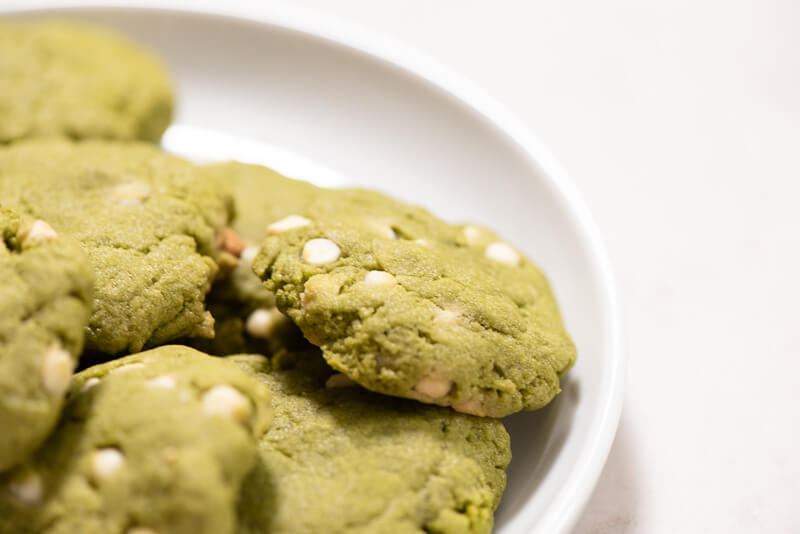
Matcha Okara Cookies: Green Tea White Chocolate Chip Cookies with Soy Pulp
These matcha okara cookies are one of my favorite ways to bake with soy pulp. They’re high in fiber, packed with protein, and the matcha-white chocolate combo is honestly hard to beat. Whether you call them okara cookies, okara biscuits, or soy pulp cookies — once you try them, you’ll want to make a double batch.

What Is Okara? (And Why Bake with It)
If this is your first time hearing about okara, here’s the short version: okara is the soy pulp left over after making soy milk or tofu. In Japanese, it’s sometimes called unohana or kirazu. You might also see it labeled as soy pulp at Asian grocery stores. For more, see our guide on Japanese okara hamburger steak. For more, see our guide on five ways to use okara.
After the soybeans are blended and strained, the remaining fiber-rich pulp is okara. It’s been used in Japanese cooking for centuries — in savory simmered dishes, in Japanese main dishes, and in baked goods like these cookies.
Here’s why okara is worth using in baking:
- High in fiber — okara retains most of the fiber from the soybeans
- Good source of plant protein — adds nutritional value to your cookies without changing the flavor
- Low waste and sustainable — instead of throwing away the byproduct of soy milk making, you turn it into something delicious
- Mild, neutral flavor — just like tofu, okara doesn’t have a strong taste on its own, which makes it incredibly versatile
- Adds moisture and soft texture — gives cookies a tender, slightly cakey crumb
If you wanna see how I make soy milk from scratch (and get fresh okara as a byproduct), check out our 3-day Japanese cooking challenge where we covered the whole process.
Why Matcha and White Chocolate Work So Well Together
If you’ve had matcha before, you know it has that slightly bitter, earthy, almost grassy flavor. White chocolate is creamy and sweet. Put them together and you get a balance that just works.
The sweetness of the white chocolate chips takes the edge off the matcha without masking it. And the matcha gives the cookies a beautiful green color that looks as good as they taste.
This is a pairing you’ll see a lot in Japanese desserts and Japanese-style baked goods — and for good reason. Our matcha biscotti with white chocolate and slivered almonds uses the same winning combination.
What These Okara Cookies Taste and Feel Like
FROM OUR JAPANESE
Use Quality Matcha for Better Baking Results
These cookies get their vibrant color and depth of flavor from genuine Japanese matcha. Our organic Shizuoka cooking matcha is perfect for baking — a bright green color, clean flavor, and no bitterness that can come from lower-grade powders. Try a $5.99 travel-size bag to test it in this recipe.
Let me set the right expectations because okara cookies have a different texture than your standard American cookie.
These are not chewy, gooey cookies. They’re closer to a shortbread or a Japanese-style biscuit — lightly crumbly, tender, and not overly sweet. The okara gives them a slightly denser, more satisfying bite. Think of them as otona no amasa (sweetness for adults).
The matcha flavor comes through clearly, and the white chocolate chips add little pockets of sweetness throughout. They’re the kind of cookie you pair with
We go through a batch within a day or two in our house. They’re super oishii (delicious).
Cookie Variations and Add-Ins
One thing I love about this okara cookies recipe is how easy it is to customize. Here are some variations I’ve tried:
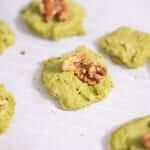
- Walnuts — the nuttiness pairs beautifully with matcha. Walnuts add good fats and a nice crunch without clashing with the matcha flavor
- Black sesame seeds — another classic Japanese flavor that complements matcha. Try black sesame sprinkled on top or mixed into the dough
- Turbinado sugar topping — sprinkle some turbinado sugar (thick sugar granules) on top before baking for added crunch and sweetness
- Butter instead of olive oil — I love these with butter too. Can you ever go wrong with butter in baking? I think not
- Extra matcha — add another teaspoon of matcha powder for a more intense flavor, but add a couple extra tablespoons of sugar to balance the bitterness
Watch the Matcha Okara Cookie Video
Not sure how simple these are to make? Let me show you. In this video I walk through the whole process, including the white chocolate chip version:
Understanding the Ingredients
Each ingredient in these matcha okara cookies plays a specific role. Here is what to know before you start baking.
Fresh Okara (Soy Pulp)
Okara is the fibrous pulp left after straining soy milk from blended soybeans. Its moisture content varies significantly depending on how thoroughly the soy milk was pressed out. Wetter okara makes softer, denser cookies, while drier okara produces a lighter, more crumbly texture. For best results, aim for okara that feels like damp sand rather than a wet paste. If yours is too moist, spread it on a baking sheet and dry it in a 200°F oven for 15-20 minutes before using.
Matcha Powder
Use culinary-grade matcha for these cookies, not ceremonial grade. Culinary matcha is designed for baking and cooking. It has a stronger, more robust flavor that holds up against sugar, butter, and heat. Ceremonial matcha is meant for drinking straight and its delicate nuances would be lost in a cookie. Culinary grade also costs significantly less, which matters when you are using a full tablespoon. If you want to learn more about preparing matcha the traditional way, check out our guide on how to make matcha.
White Chocolate Chips
White chocolate chips serve as the sweet counterpoint to matcha’s earthy bitterness. Use a good-quality brand that lists cocoa butter as the first ingredient rather than palm oil or vegetable fats. Better white chocolate melts more smoothly and provides a creamier, more authentic flavor. The pockets of sweetness they create throughout the cookie make each bite balanced.
Walnuts
Walnuts add welcome crunch and pair naturally with Japanese
Butter
Use unsalted butter at room temperature for proper creaming with the sugar. Room temperature means the butter gives slightly when pressed but still holds its shape. Cold butter will not incorporate evenly, and melted butter changes the cookie texture entirely (though this recipe also works with olive oil if you prefer a dairy-free option).
All-Purpose Flour
The flour provides the structural backbone of the cookie. The original recipe calls for hakurikiko (Japanese light flour, similar to cake flour), but all-purpose flour works well too. For a gluten-free version, you could experiment with a rice flour blend. Keep in mind that rice flour absorbs moisture differently, so you may need to adjust the liquid ratio slightly.
Tips for Making the Best Okara Cookies
- Watch the moisture content of your okara. Store-bought okara and homemade okara can be quite different. If you made it yourself, squeeze out as much soy milk as possible before using it. Too much moisture will make your cookies damp instead of crumbly.
- Olive oil to butter substitution: 1 stick of butter = 3/4 cup olive oil (6 Tbsp). I like extra virgin for the peppery kick — it adds another layer of flavor to the matcha.
- Adjust sweetness to taste. I don’t like my cookies super sweet, but if you do, add an extra tablespoon or two of sugar.
- Don’t worry about the thick batter. The dough will be quite thick and almost crumbly. That’s normal. Just form them into small discs with your hands and they’ll hold their shape in the oven.
- Make a double or triple batch. The base recipe makes enough for about 3-4 people for a day (2-3 cookies per person). Scale up if you’re baking smart.
- Serve with hojicha
tea . The roasted flavor of hojicha balances the subtle sweetness of these cookies perfectly.
Where to Find Okara
You have a few options:
- Asian grocery stores — some carry fresh okara in the refrigerated tofu section. It may be labeled as “soy pulp” or “okara.”
- Tofu shops — if you have a local tofu maker, they almost always have okara available (sometimes for free, since it’s a byproduct)
- Make it yourself — if you make homemade soy milk, you’ll automatically end up with okara. It’s the pulp that stays in the straining cloth
- Dried okara powder — available online, this is a shelf-stable option. You’ll need to rehydrate it before using
Equipment You’ll Need
- Mixing bowls
- Whisk
- Spatula
- Baking sheet lined with parchment paper
- Wire cooling rack
- Oven preheated to 350°F (175°C)
How to Store Okara Cookies
Room temperature: Keep in an airtight container for 3-4 days. They actually taste great the next day once the flavors have had time to meld.
Freezer: These okara cookies freeze well for up to two weeks in an airtight glass container. Let them come to room temperature before eating, or give them 5 minutes in a warm oven to refresh.
Note about matcha and caffeine: since matcha is powdered green tea, these cookies do contain caffeine. I love eating them any time of day, but I tend not to eat them after dinner so I can sleep. Emi won’t touch them after about 3pm — which is both good and bad for both of us!

Nutritional Benefits of Okara Cookies
Beyond being delicious, these matcha okara cookies offer genuine nutritional advantages over conventional cookies.
High fiber content: Okara retains most of the dietary fiber from whole soybeans. When soybeans are processed into soy milk, the liquid carries away the protein and fats, but the fiber-rich pulp stays behind. Adding okara to cookie dough significantly increases the fiber per serving compared to a standard butter cookie.
Plant-based protein: Between the soy protein in the okara and the protein from walnuts, these cookies deliver a meaningful amount of plant protein. This makes them a more satisfying snack that keeps you fuller longer than empty-calorie sweets.
Matcha’s L-theanine and antioxidants: Matcha powder is rich in catechins, a class of antioxidants that have been studied extensively in Japanese health research. It also contains L-theanine, an amino acid that promotes calm alertness. Unlike coffee, matcha delivers caffeine alongside L-theanine, which may help smooth out the energy curve. For another way to enjoy matcha in dessert form, try our matcha purin (Japanese-style custard pudding).
Lower glycemic potential: When made with less sugar (as this recipe does with just 1/3 cup), and combined with the fiber from okara and protein from walnuts, these cookies have a lower glycemic impact than traditional all-butter, all-sugar cookie recipes. The fiber slows digestion and helps moderate blood sugar response.
Sustainable and zero-waste baking: Okara is a byproduct of tofu and soy milk production. Tons of okara are discarded every year. Baking with it transforms food waste into something genuinely useful and delicious. If you are already making homemade soy milk, these cookies give your okara a second life instead of sending it to the compost bin.
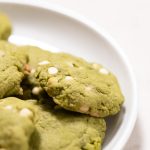
Matcha cookies with okara and walnuts
- Prep Time: 10 minutes
- Cook Time: 15 minutes
- Total Time: 25 minutes
- Yield: 8 people 1x
- Category: Dessert
- Cuisine: Japanese
Ingredients
Units
Scale
Instructions
- First combine olive oil or melted butter with sugar and egg yolk, whisk until combined.
- Next add in matcha powder, whisk until combined and then flour and then okara until just incorporated.
- Add in the white chocolate or nuts and use a spatula to evenly distribute
- Use your hands and form into small balls and flatten between your palms to form into a small cookie
- Bake at 350 degrees for 15 minutes, until lightly browned on the bottom.
- Cool on a wire rack and once cool, enjoy!
Okara Cookies FAQ
What is okara?
Okara (also called soy pulp) is the fiber-rich byproduct left over after making soy milk or tofu. It’s high in protein and fiber, has a mild flavor, and is commonly used in Japanese cooking for both savory dishes and baked goods like cookies and biscuits.
Can I use dried okara powder instead of fresh okara?
Yes. Rehydrate dried okara powder with water according to the package instructions until it reaches a consistency similar to fresh okara. Start with less water and add more as needed — you want it moist but not wet.
Are okara cookies gluten free?
This particular recipe uses cake flour (hakurikiko), so it’s not gluten free as written. However, you could experiment with substituting a gluten-free flour blend. The okara itself is naturally gluten free.
Can I make these okara cookies without matcha?
Absolutely. Skip the matcha and you’ll have a simple, lightly sweet okara cookie. You can also swap in cocoa powder, hojicha powder, or kinako (roasted soybean flour) for a different flavor profile.
Why are my okara cookies too wet or crumbly?
The moisture content of okara varies. If your cookies are too wet, your okara likely had too much liquid — try squeezing it in a cheesecloth next time. If too crumbly, add a tiny bit more oil or butter to help bind the dough. Aim for okara with the consistency of damp sand rather than a wet paste.
How many cookies does this recipe make?
The recipe yields enough for about 8 servings, with 2-3 small cookies per person. I recommend making a double or triple batch if you’re baking for a group — they disappear fast.
What’s the best tea to pair with okara cookies?
Hojicha (roasted green
Can I freeze okara cookie dough?
Yes. Shape the dough into logs, wrap tightly in plastic wrap, and freeze for up to 3 months. When ready to bake, slice the frozen logs into rounds and place directly on a parchment-lined baking sheet. Add 2-3 minutes to the bake time since they go into the oven from frozen.
What matcha grade should I use for cookies?
Culinary grade matcha is perfect for baking. Ceremonial grade matcha is designed for drinking straight and its delicate qualities are wasted in baking, where heat and competing flavors from sugar, butter, and chocolate overpower the nuances. Save ceremonial grade for your morning bowl and use culinary grade here — you’ll get better color and flavor in the final cookie.
Can I use okara from homemade soy milk?
Absolutely. Fresh homemade okara is ideal for these cookies. Just make sure to squeeze out as much excess moisture as possible through a cheesecloth or nut milk bag. If your homemade okara is very wet, spread it on a baking sheet and dry it in a 200°F oven for 15-20 minutes until it reaches a crumbly, damp-sand texture.
Have you made these matcha okara cookies? Let me know how they turned out in the comments!
Which Japanese Tea Are You? Take the 60-second quiz
🍵 Enjoyed this recipe? Take our 60-second quiz: What Hojicha Treat Should You Bake?
Get a personalized recommendation — plus a discount code for your first order.

I converted these to gluten free and they turned out really well! Because of the different flour (and probably my wet okara), I couldn’t form them in balls and used a scooper to put them on the pan. The ones I pressed down a more and cooked until a bit crisp were the best. They tasted like shortbread even though I used olive oil, not butter. My guests loved them, too. Thanks!
Theese okara matcha cookies are great and easy to make. I use olive oil and pecan nuts and for once I look forward to making soy milk🌞
thanks for the note Ewa! glad they turned out well for you!
Tried this recipe but used Moringa powder instead of matcha. The texture was really good, compared to other okara cookie recipes I’ve tried! The taste is great too, but definitely would’ve been better had I just used matcha instead, ha. Thanks Pat!
You are welcome! Glad that you enjoyed the recipes we shared.
If you want more plant-based Japanese resto cooking, feel free to subscribe or visit our website!